
Finding the best fabric for a summer wedding guest dress can make a major difference in how comfortable an outfit feels throughout the celebration.
A dress may look beautiful, but the fabric determines much of what you experience after several hours in warm weather. Some materials allow air to move easily and feel light against the skin, while others can trap warmth, cling to the body, or become uncomfortable when temperatures rise.
This matters even more for weddings that involve outdoor ceremonies, garden receptions, destination celebrations, or long periods of standing and dancing.
The best choice isn’t simply the thinnest fabric available. You also need to consider breathability, weight, drape, lining, wrinkle resistance, opacity, and the formality of the wedding.
This guide breaks down the most useful fabrics for hot-weather weddings, explains their strengths and limitations, and shows how to choose between them for different venues and dress codes.
What Makes a Wedding Fabric Good for Hot Weather?
Before choosing a summer wedding guest dress, look beyond the fabric name.
Two dresses made from completely different materials can feel surprisingly similar, while two dresses made from the same fabric can perform very differently because of their lining, construction, or fit.
For warm-weather weddings, look for these characteristics:
| Fabric characteristic | Why it matters in heat |
|---|---|
| Breathability | Allows heat and moisture to escape |
| Lightweight construction | Reduces the heavy feeling of the dress |
| Fluid drape | Prevents the material from feeling stiff or restrictive |
| Moisture management | Helps the garment feel more comfortable during extended wear |
| Minimal lining | Reduces unnecessary layers and trapped warmth |
| Appropriate opacity | Keeps the dress wearable without excessive layering |
| Wrinkle resistance | Helps the outfit remain polished throughout the event |
| Soft texture | Reduces irritation during prolonged wear |
A fabric doesn’t need to satisfy every category to be a good summer choice. The best option depends on the temperature, humidity, venue, dress code, and length of time you’ll be wearing it.
For example, a flowing chiffon dress may be excellent for an outdoor wedding, while a structured lightweight crepe gown may be more appropriate for an air-conditioned formal venue.
Best Fabrics for Hot Weather Weddings
Several fabrics work particularly well for warm-weather wedding guest outfits, but each has different advantages.
The most useful options include chiffon, silk, georgette, linen blends, cotton, lightweight crepe, and organza.
Here’s a quick comparison before looking at each fabric individually.
| Fabric | Breathability | Formality | Wrinkle Resistance | Best For |
|---|---|---|---|---|
| Chiffon | High | High | Good | Flowing wedding dresses |
| Silk | High | Very high | Moderate | Elegant formal weddings |
| Georgette | High | High | Good | Movement and coverage |
| Linen blend | Very high | Moderate | Better than pure linen | Outdoor daytime weddings |
| Cotton | High | Low–moderate | Moderate | Casual or relaxed weddings |
| Lightweight crepe | Moderate–high | Very high | Good | Formal evening events |
| Organza | Moderate | Very high | Good | Structured formal looks |
| Satin | Moderate | Very high | Good | Evening weddings |
| Polyester chiffon | Moderate | High | Very good | Easy-care wedding guest dresses |
No single fabric wins every category. The right choice depends on what matters most for the event.
Chiffon
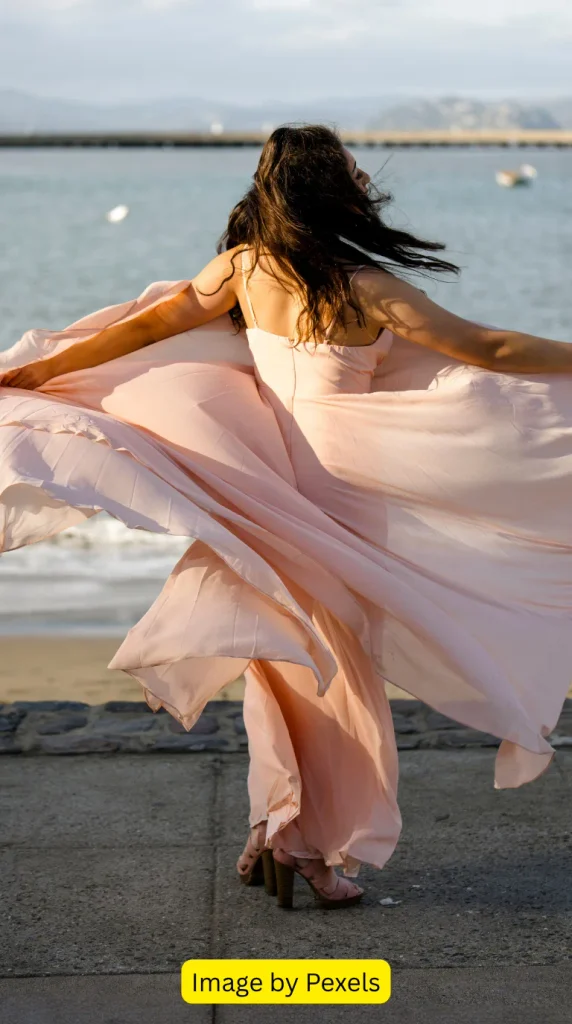
Chiffon is one of the easiest fabrics to associate with warm-weather wedding dressing because of its lightweight construction and flowing movement.
It works particularly well for dresses with gathered skirts, layered skirts, sleeves, or softly draped silhouettes.
Chiffon can also create visual volume without adding the weight associated with heavier formal fabrics.
Why choose chiffon?
- Lightweight feel
- Fluid movement
- Elegant appearance
- Works well for layered designs
- Suitable for daytime and evening weddings
- Photographs beautifully when the skirt moves
One consideration is that chiffon is often somewhat sheer, so dresses may use an inner lining. That lining can significantly affect how cool the garment feels.
For very hot weather, check the lining fabric as carefully as the outer chiffon.
Silk
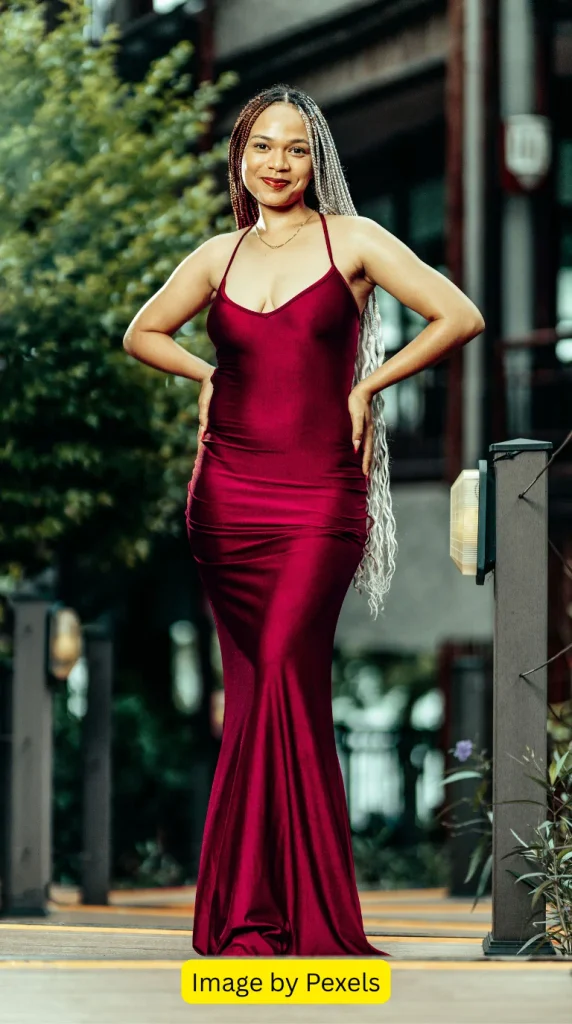
Silk offers a combination of luxury and comfort that makes it particularly attractive for elegant summer weddings.
A lightweight silk dress can feel smooth against the skin while creating the polished appearance expected at a formal celebration.
Silk is especially effective when you want a minimalist dress rather than heavy embellishment.
Silk works well for:
- Black-tie weddings
- Evening receptions
- Slip dresses
- Bias-cut gowns
- Simple column silhouettes
- Sophisticated destination weddings
The main disadvantage is maintenance. Some silk garments require more careful cleaning and can wrinkle more easily than synthetic alternatives.
If you’re attending a wedding where you expect considerable movement or travel, check the garment’s care requirements before purchasing.
Georgette
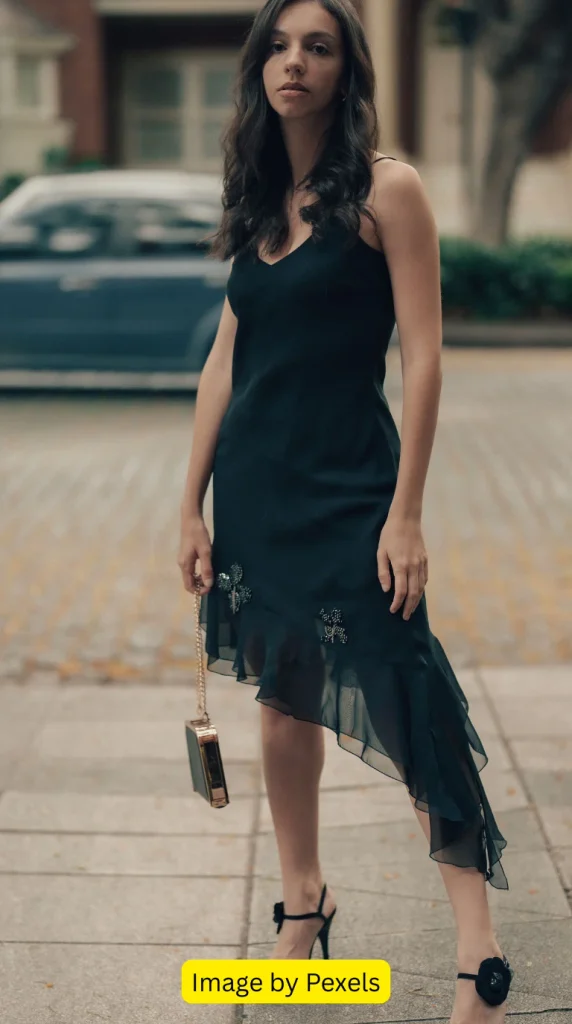
Georgette is another useful option for warm-weather wedding attire.
It has a slightly more textured appearance than very smooth fabrics and can create beautiful movement without looking overly delicate.
Georgette works especially well for:
- Flowing maxi dresses
- A-line silhouettes
- Gathered skirts
- Long sleeves
- Draped necklines
- Wedding guest dresses with movement
Because georgette can vary in weight and fiber composition, don’t assume every georgette garment will feel identical.
Always check the actual garment construction, particularly if the dress includes several layers.
Linen Blends
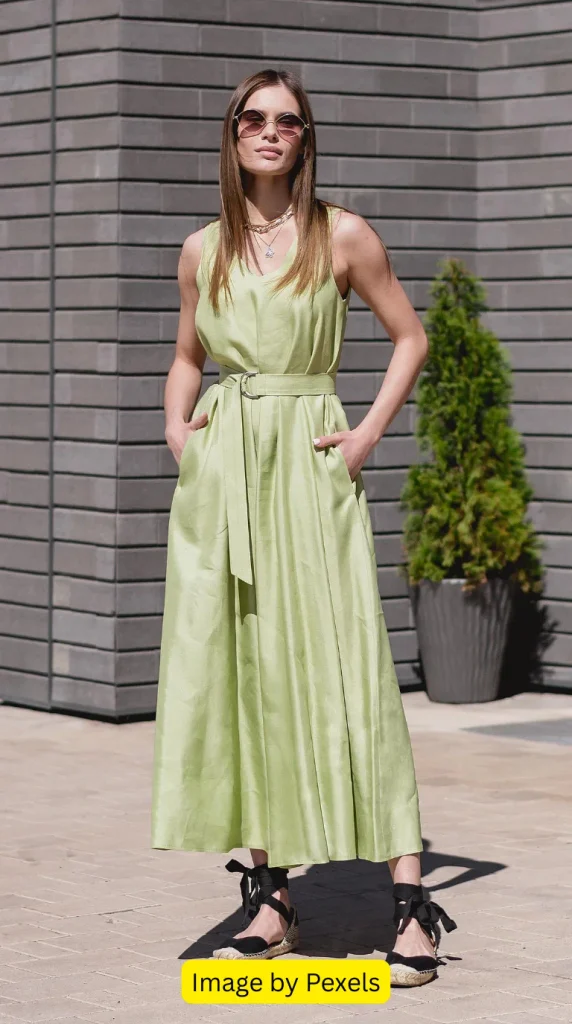
Linen is famous for breathability, making it an obvious choice for hot outdoor weddings.
The tradeoff is that pure linen wrinkles easily. For a wedding guest outfit, a linen blend can be more practical because blended fabrics may retain some of linen’s airy qualities while improving durability and wrinkle performance.
Linen blends are particularly suitable for:
- Garden weddings
- Daytime ceremonies
- Destination weddings
- Outdoor receptions
- Relaxed dress codes
- Warm and humid climates
They are generally less appropriate for highly formal black-tie events unless the particular garment has an unusually polished construction and the invitation clearly allows that level of informality.
Cotton
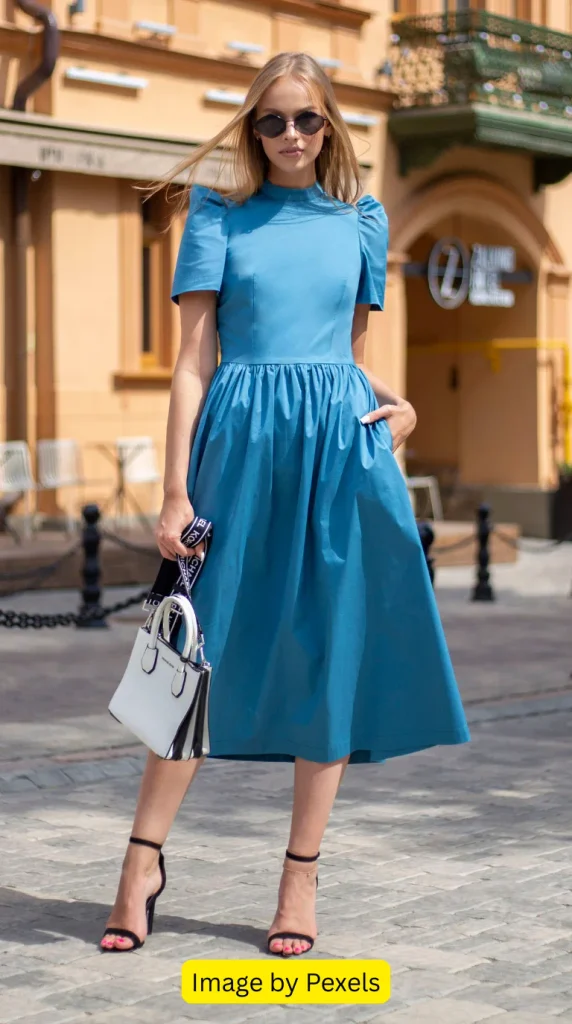
Cotton is breathable, familiar, and comfortable, but its suitability depends heavily on the wedding’s dress code.
A polished cotton dress can work beautifully for a casual garden wedding or relaxed daytime celebration.
However, cotton isn’t automatically appropriate for every formal event.
For black-tie or highly formal weddings, more elevated fabrics such as silk, chiffon, or refined crepe generally create a more suitable finish.
Choose cotton when:
- The wedding is casual or semi-formal
- The ceremony takes place outdoors
- Comfort is a major priority
- The dress has a refined silhouette
- The invitation doesn’t require highly formal eveningwear
The cut, finish, and styling determine whether cotton looks wedding-ready.
Lightweight Crepe
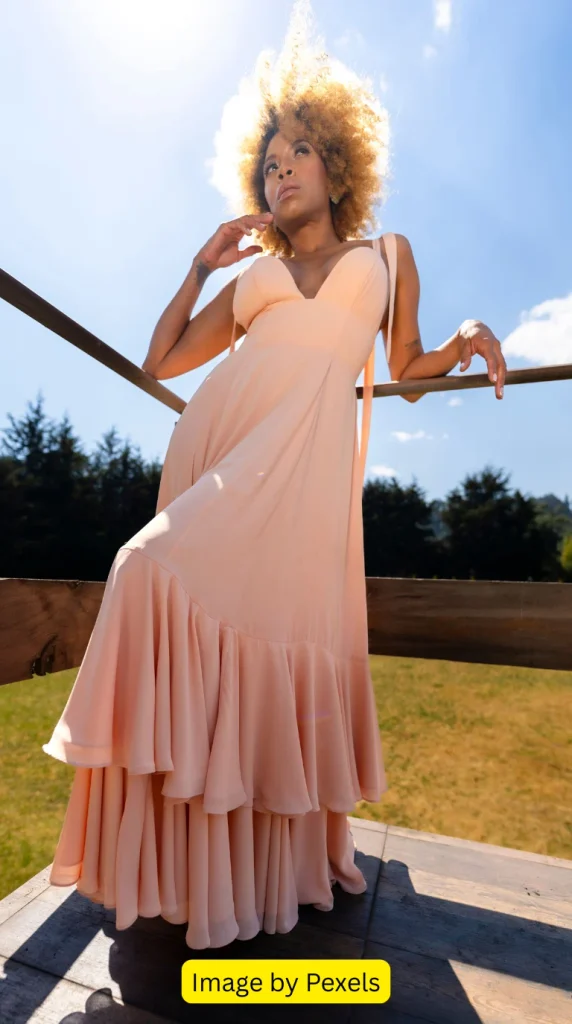
Crepe is useful when you want structure without a heavy appearance.
Unlike very floaty fabrics, lightweight crepe can create a smoother, more streamlined silhouette. This makes it particularly useful for formal wedding guest dresses where you want a polished shape.
Lightweight crepe works well for:
- Column dresses
- Wrap dresses
- Tailored gowns
- One-shoulder dresses
- Minimalist formalwear
- Evening receptions
Because crepe varies considerably by fiber and weight, check the garment specifications rather than judging solely by the fabric name.
Organza
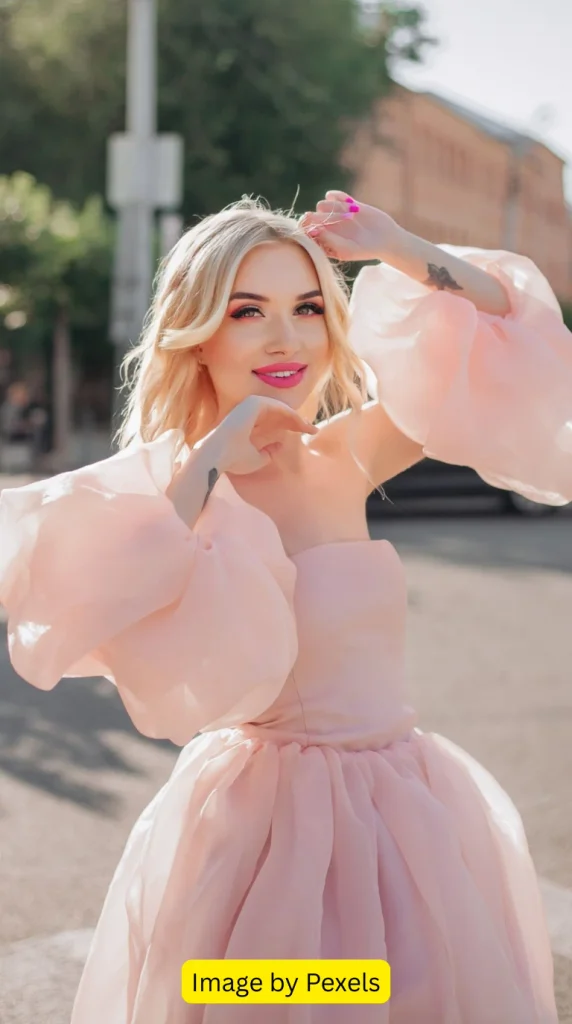
Organza is lightweight but behaves differently from chiffon and silk.
Its crisp structure makes it useful when you want a dress with volume, definition, or architectural details.
It can work beautifully for:
- Full skirts
- Statement sleeves
- Structured overlays
- Formal evening dresses
- Romantic silhouettes
However, organza isn’t necessarily the coolest option simply because it looks airy.
A dress made from multiple layers of organza can feel considerably warmer than a simple, single-layer design.
Satin
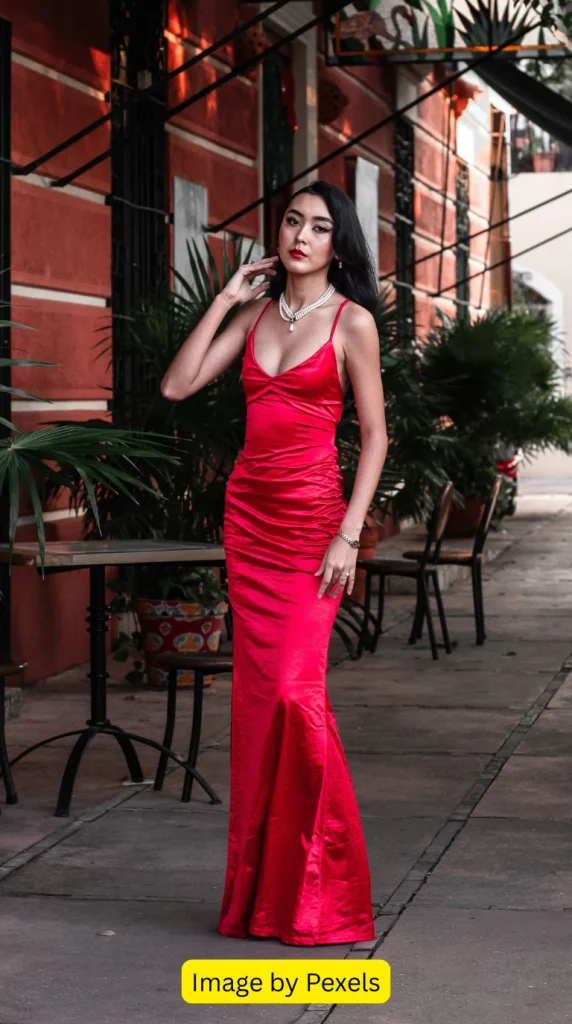
Satin creates a smooth, polished surface and is often associated with elegant eveningwear.
It can be an excellent summer wedding fabric when used in a relatively lightweight construction.
The important distinction is that satin describes a type of weave rather than one specific fiber. Satin garments can be made from different fibers, and their comfort can vary substantially.
A lightweight satin dress can work well for:
- Evening weddings
- Formal receptions
- Black-tie celebrations
- Slip silhouettes
- Bias-cut dresses
For hot weather, pay attention to the fiber content, garment weight, and lining rather than assuming every satin dress will feel cool.
Polyester Chiffon
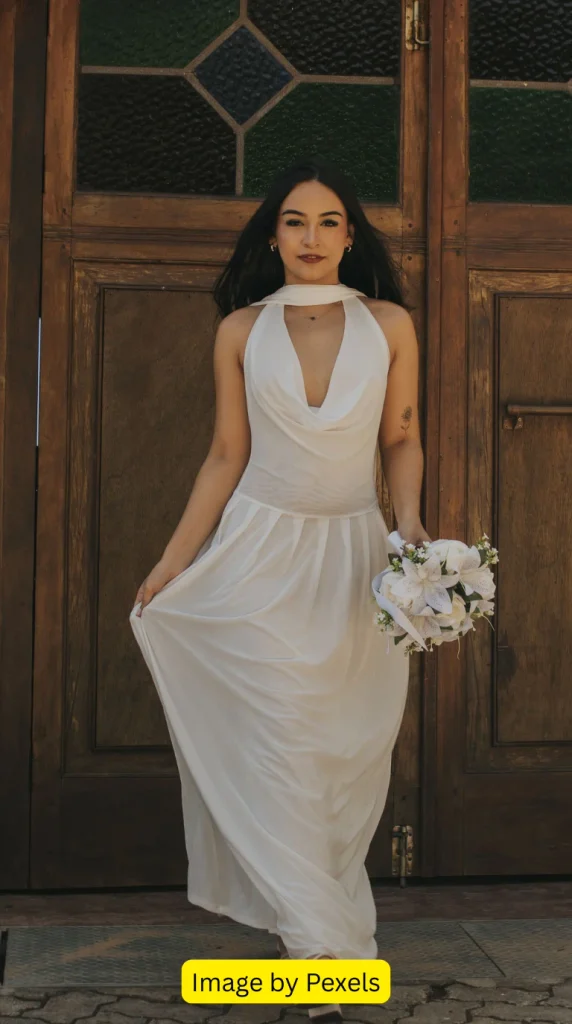
Polyester chiffon deserves separate consideration because it is common in affordable wedding guest dresses.
It can offer the flowing appearance associated with chiffon while generally providing easier care and better wrinkle resistance than some delicate natural-fiber alternatives.
Its performance in heat can vary, however.
A polyester chiffon dress with several thick layers and a heavy synthetic lining may feel much warmer than a simple chiffon garment.
When shopping, evaluate the entire dress rather than the outer fabric alone.
Fabric Comparison: Which Is Best for You?
The “best” summer wedding fabric depends on the conditions you’re expecting.
| If your priority is… | Consider… | Why |
|---|---|---|
| Maximum airflow | Linen blend | Naturally airy construction |
| Formal elegance | Silk | Luxurious appearance and smooth drape |
| Flowing movement | Chiffon | Light, fluid appearance |
| Structured elegance | Lightweight crepe | Streamlined shape |
| Easy care | Polyester chiffon | Generally wrinkle-resistant and practical |
| Crisp volume | Organza | Holds structure beautifully |
| Relaxed comfort | Cotton | Breathable and familiar |
| Sophisticated eveningwear | Lightweight satin | Polished surface and formal appearance |
| Soft textured movement | Georgette | Drapes beautifully while adding texture |
Think of this table as a starting point rather than a strict ranking.
The dress’s lining, construction, fit, and number of layers can change the way any fabric performs.
Fabrics to Be Careful With in Extreme Heat
Some fabrics aren’t inherently “bad” for summer, but certain versions can become uncomfortable in very hot weather.
Heavy velvet
Velvet is luxurious and beautiful for fall and winter celebrations, but heavier velvet can feel unnecessarily warm at an outdoor summer wedding.
Heavy brocade
Brocade can create a dramatic formal appearance, but its dense construction may not be ideal when temperatures are high.
Thick polyester
Not every polyester garment is uncomfortable, but heavy polyester with limited airflow can feel warm and clingy.
Multiple fabric layers
Even a lightweight outer fabric can become hot when combined with several layers of lining, underskirts, padding, or decorative overlays.
Heavy embellishment
Beading and dense embellishment add weight to a dress and can reduce the airy feeling you may want in warm weather.
The goal isn’t to avoid these materials completely. Instead, consider whether the overall garment construction matches the weather.
Does the Lining Matter?
Absolutely.
This is one of the easiest details to overlook when shopping for a summer wedding guest dress.
A dress may have a lightweight outer fabric but still feel warm because of a thick synthetic lining.
For hot-weather weddings, look for:
- Lightweight lining
- Minimal unnecessary layers
- Breathable construction
- Comfortable armholes
- A relaxed or fluid fit
- No excessive padding unless needed for structure
When possible, read the garment’s fiber-content information and examine photographs of the inside construction.
A fabric comparison based only on the outer material can be misleading.
Best Fabrics for Humid Weather
Heat and humidity create different challenges from dry heat.
In humid conditions, clothing can feel clingier because moisture doesn’t evaporate as easily.
For humid weddings, prioritize fabrics and constructions that feel:
- Lightweight
- Airy
- Non-restrictive
- Comfortable against damp skin
- Easy to move in
Chiffon, lightweight silk, breathable linen blends, and suitable cotton fabrics can all be useful depending on the dress code.
Avoid choosing a fabric solely because it is marketed as “summer.” Look at the actual weight and construction of the dress.
Best Fabrics for Outdoor Weddings
Outdoor weddings require you to think beyond the fabric itself.
A dress that works perfectly inside an air-conditioned hotel may feel very different during an outdoor ceremony.
For garden, vineyard, beach, and other outdoor celebrations, consider:
- Temperature — Will you be outside for several hours?
- Humidity — Will moisture make the fabric cling?
- Wind — Could an extremely lightweight skirt become difficult to manage?
- Sun exposure — Will you be standing directly in the sun?
- Venue surface — Will you need to walk across grass, sand, or uneven ground?
- Dress code — Does the fabric still look appropriate for the event?
This is why the best outdoor fabric isn’t always the lightest possible fabric.
For example, a very sheer flowing dress may feel wonderful in the heat but become impractical in strong wind.
Best Fabrics by Wedding Dress Code
Fabric should also support the formality of the invitation.
| Wedding dress code | Fabrics to consider | Overall effect |
|---|---|---|
| Casual | Cotton, linen blends | Relaxed and polished |
| Garden formal | Chiffon, silk, refined crepe | Soft and elegant |
| Cocktail | Chiffon, crepe, satin | Polished and versatile |
| Formal | Silk, crepe, chiffon, satin | Refined and sophisticated |
| Black tie | Silk, chiffon, elegant satin, refined organza | Luxurious and evening-appropriate |
This doesn’t mean one fabric is automatically correct or incorrect for a dress code.
The silhouette, color, length, finish, and styling matter too.
A simple silk dress can look exceptionally formal, while a casual cotton maxi dress may not meet black-tie expectations.
How to Choose the Right Fabric for Your Wedding
Instead of asking only, “What is the coolest fabric?”, work through these questions.
1. Where is the wedding?
An indoor hotel reception may have reliable air conditioning, while a garden or beach ceremony may expose you to heat for several hours.
2. What time is the wedding?
Daytime ceremonies generally require more consideration of direct sunlight and heat.
Evening weddings may be cooler, although outdoor summer temperatures can remain high.
3. What is the dress code?
A fabric that works beautifully for a casual garden wedding may look too relaxed for a black-tie reception.
4. How long will you wear the dress?
If the celebration includes a ceremony, photographs, dinner, and dancing, comfort becomes increasingly important.
5. How does the dress feel against your skin?
Don’t rely entirely on the fabric label.
If possible, try the garment on and sit, walk, and move your arms before deciding.
6. What is the lining made from?
The lining can have as much impact on comfort as the outer fabric.
7. Does the fabric wrinkle easily?
Traveling to a destination wedding makes wrinkle resistance particularly valuable.
How to Make Any Summer Wedding Dress More Comfortable
Fabric choice is only one part of staying comfortable.
The dress’s construction and styling can make a significant difference.
Choose a silhouette that doesn’t cling excessively to the body, particularly if you’ll be outdoors for several hours.
Avoid unnecessary layers when temperatures are high.
Select footwear that you can comfortably wear throughout the ceremony and reception.
If you need a wrap or jacket for an air-conditioned venue, choose a lightweight layer rather than carrying a heavy outer piece throughout the event.
You can also keep accessories streamlined. A lightweight clutch and minimal jewelry can maintain an elegant appearance without adding unnecessary weight.
Common Summer Fabric Mistakes
Choosing by appearance alone
A beautiful fabric isn’t necessarily comfortable in high temperatures.
Ignoring the lining
The outer fabric may be breathable while the lining traps heat.
Assuming “lightweight” means cool
A thin-looking fabric can still feel warm if the garment contains multiple layers.
Choosing an overly casual fabric for a formal wedding
Comfort shouldn’t come at the expense of the dress code.
Forgetting about wrinkles
A fabric that looks perfect at home may require considerable steaming after travel.
Buying without checking the fiber content
Fabric names can describe a construction rather than a specific fiber, so the fiber composition can provide useful additional information.
Frequently Asked Questions
What is the best fabric for a summer wedding guest dress?
There isn’t one universal winner. Chiffon, lightweight silk, georgette, linen blends, cotton, and lightweight crepe can all work well, depending on the weather and dress code.
Is chiffon good for hot weather?
Yes. Chiffon is lightweight and flows easily, making it a popular option for warm-weather wedding guest dresses. Check the lining because multiple layers can reduce its cooling advantage.
Is silk good for summer weddings?
Lightweight silk can be an excellent choice for summer weddings because it combines a luxurious appearance with a smooth, fluid feel. It is particularly suitable for formal and black-tie events.
Is satin too hot for a summer wedding?
Not necessarily. Lightweight satin can work well for summer evening weddings. Since satin can be made from different fibers and weights, check the garment’s composition and construction.
Is linen appropriate for a wedding?
Linen can work very well for relaxed outdoor and daytime weddings, especially in hot climates. For highly formal or black-tie events, a more elevated fabric may be appropriate.
What fabric is best for a humid wedding?
Lightweight, breathable fabrics and loose-fitting constructions are generally more comfortable in humid weather. Chiffon, suitable silk, linen blends, and breathable cotton can all be considered depending on the dress code.
What fabric should I avoid for a hot outdoor wedding?
Consider avoiding very heavy velvet, dense brocade, thick multilayered fabrics, and garments with heavy synthetic lining when temperatures are extremely high.
Does dress color affect how hot it feels?
Color can influence how much sunlight a garment absorbs, but fabric weight, construction, fit, and whether you’re standing in direct sun generally matter more when choosing a wedding guest dress for heat.
Final Thoughts
The best fabric for a summer wedding guest dress is the one that balances comfort, appearance, and the formality of the celebration.
Chiffon is excellent for flowing movement, silk offers refined luxury, linen blends work well for relaxed outdoor settings, lightweight crepe provides structure, and carefully selected satin can create an elegant evening look.
But don’t judge a dress by its fabric name alone.
Pay attention to fiber content, lining, number of layers, garment weight, fit, and the actual conditions you’ll encounter. A lightweight fabric can become surprisingly warm when heavily lined, while a well-constructed dress can remain comfortable even when the material itself isn’t traditionally considered a “cooling” fabric.
When shopping for a hot-weather wedding, think beyond how the dress looks in the mirror. Consider how it will feel after several hours of walking, sitting, photographing, dining, and dancing.
The best summer wedding outfit is one that lets you concentrate on celebrating rather than thinking about the heat.