
Finding the right winter wedding guest dress means balancing three things: a flattering silhouette, seasonal comfort, and the dress code. Cold-weather weddings also give you the opportunity to work with richer fabrics, elegant layers, deeper colors, and more structured shapes than you might choose for a summer celebration.
The most flattering dress is not necessarily the one labeled for a particular body type. What matters more is how the neckline, waist placement, skirt shape, fabric, and length work with the proportions you want to emphasize.
This guide features 18 winter wedding guest dress ideas ranging from velvet gowns and satin wrap dresses to A-line silhouettes, column dresses, and softly draped styles. Each look includes practical styling guidance so you can choose an outfit based on your shape, the wedding dress code, and how warm you need to be.
How to Choose Your Dress
Before choosing a winter wedding guest dress, consider the silhouette first and the trend second.
Think about the areas you naturally like to emphasize. If you enjoy defining your waist, look for wrap dresses, belted silhouettes, or dresses with structured waists. If you prefer a more streamlined appearance, a column or softly draped gown may be a better choice.
Fabric matters just as much during winter. Velvet, heavier satin, crepe, and lined chiffon generally feel more seasonal than very lightweight summer fabrics.
Your invitation should always determine the level of formality. A black-tie wedding usually calls for a floor-length gown or another clearly formal option, while a cocktail or semi-formal celebration gives you more flexibility.
1. Emerald Velvet A-Line
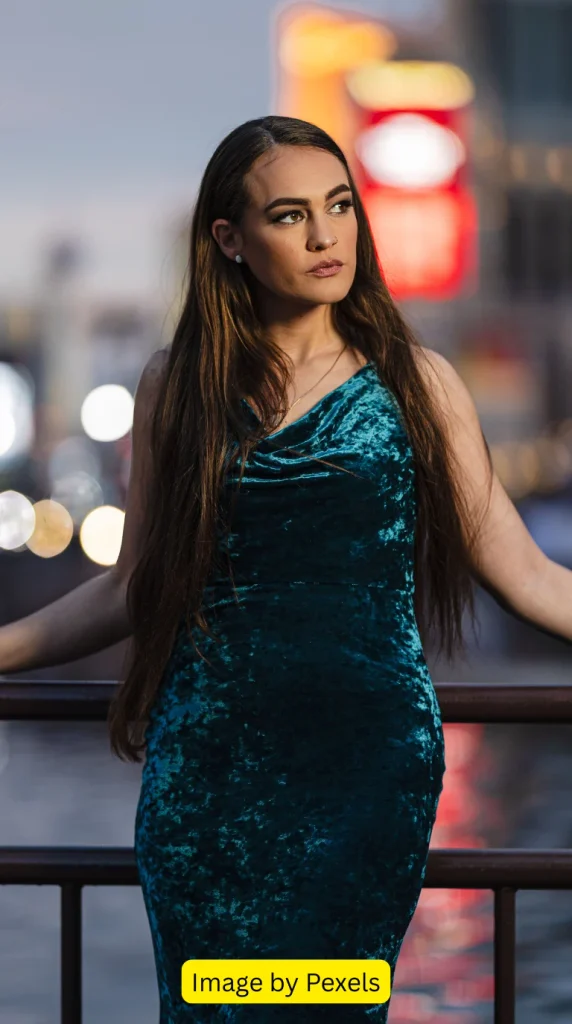
Emerald velvet combines a winter-appropriate fabric with a classic silhouette that works beautifully for formal celebrations.
An A-line skirt gradually widens from the waist, creating a balanced shape without clinging closely to the hips or legs. This makes it a versatile choice if you want definition through the waist while keeping the lower half of the dress relaxed.
Style it with:
- Delicate gold or crystal earrings
- Metallic or black heels
- A structured evening clutch
- A tailored wool coat for outdoor arrivals
The deep green shade also gives you a seasonal alternative to black without becoming overly festive.
2. Satin Wrap Dress
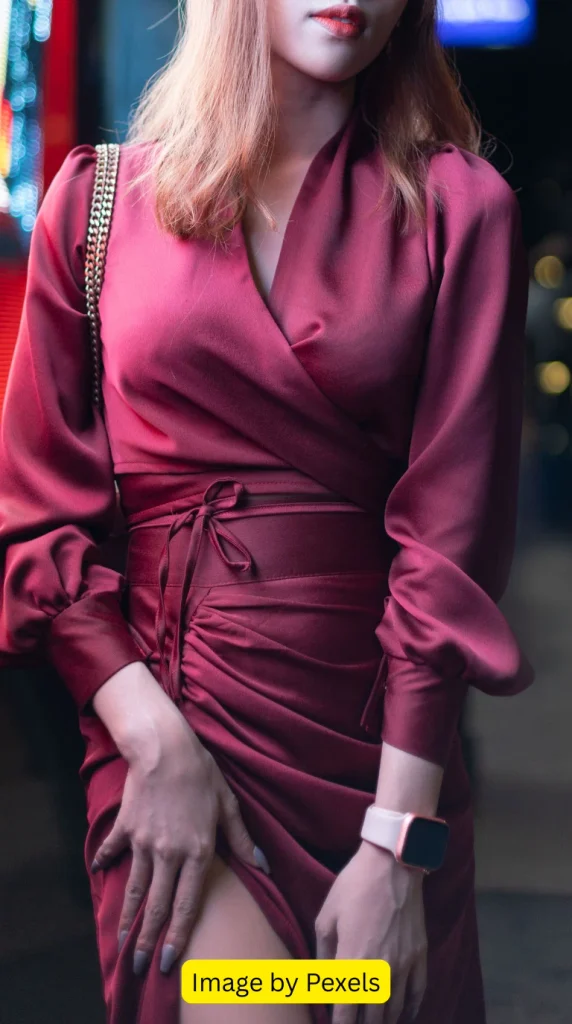
A satin wrap dress is a particularly useful option when you want an adjustable waist and comfortable movement.
The wrap construction allows you to control how closely the bodice fits, while the V-neckline can create a longer visual line through the upper body.
Choose a heavier satin for winter rather than an extremely thin, lightweight version.
Best for: guests who like adjustable waist definition and graceful movement.
Add a long coat, pointed-toe pumps, and simple jewelry for a polished winter wedding outfit.
3. Navy Cape-Sleeve Gown
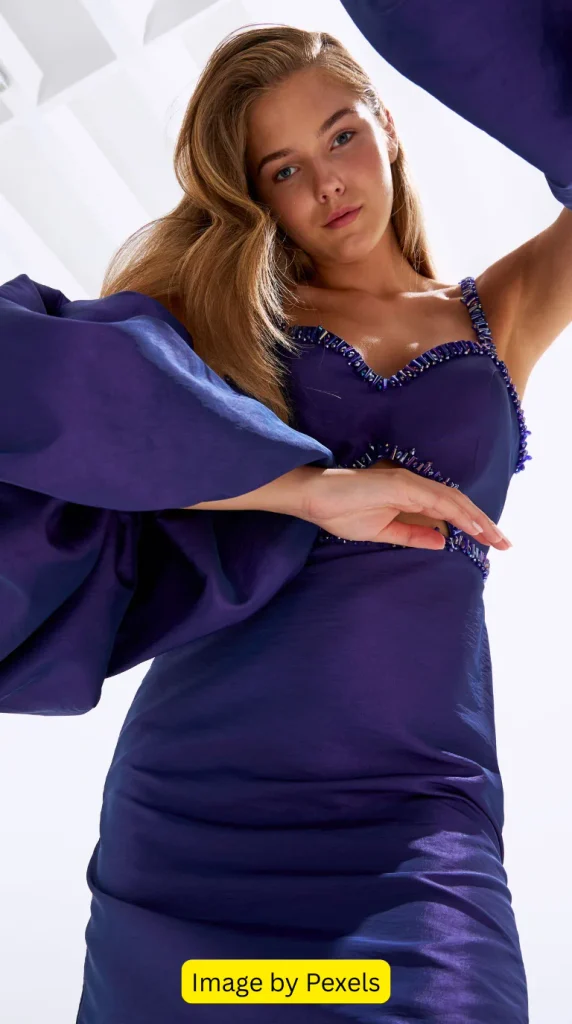
A navy gown with a cape detail offers drama without requiring heavy embellishment.
The vertical shape of a floor-length gown can create a streamlined appearance, while the cape draws attention toward the shoulders and neckline.
This is particularly useful if you prefer to balance a fuller lower half or simply enjoy statement shoulder details.
Keep the accessories understated. Silver earrings and a structured clutch are enough to complete the look.
4. Burgundy Velvet Wrap Gown
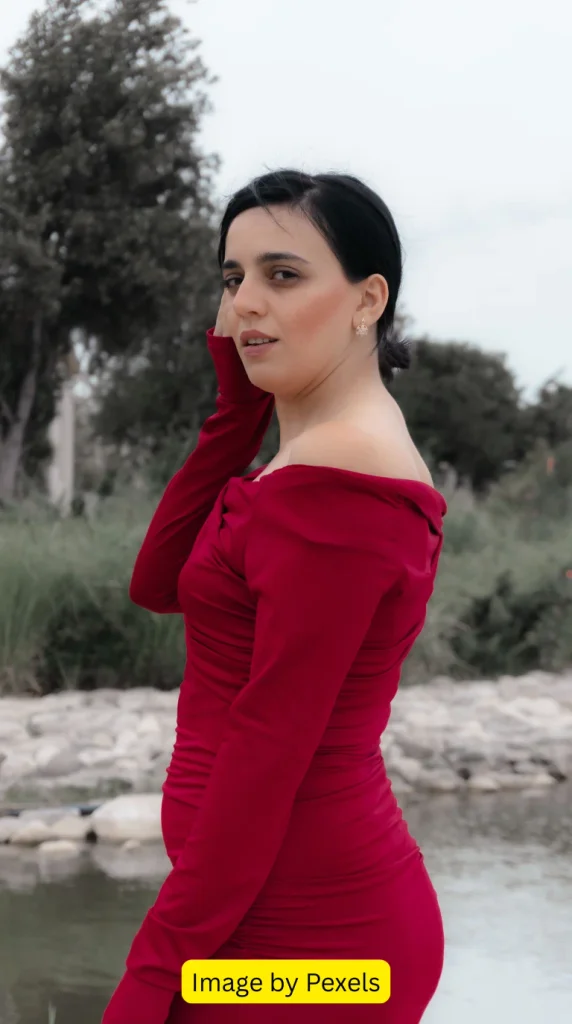
Burgundy and velvet naturally complement the atmosphere of a winter wedding.
A wrap-style or defined-waist velvet gown can create shape through the middle while allowing the skirt to fall naturally.
If you prefer more coverage, look for a long-sleeve version. If the wedding is indoors and the venue is warm, a sleeveless or three-quarter-sleeve design can work just as well.
Pair burgundy velvet with:
- Champagne accessories
- Silver jewelry
- Black pumps
- A simple evening bag
The result feels seasonal without relying on excessive decoration.
5. Black Satin Column Dress
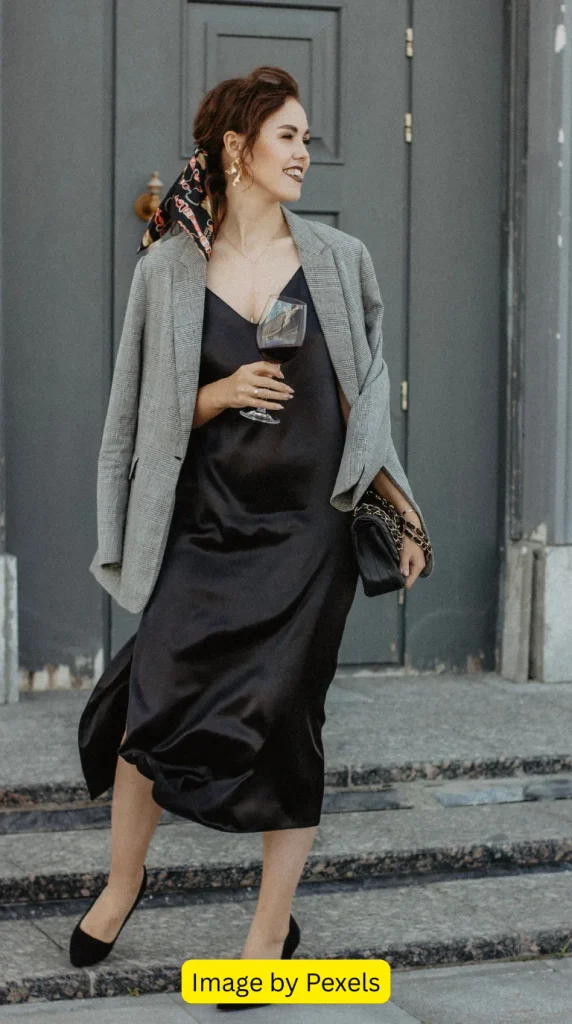
A black satin column dress is one of the simplest choices for a formal winter wedding.
The relatively straight silhouette creates a clean vertical line from the shoulders toward the hem. It works especially well if you prefer minimalist eveningwear rather than a voluminous skirt.
Because the silhouette is simple, fit becomes especially important. Look for a dress that skims the body without pulling or bunching.
Add statement earrings if you want more visual interest, or keep the accessories minimal for a quiet-luxury look.
6. Champagne Draped Gown
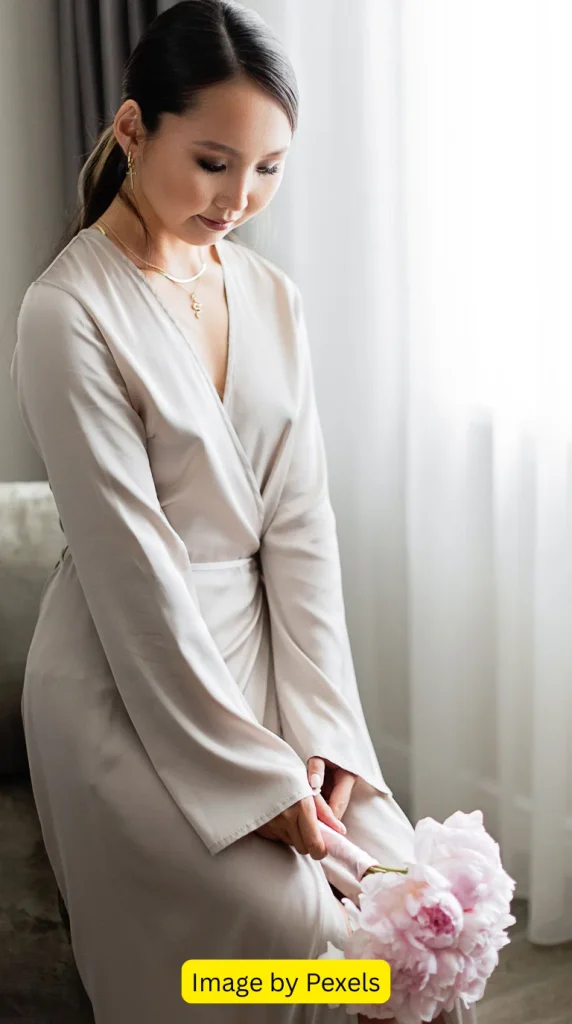
Champagne does not have to be reserved for summer weddings. A heavier satin or draped formal gown can look elegant in a winter ballroom or hotel setting.
A softly draped bodice adds dimension without relying on heavy embellishment. An A-line or gently flowing skirt gives the outfit movement while maintaining a formal appearance.
If you’re concerned about looking too close to the bridal palette, check the invitation and consider choosing a deeper champagne, taupe, bronze, or muted gold instead of a very pale ivory-like shade.
7. Plum Long-Sleeve Satin Dress
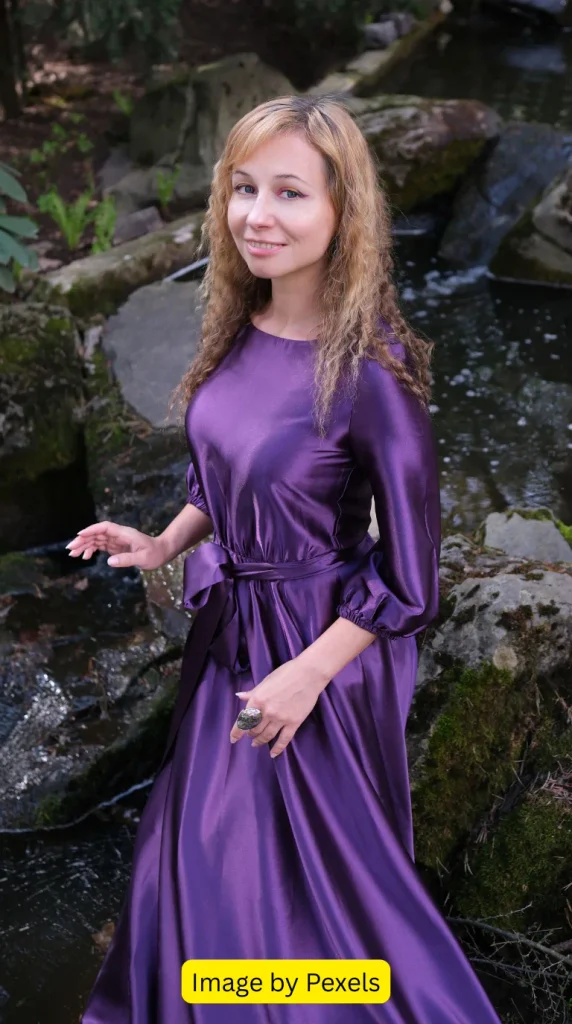
Plum offers the richness of a jewel tone without being as predictable as emerald or burgundy.
A long-sleeve satin dress can provide additional coverage for a cold-weather ceremony while maintaining a polished evening appearance.
Look for details such as:
- A defined waist
- Softly gathered fabric
- A V-neckline
- A gently flared skirt
These details can create shape without requiring a tightly fitted dress.
Silver accessories work particularly well with cooler plum tones, while gold can warm up more reddish versions of the color.
8. Forest Green Fit-and-Flare
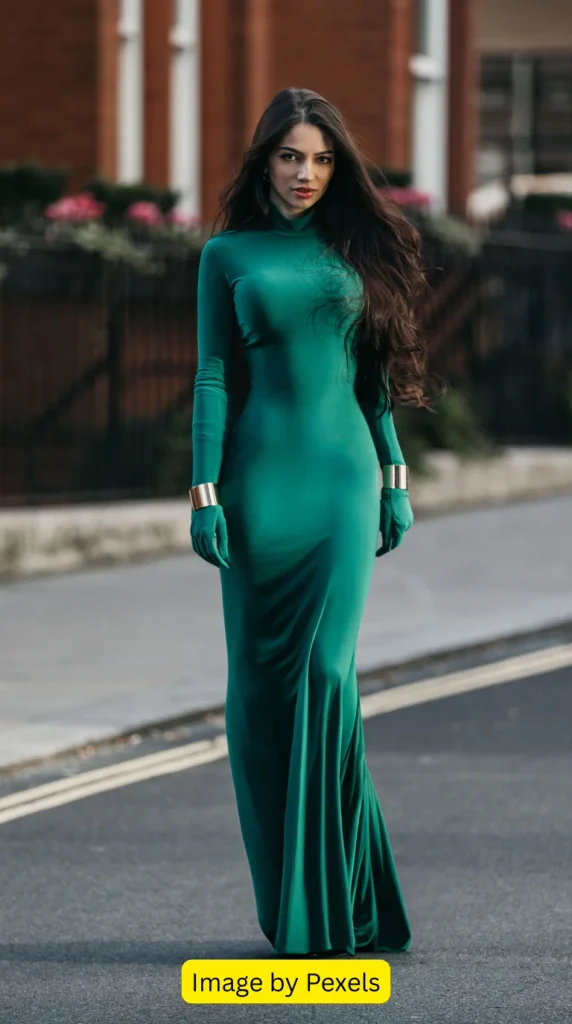
A fit-and-flare silhouette creates definition around the bodice before gradually widening through the skirt.
That combination can be useful when you want to emphasize your waist while keeping the skirt comfortable and mobile.
Forest green velvet makes the silhouette feel especially appropriate for winter.
For a formal evening wedding, pair it with pointed heels, a small clutch, and simple metallic jewelry. A floor-length version can work beautifully for black tie, while a midi version may suit a less formal invitation.
9. Silver Long-Sleeve Gown
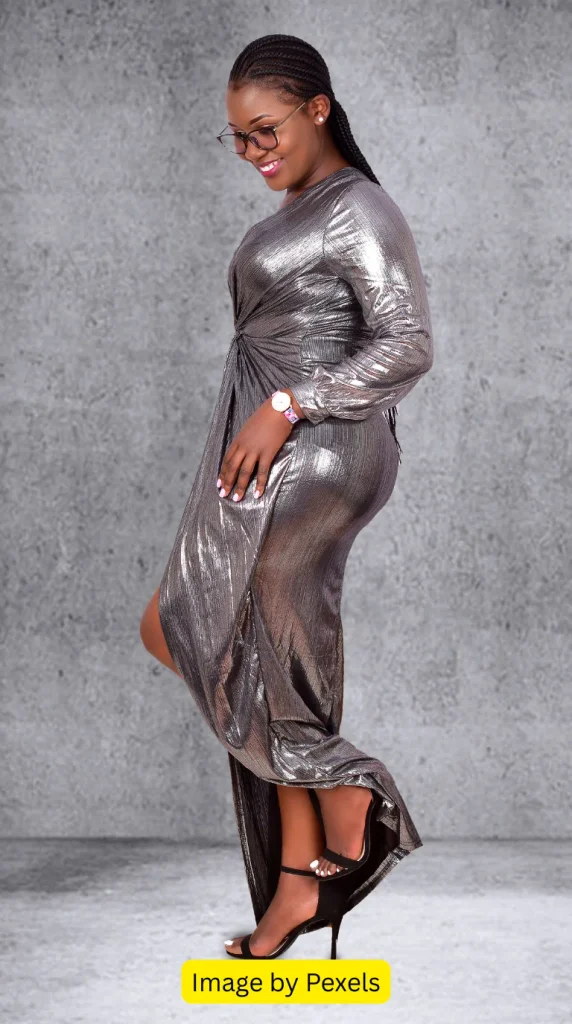
A silver gown can bring evening glamour to a winter celebration, especially when subtle sequins or metallic detailing catch the light.
If you’re attending a formal evening reception, a floor-length design creates a more polished result than an overly short glitter dress.
Long sleeves also make the look more seasonally practical.
Because silver already provides visual impact, avoid adding too many competing accessories. A simple clutch and understated earrings are usually enough.
10. Wine-Colored Off-Shoulder Gown
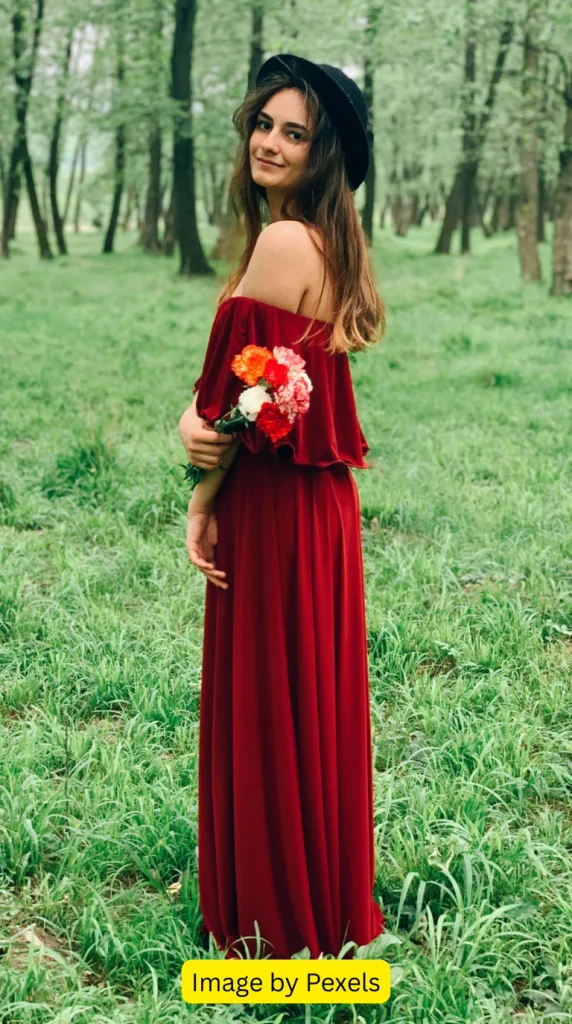
An off-shoulder gown creates an elegant horizontal line across the neckline while the long skirt provides balance.
Wine, oxblood, or deep red shades work especially well during the colder months.
If you love the neckline but need more warmth, consider wearing a sophisticated coat or wrap over the dress rather than trying to add casual layers underneath.
This style works particularly well for guests who want their neckline and shoulders to become the focal point of the outfit.
11. Navy Draped Crepe Dress
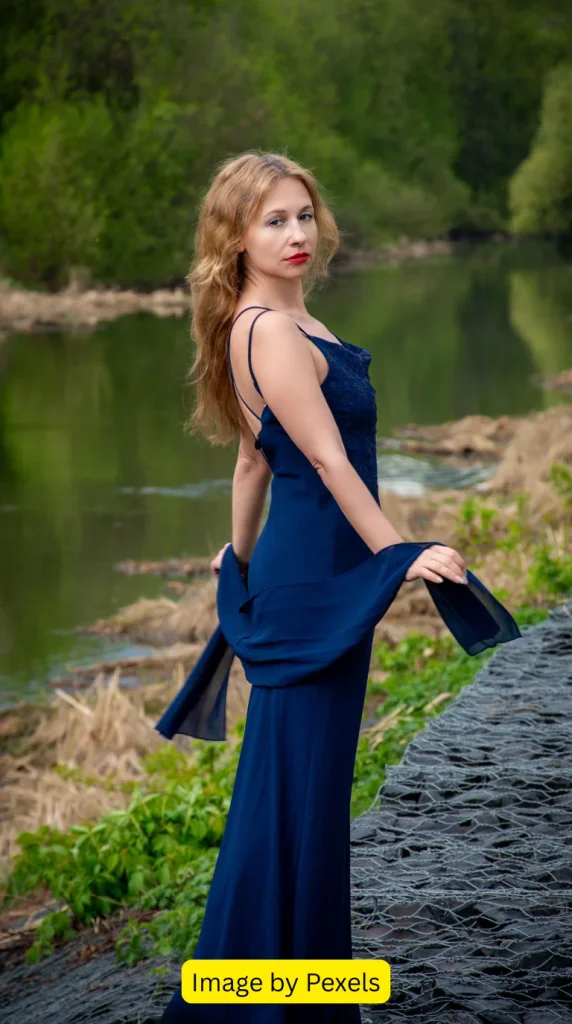
Crepe is an excellent choice when you want a smooth, structured appearance without the shine of satin.
A navy crepe dress with gentle draping can create a sophisticated silhouette while remaining relatively easy to accessorize.
Look for strategic draping around the waist or side rather than excessive gathering across the entire dress.
This can be a particularly appealing option if you prefer clothing that skims rather than tightly hugs the body.
Finish the outfit with silver jewelry, a navy or black clutch, and classic pumps.
12. Blush Satin Dress With Winter Coat
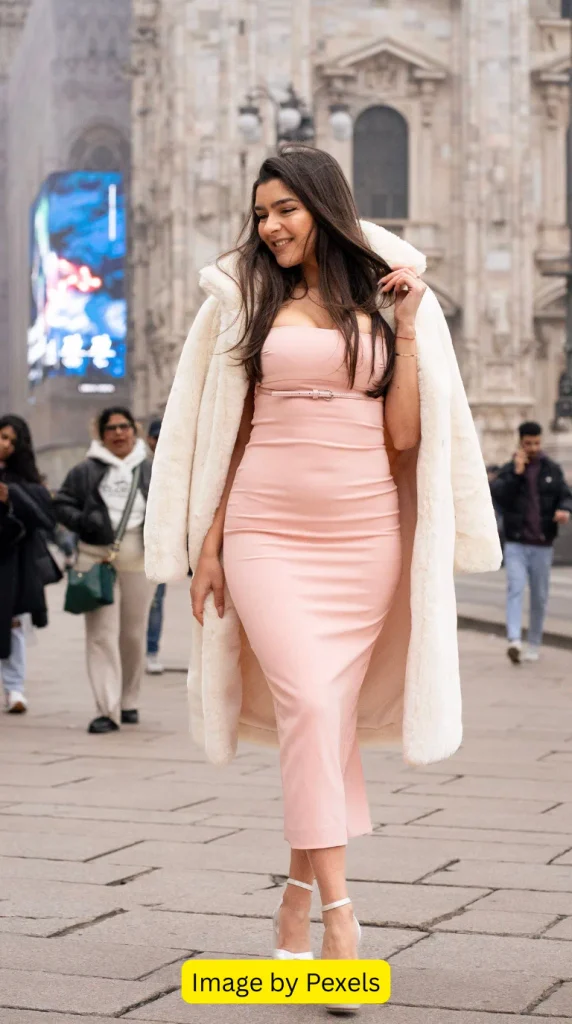
A winter wedding does not automatically require dark colors.
A muted blush satin dress paired with a structured wool coat creates contrast between a delicate dress and a substantial seasonal layer.
If the wedding is formal, choose a floor-length dress and elegant outerwear. For a cocktail celebration, a sophisticated midi can work instead.
Choose a coat that finishes around the same visual length as the dress rather than one that overwhelms the silhouette.
Pearl or crystal jewelry keeps the look soft and formal.
13. Chocolate Brown Velvet Empire Waist
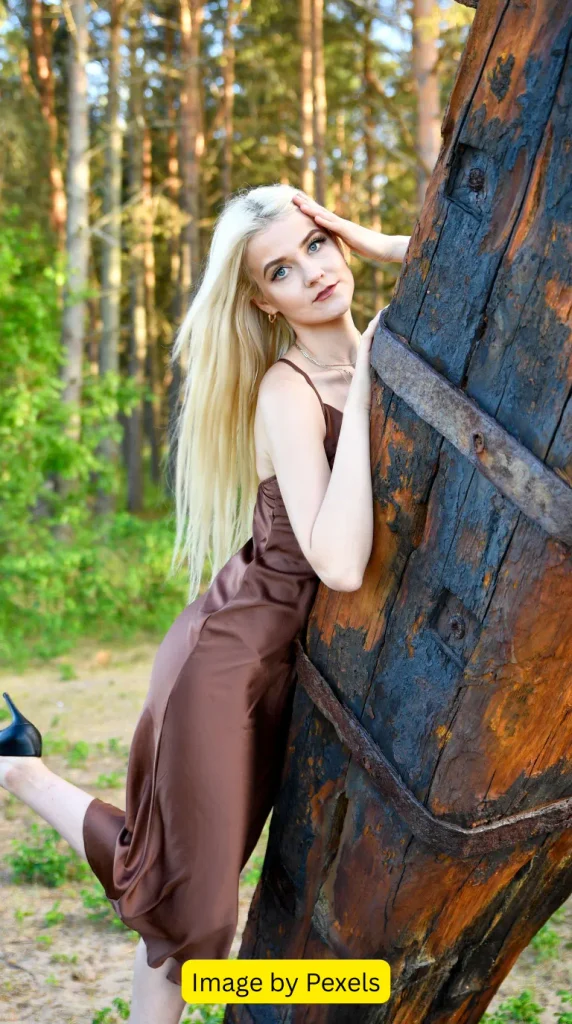
Chocolate brown has become a sophisticated alternative to traditional black and navy.
An empire-waist dress places the waistline higher on the torso, with the skirt flowing downward from beneath the bust.
This can be appealing if you prefer a relaxed fit around the midsection rather than a strongly defined natural waist.
Velvet makes the silhouette feel especially appropriate for winter.
Pair it with gold jewelry and dark brown, bronze, or black accessories for an elegant tonal appearance.
14. Royal Blue Ball Gown
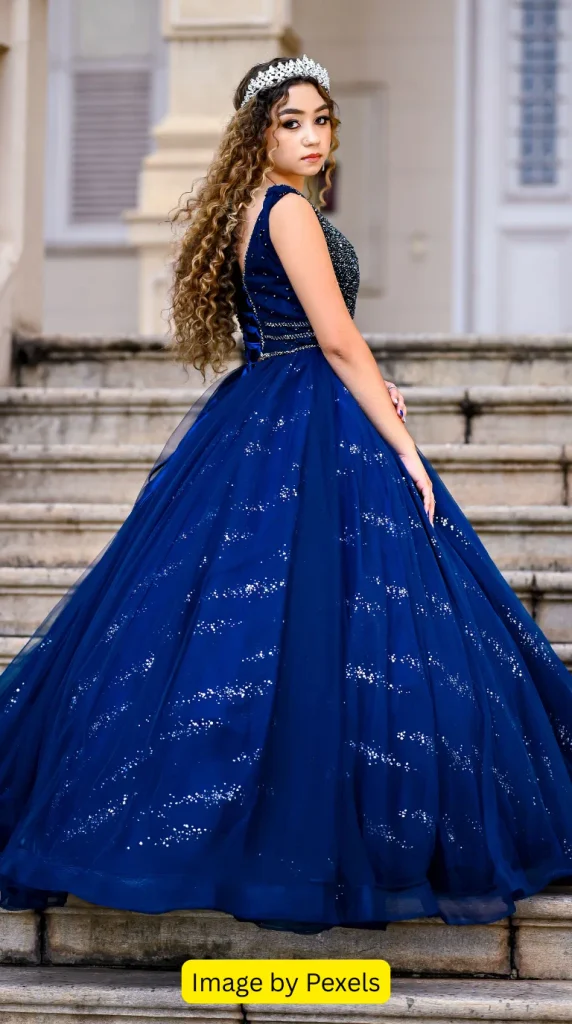
For a particularly formal winter wedding, a royal blue ball gown creates a dramatic evening silhouette.
The fitted bodice and fuller skirt provide strong visual contrast, making this an ideal choice when the invitation calls for black tie or formal attire.
Because the skirt already creates volume, keep the accessories controlled.
A sleek hairstyle, small clutch, and simple earrings allow the color and silhouette to remain the focus.
If you are petite, pay attention to hem length and skirt volume. A dress that requires excessive alterations can overwhelm a smaller frame.
15. Monochrome Charcoal Column
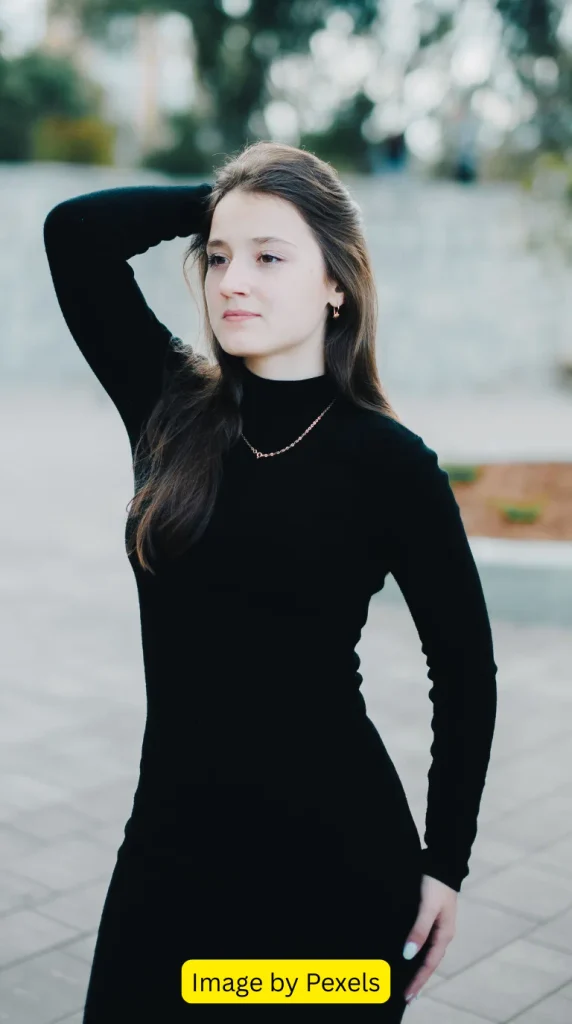
Monochrome dressing can create a polished appearance without relying on bold colors.
A charcoal or deep gray column dress paired with a matching or closely coordinated coat creates an uninterrupted visual palette.
This is especially useful if you prefer understated fashion.
To prevent monochrome styling from looking flat, combine different textures such as crepe, wool, satin, or velvet.
For example, a matte crepe dress with a soft wool coat and metallic accessories creates enough contrast to keep the outfit interesting.
16. Belted Chiffon Maxi
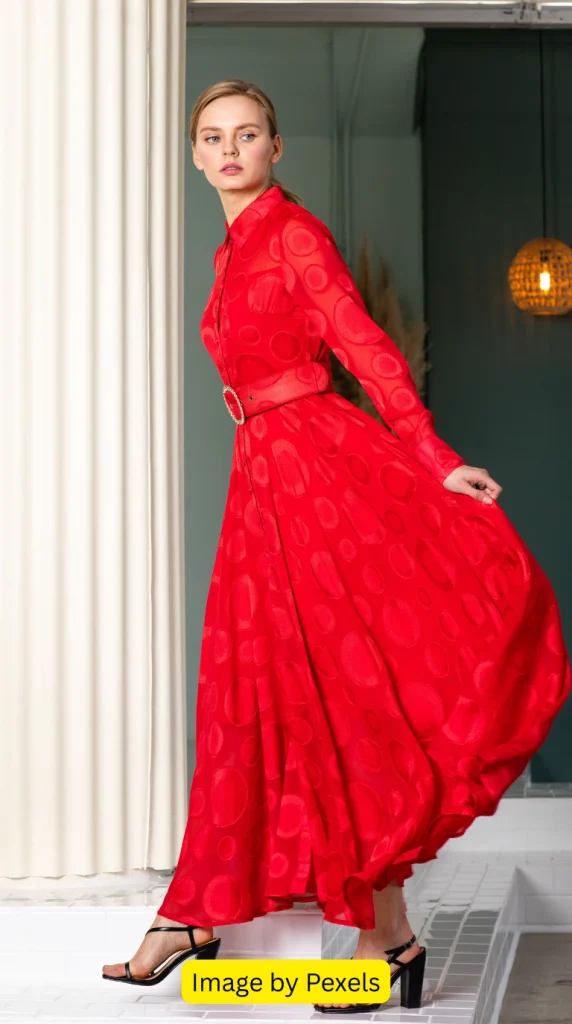
A belted maxi dress can create visible waist definition while maintaining a softer, flowing skirt.
For winter, choose lined chiffon or a heavier layered construction rather than a very lightweight summer version.
The belt does not need to be wide. A narrow, matching belt can create definition without becoming the main feature of the outfit.
Add a long tailored coat for warmth and choose closed-toe heels or elegant pointed flats depending on the venue.
This is a useful option for guests who value movement and comfort during a long reception.
17. Sapphire Velvet Draped Gown
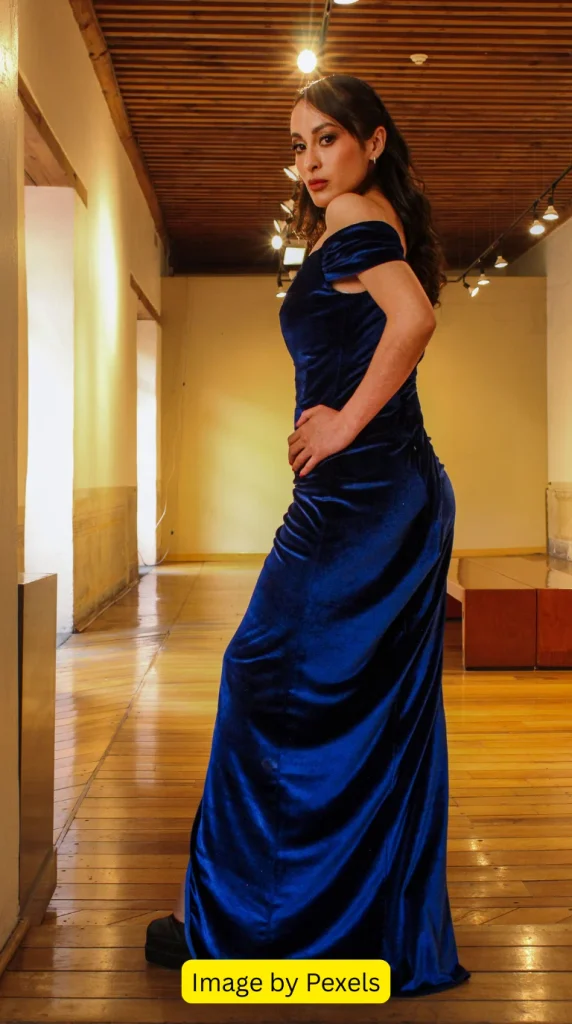
Sapphire blue provides the richness of a jewel tone while remaining distinct from more common burgundy and emerald choices.
A softly draped velvet gown can create visual interest around the neckline while allowing the rest of the silhouette to remain simple.
This style works particularly well for evening weddings where the venue has warm lighting.
Keep the jewelry refined. Silver, crystal, or diamond-inspired pieces complement sapphire without competing with it.
A black or navy wool coat provides practical warmth for the journey to and from the venue.
18. Classic Black Velvet Evening Gown
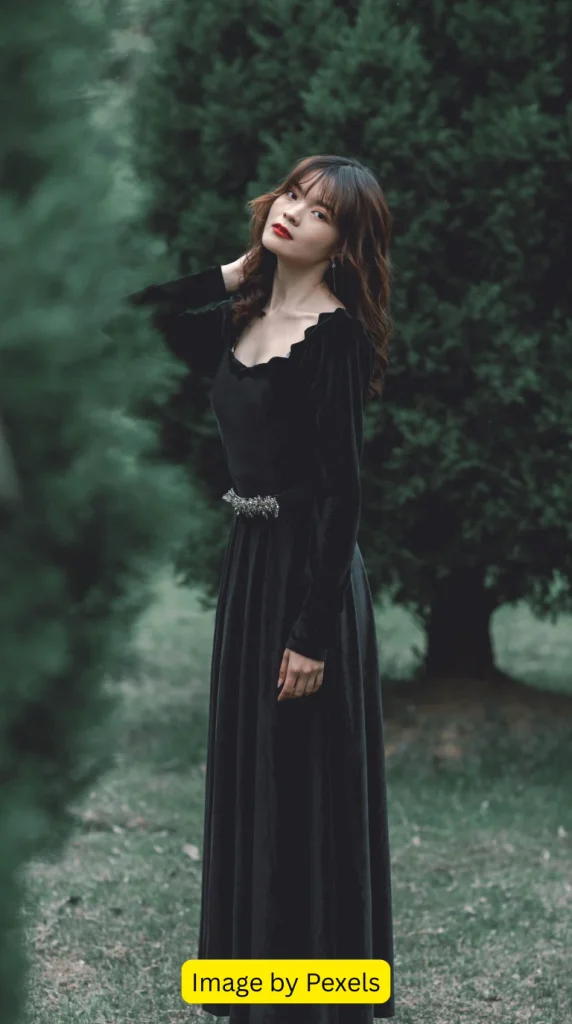
A black velvet gown is one of the most dependable choices for a formal winter wedding.
Rather than relying on a complicated silhouette, look for a dress with one strong feature: a defined waist, elegant neckline, subtle draping, or a beautifully cut skirt.
Velvet provides enough texture that the outfit can remain relatively simple.
For a black-tie wedding, pair the gown with formal heels, a small evening clutch, and refined jewelry. For a less formal celebration, choose a simpler silhouette and reduce the amount of eveningwear-style accessories.
Winter Dresses by Body Shape
Body-shape guidelines should be treated as styling suggestions rather than strict rules. You can wear any silhouette you love.
| If you prefer to… | Consider trying | Why it may appeal to you |
|---|---|---|
| Define the waist | Wrap, belted, fit-and-flare | Creates visible waist definition |
| Balance a fuller lower half | A-line, cape-sleeve, embellished neckline | Adds visual interest higher on the body |
| Minimize attention around the midsection | Empire waist, draped styles, relaxed column | Avoids a tightly defined waist |
| Create more shape | Belted, wrap, fit-and-flare | Adds structure around the waist |
| Create a streamlined look | Column, monochrome, long crepe gown | Builds a clean vertical line |
| Add visual volume | Ball gown, pleated skirt, draped skirt | Creates movement and dimension |
| Emphasize shoulders | Cape, off-shoulder, statement neckline | Draws attention toward the upper body |
The goal is not to hide your body. It is to understand how different design elements change the overall proportions of an outfit.
Best Winter Dress Fabrics
The fabric can make almost as much difference as the silhouette when you’re attending a cold-weather wedding.
Velvet
Velvet is naturally associated with winter formalwear. It adds texture, depth, and warmth while working particularly well in jewel tones and rich neutrals.
Satin
Satin creates elegant movement and a polished finish. For winter, look for lined or heavier satin rather than very thin versions.
Crepe
Crepe has a smooth, sophisticated appearance and tends to hold a structured silhouette well.
Chiffon
Chiffon can work beautifully for winter weddings when it is layered or lined. It is especially useful when you want movement rather than a structured skirt.
Wool-Blend Outerwear
Even the perfect dress can become uncomfortable if you have no plan for getting to the venue. A tailored wool or wool-blend coat can keep the overall outfit elegant while providing substantially more warmth.
How to Stay Warm Without Ruining the Outfit
Winter wedding dressing requires more than choosing a long-sleeve dress.
Consider the complete journey from your home to the venue.
A formal coat is usually more elegant than a casual puffer when arriving at an upscale celebration. If you expect to spend significant time outdoors, choose closed-toe shoes and consider practical footwear for the journey before changing into your formal heels.
For additional warmth, you can also consider:
- A tailored wool coat
- A sophisticated evening wrap
- A cashmere stole
- Lined tights with shorter dresses
- Closed-toe pumps
- Elegant ankle boots for outdoor travel
The important thing is to make the warm layer look intentional rather than like something added at the last minute.
Choose by Wedding Dress Code
Your body-shape preference should come after the invitation’s dress code.
Black Tie
Choose a floor-length gown or another clearly formal evening silhouette. Velvet, satin, crepe, and sophisticated embellishment are all suitable directions.
Formal
A floor-length gown works well, but an elegant midi can sometimes be appropriate depending on the venue and invitation wording.
Cocktail
A polished midi or knee-length dress can work beautifully. Winter fabrics such as velvet and heavier satin can make a shorter dress feel more seasonal.
Semi-Formal
You generally have more flexibility with length and styling. A refined midi paired with elegant shoes and a tailored coat can be enough.
If the invitation gives specific instructions, follow those over general wedding guest fashion rules.
Best Winter Colors for Wedding Guests
Winter gives you plenty of opportunities to move beyond basic black.
| Color | Overall effect | Best paired with |
|---|---|---|
| Emerald | Rich and elegant | Gold or crystal |
| Burgundy | Romantic and seasonal | Silver, champagne, or black |
| Navy | Classic and versatile | Silver or pearls |
| Plum | Sophisticated and distinctive | Silver or crystal |
| Forest green | Deep and understated | Gold |
| Chocolate brown | Warm and modern | Gold or bronze |
| Sapphire | Bold and formal | Silver |
| Charcoal | Minimal and sophisticated | Silver or black |
| Black | Timeless and formal | Crystal, silver, or pearls |
You do not have to choose a traditionally “winter” color, either. Soft blush, champagne, dusty rose, or muted blue can look beautiful when paired with heavier seasonal fabrics and elegant outerwear.
What to Wear Over Your Dress
Your outer layer should complement the dress rather than compete with it.
For a floor-length gown, a long tailored coat usually creates the cleanest silhouette. For a midi dress, a structured coat that finishes around the knee or below can maintain balanced proportions.
An evening wrap is another option when you want something lighter and more decorative.
Avoid throwing a casual everyday jacket over an otherwise formal outfit. Even an inexpensive formal dress can look significantly more polished when paired with appropriate outerwear.
Shoes for a Winter Wedding
Winter weather can make footwear more complicated.
For indoor formal receptions, classic pumps, slingbacks, or elegant evening sandals may work depending on the venue.
If you will walk across snow, ice, wet pavement, or uneven outdoor surfaces, practicality matters more. Consider traveling in weather-appropriate shoes and changing into formal footwear when you arrive.
For shorter dresses, pointed-toe pumps can create a longer visual line. With floor-length gowns, the shoe is less visible, so comfort becomes especially important.
Accessories That Complete the Look
Accessories should support the dress rather than compete with it.
If the dress has a dramatic neckline, keep the necklace simple or skip it entirely. If the dress is minimalist, statement earrings can add enough interest without changing the character of the outfit.
Useful winter wedding accessories include:
- Crystal earrings
- Pearl jewelry
- Structured evening clutches
- Metallic shoes
- Satin wraps
- Cashmere stoles
- Delicate bracelets
The best combination usually includes one main statement rather than several competing ones.
A Simple Winter Wedding Outfit Formula
If you’re still unsure what to wear, start with this formula:
Dress + appropriate winter fabric + elegant coat + comfortable formal shoes + simple jewelry + small clutch
Then adjust the silhouette based on what you want from the outfit.
Choose a wrap or belted waist if you like definition. Choose an A-line if you prefer a forgiving skirt. Choose a column dress if you love a streamlined appearance. Choose velvet if warmth and texture matter most.
There is no single “correct” body shape for any of these styles.
Final Thoughts
The best winter wedding guest dress is one that works with both the occasion and the way you want to feel in it.
Start with the dress code, then consider silhouette, fabric, warmth, and color. A velvet A-line, satin wrap dress, flowing empire waist, structured column gown, or classic black velvet dress can all be beautiful choices when the proportions and styling suit your preferences.
Instead of asking which dress is supposed to flatter your body shape, ask a more useful question: Which features of this dress make me feel most comfortable and confident?
That approach gives you far more freedom to choose an outfit that feels elegant, practical, and genuinely like you.