
When a wedding invitation says Black Tie, you do not need to chase every new fashion trend to create an appropriate outfit.
The most reliable approach is to build your look around a few dependable elements: a formal silhouette, an elevated fabric, a good fit, refined shoes, a compact evening bag, and accessories that complement rather than compete with the dress.
This guide is for those moments when you know the dress code but still find yourself asking, “What actually works?”
Start With the Dress

For traditional evening black tie, a floor-length gown is the most straightforward starting point.
You do not need an elaborate ball gown. A simple column dress, elegant A-line gown, flowing silhouette, or refined sheath can look formal when the fabric, construction, and fit are appropriate.
If the event allows more flexibility, a sophisticated formal midi may also work. However, when the invitation clearly calls for traditional black tie, a floor-length silhouette creates the least ambiguity.
The goal is not maximum drama. It is a dress that immediately looks intentional and appropriate for an evening formal celebration.
Choose an Elevated Fabric
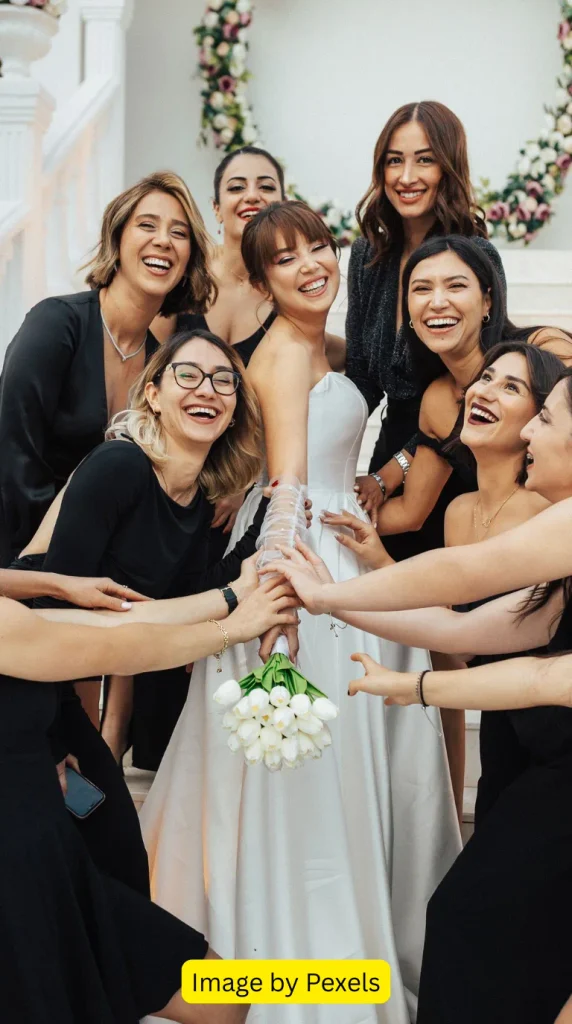
Fabric can change the entire appearance of a dress.
Look for materials with an elegant drape, refined texture, or subtle sheen. Satin, silk, velvet, crepe, and chiffon are common choices for formalwear, although the best option depends on the season and setting.
A simple dress in a beautiful fabric can look more polished than an elaborate design made from a visibly casual material.
When choosing between two similar dresses, examine:
- How the fabric falls
- Whether it holds its shape
- How it looks under evening lighting
- Whether it suits the season
- Whether it complements the dress silhouette
The fabric should support the dress rather than overwhelm it.
Keep the Shape Refined
A formal dress does not need excessive embellishment.
Clean construction, graceful draping, a defined waist, an elegant neckline, or a well-proportioned silhouette can create enough visual interest on their own.
This is especially useful if you want an outfit that can be worn to more than one formal occasion.
Instead of asking whether a dress has enough decoration, ask:
Does the overall shape look polished without needing extra styling to make it feel special?
If yes, you already have a strong foundation.
Prioritize the Fit
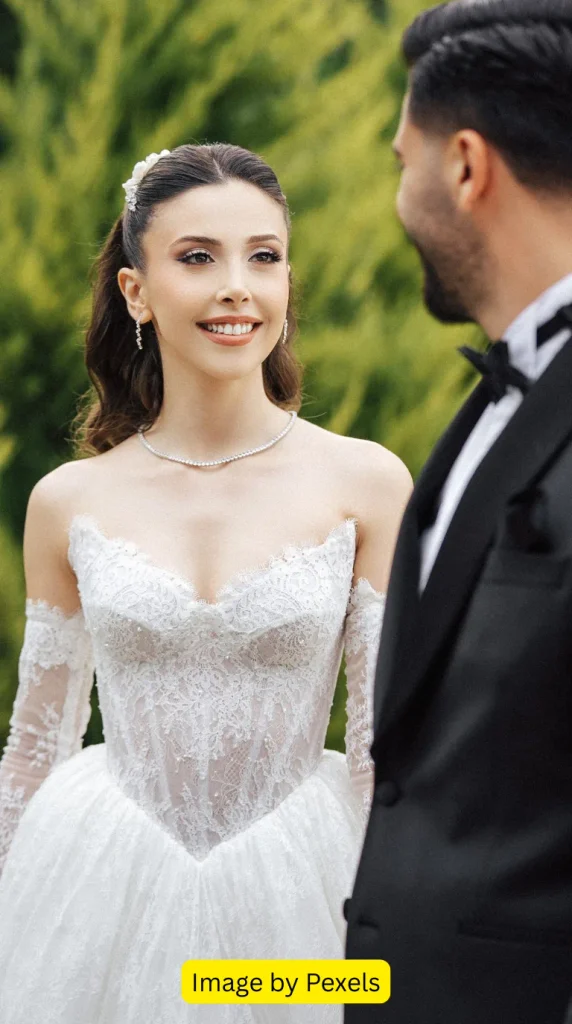
A well-fitting dress can make a major difference to the finished outfit.
Before the wedding, check:
- Does the neckline stay in place?
- Are the straps secure?
- Does the waist sit correctly?
- Is the hem the right length for your shoes?
- Can you sit comfortably?
- Can you walk without adjusting the dress?
- Can you raise your arms and move naturally?
If the dress is almost right but needs minor adjustments, alterations may improve the final appearance considerably.
Try the Movement Test
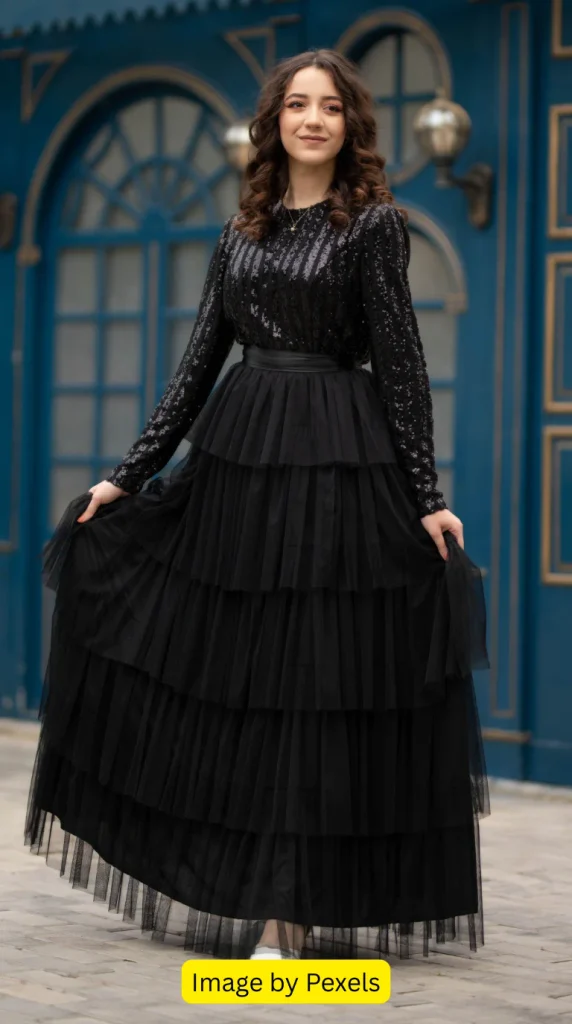
Do not test your dress only while standing in front of a mirror.
Wear the complete outfit and:
- Walk normally.
- Sit down.
- Walk up and down stairs.
- Raise your arms.
- Turn and move naturally.
- Sit for several minutes.
- Check the hem with your actual shoes.
A beautiful outfit still needs to function during a real wedding.
Match the Accessories to the Dress
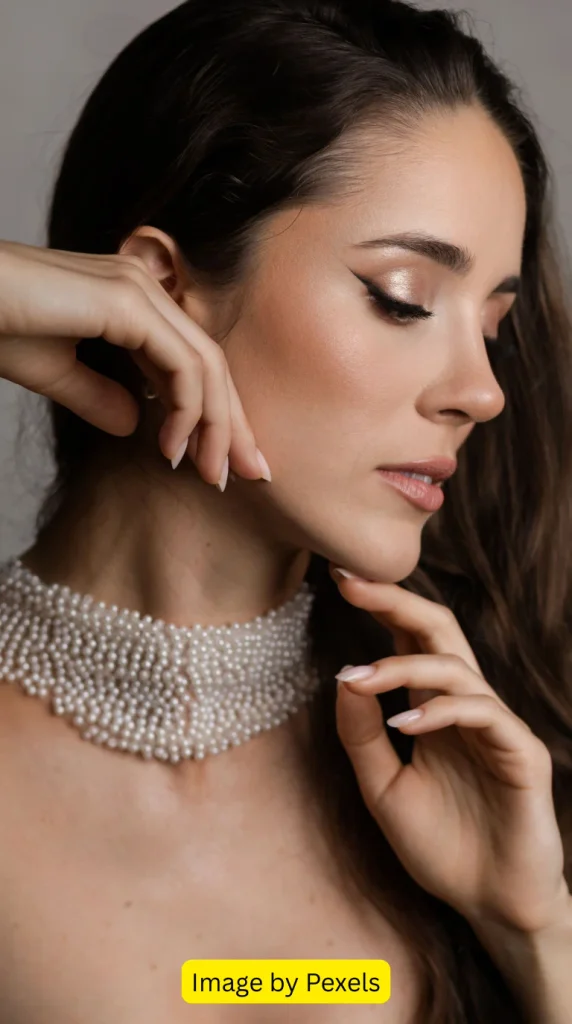
Accessories should finish the outfit rather than compete with it.
A reliable combination can include:
- Elegant earrings
- A refined bracelet
- A compact clutch
- Formal shoes
- One intentional statement piece
You do not need all of these at once.
If the dress has heavy embellishment, keep the jewelry restrained. If the dress is minimalist, a striking pair of earrings or an elegant clutch can provide the focal point.
Use One Main Statement
If you are unsure whether your accessories are becoming excessive, choose one main statement element.
For example:
Statement earrings + simple bracelet
or
Embellished dress + delicate jewelry
or
Minimalist gown + striking clutch
This keeps the outfit visually coordinated.
Choose Formal Shoes You Can Actually Wear
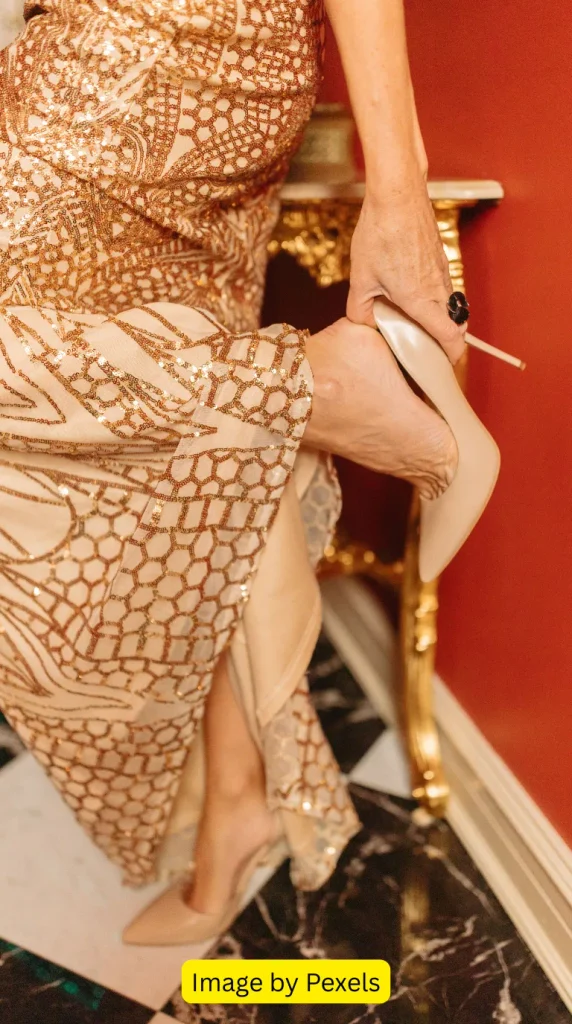
Shoes should look appropriate for the dress while remaining practical enough for several hours of walking, standing, and dancing.
Elegant pumps, refined sandals, pointed-toe heels, and sophisticated block heels can all work depending on the outfit and venue.
Before the wedding, consider:
- Heel height
- Stability
- Comfort
- Strap placement
- Venue surface
- Amount of walking
- Dress hem length
A beautiful shoe that becomes painful after thirty minutes is not a particularly useful wedding shoe.
Carry a Small
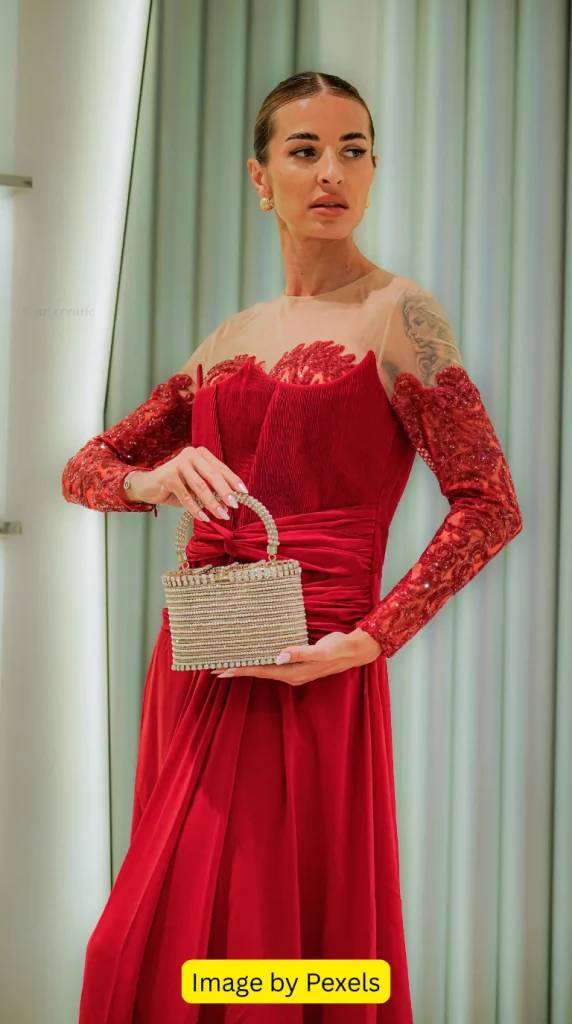
A large everyday tote usually does not complement a formal black-tie outfit.
A compact clutch or structured evening bag is generally easier to coordinate with formalwear.
Choose something large enough for your essentials without becoming bulky.
Useful options include:
- Satin clutch
- Metallic evening bag
- Small structured bag
- Minimalist box clutch
- Refined small shoulder bag
Treat the handbag as part of the outfit rather than an afterthought.
Use Metallic Carefully
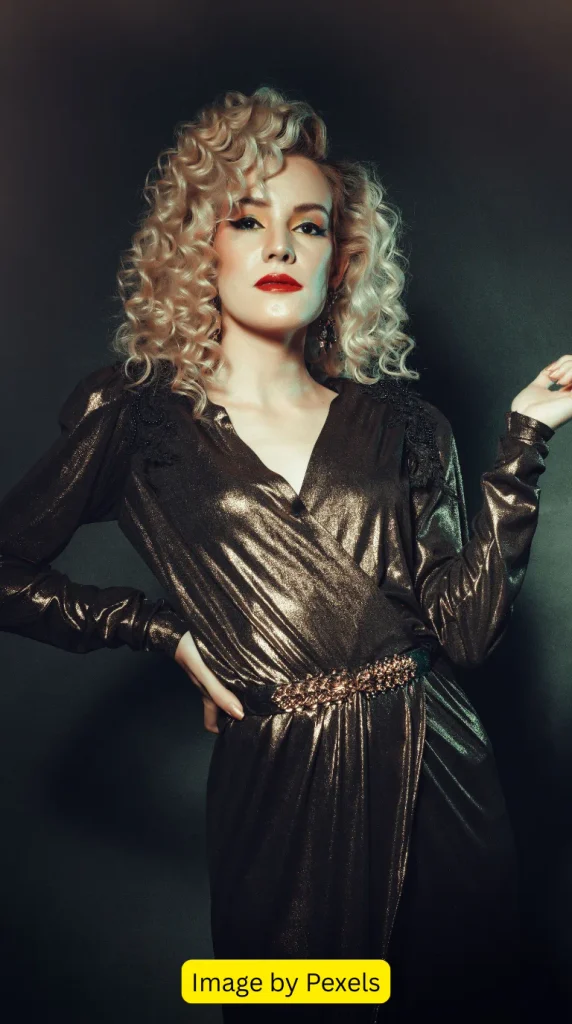
Gold, silver, champagne, and other understated metallic finishes can add polish without introducing another dominant color.
You can coordinate them with the dress rather than matching every piece exactly.
For example:
Navy dress + silver earrings + silver clutch
Emerald dress + gold earrings + neutral evening bag
Black gown + mixed metallic jewelry + simple clutch
The important thing is that the accessories look intentionally connected.
Build Around One Style Direction
A polished outfit usually has a clear visual direction.
For example:
Classic: floor-length gown + refined earrings + structured clutch
Modern: sleek gown + geometric jewelry + pointed heels
Romantic: flowing dress + delicate jewelry + soft waves
Minimalist: clean silhouette + understated jewelry + simple heels
You can still personalize the outfit, but avoiding too many competing aesthetics helps the final look feel cohesive.
Do Not Confuse Expensive With Elegant
A high price does not automatically make a dress look polished.
Fit, proportions, fabric, tailoring, and styling are often more noticeable than the label.
If you are shopping on a budget, prioritize:
- Good fit
- Clean construction
- Appropriate fabric
- Proper alterations
- Polished shoes
- A refined bag
- Coordinated accessories
A reasonably priced dress that fits beautifully can create a more finished appearance than an expensive dress that requires constant adjustment.
Complete the Outfit Before the Wedding
Do not wait until the day of the wedding to discover that your shoes, jewelry, handbag, and outer layer do not work together.
Put everything together beforehand:
Dress + undergarments + shoes + jewelry + handbag + outer layer
Then check the complete look from several angles.
Look for:
- Uneven proportions
- Visible undergarments
- A distracting accessory
- A hem that is too long
- Jewelry competing with the neckline
- Shoes that do not work with the dress
- An outer layer that clashes with the outfit
Fixing these details in advance makes the actual wedding day much easier.
Prepare for the Real Event
A formal outfit also needs to work in the conditions where you will actually wear it.
Think about:
- Weather
- Temperature
- Walking distance
- Outdoor areas
- Transportation
- Venue flooring
- Need for an outer layer
For example, a floor-length gown may be beautiful for a ballroom reception but require different footwear or an elegant wrap for an outdoor venue.
The dress code establishes the level of formality. Practical details determine how comfortably you can carry it out.
Keep a Small Emergency Kit
A few simple items can save an otherwise stressful evening.
Consider carrying:
- Fashion tape
- Safety pins
- Small sewing kit
- Blister protection
- Compact stain-removal option
- Small cosmetic essentials
You do not need a large emergency bag. A few carefully chosen items are enough.
The Reliable Black Tie Formula
If you are overwhelmed by choices, start with this simple formula:
Floor-length gown + elevated fabric + refined shoes + compact evening bag + coordinated jewelry + polished styling
Then personalize it through:
- Color
- Neckline
- Texture
- One statement accessory
- Hairstyle
This gives you a dependable foundation without requiring an overly complicated outfit.
Quick Checklist
Before leaving for the wedding, ask:
- Does my dress match the stated dress code?
- Does the fabric look formal enough?
- Does the dress fit correctly?
- Can I move comfortably?
- Are my shoes appropriate and wearable?
- Does my handbag suit the outfit?
- Are my accessories coordinated?
- Does my outer layer work with the dress?
- Have I tested the complete outfit?
- Does the overall look feel cohesive?
If the answer is yes, you have covered the elements that matter most.
Final Takeaway
A reliable black-tie wedding guest outfit does not need to be complicated.
Start with a formal dress that fits well. Choose an elevated fabric and refined silhouette. Add shoes and a small evening bag that suit the occasion, then use accessories to complement the dress rather than overwhelm it.
Most importantly, evaluate the complete outfit, not individual pieces in isolation.
When the dress, shoes, accessories, fit, and practical details all work together, you can create a polished black-tie look without relying on excessive embellishment or constantly changing trends.