
A champagne wedding dress can create a softer alternative to traditional black or darker formalwear, but choosing the right style involves more than picking a beautiful color. The silhouette, neckline, fabric, length, and amount of structure can change how the dress fits and feels.
For wedding guests, champagne also requires a little extra consideration. Some champagne shades are very close to ivory or bridal white, particularly under bright photography or evening lighting. Before wearing one, check the invitation and, when appropriate, the couple’s preferences. A deeper champagne or a dress with clearly evening or guest-oriented styling can make the distinction more obvious.
The good news is that champagne works across a wide range of silhouettes. An A-line gown can provide easy movement, a wrap dress can define the waist, a column gown can create a streamlined profile, and a flowing chiffon style can feel especially comfortable for outdoor celebrations.
Rather than following strict body-shape rules, use these ideas to identify the features you want from your dress—whether that’s waist definition, more coverage, movement, structure, or a long streamlined line.
Champagne A-Line Gown
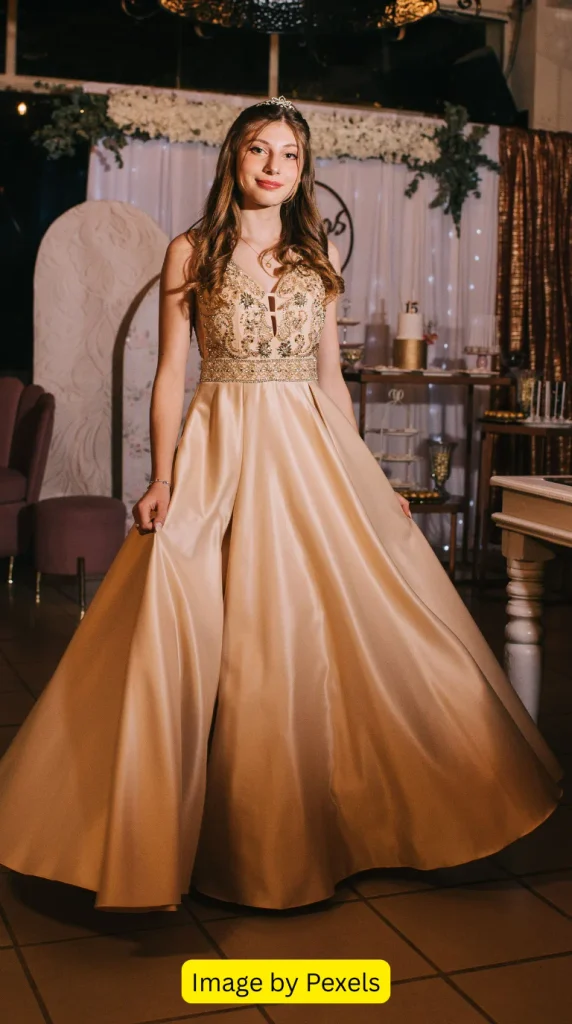
An A-line silhouette is fitted through the upper body and gradually widens toward the hem.
This shape can work well when you want some waist definition without a skirt that closely follows the hips. The gentle flare also makes walking and sitting comfortable during a long celebration.
For a formal evening wedding, choose a floor-length champagne gown with refined tailoring. For a less formal event, a midi or tea-length version can feel lighter.
Pair the gown with metallic or nude heels and simple earrings to keep the overall look balanced.
Champagne Wrap Dress
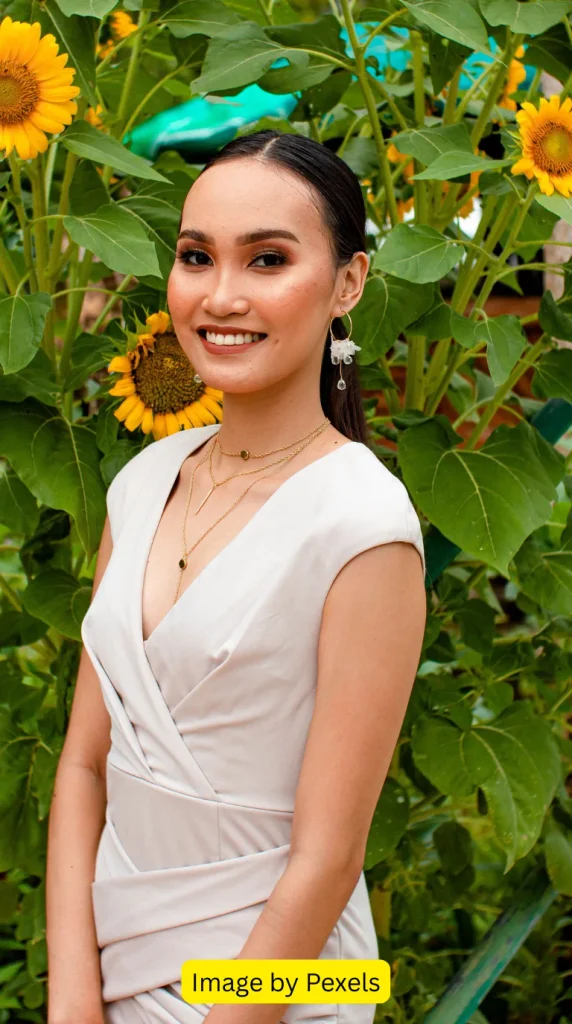
A wrap silhouette creates adjustable definition around the waist while allowing the skirt to move freely.
The V-shaped neckline can create an open vertical line, while the adjustable waist makes the style practical when you’ll be wearing the dress for several hours.
A champagne wrap dress works particularly well for semi-formal and daytime weddings. For a more formal invitation, choose a floor-length version in crepe, satin, or another elevated fabric.
Champagne Satin Gown
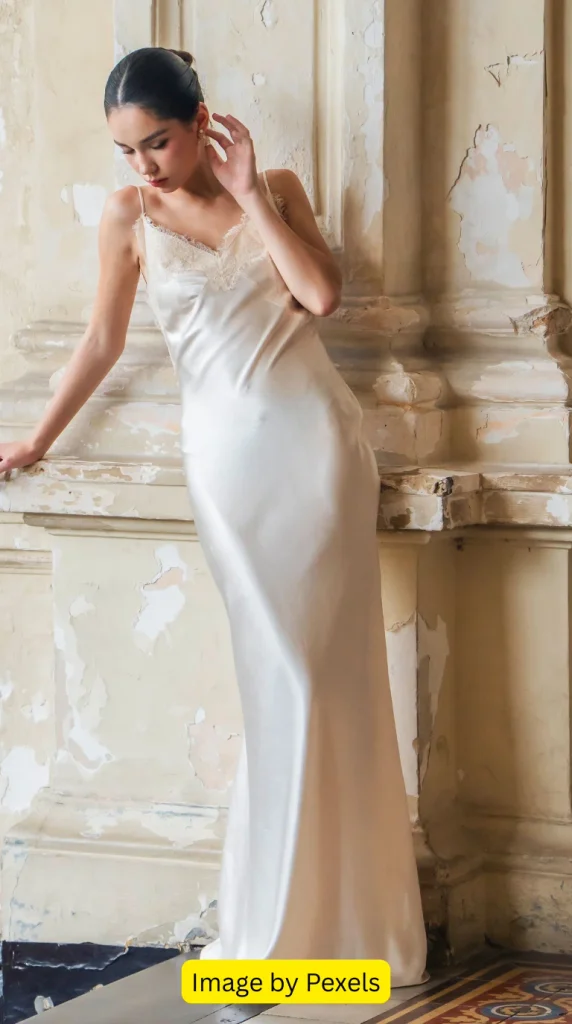
Satin gives champagne a smooth, luminous finish that works especially well for evening weddings.
A simple floor-length gown can look polished without extensive embellishment. Choose a silhouette based on the shape and amount of structure you prefer rather than adding decoration simply for the sake of it.
If satin is your favorite fabric, our guide to 18 Satin Wedding Dress Ideas That Look Expensive has more inspiration for satin silhouettes and styling.
For accessories, gold can emphasize the warmth of champagne, while silver or crystal creates a cooler contrast.
Champagne Empire-Waist Dress
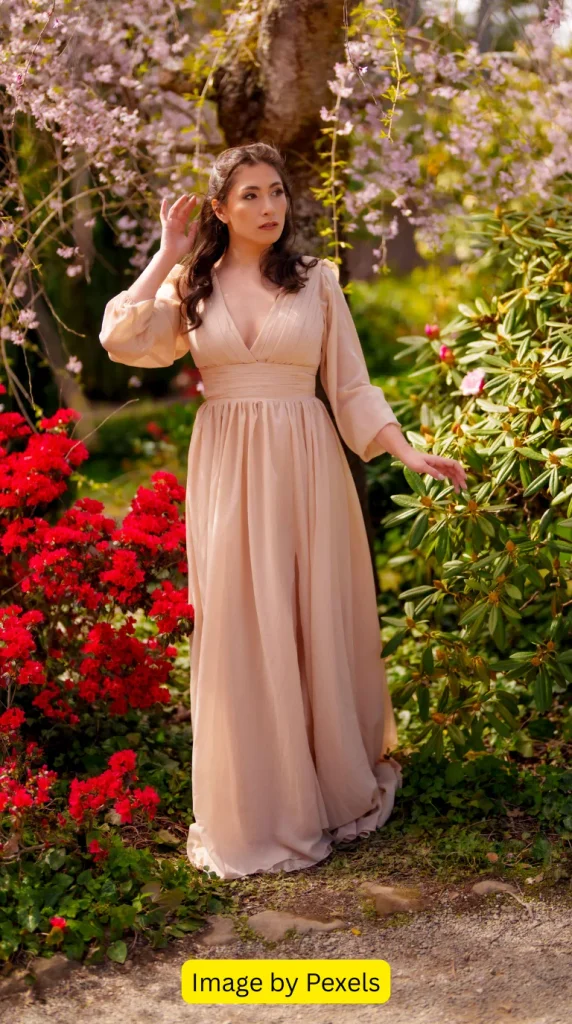
An empire waist sits above the natural waist and allows the skirt to fall freely.
This can be a comfortable choice if you prefer less structure around the midsection or want a flowing silhouette. Chiffon and lightweight fabrics can make the style especially suitable for outdoor weddings.
A floor-length empire-waist gown feels more formal than a shorter version and can be paired with delicate jewelry and simple heels.
Champagne Column Gown
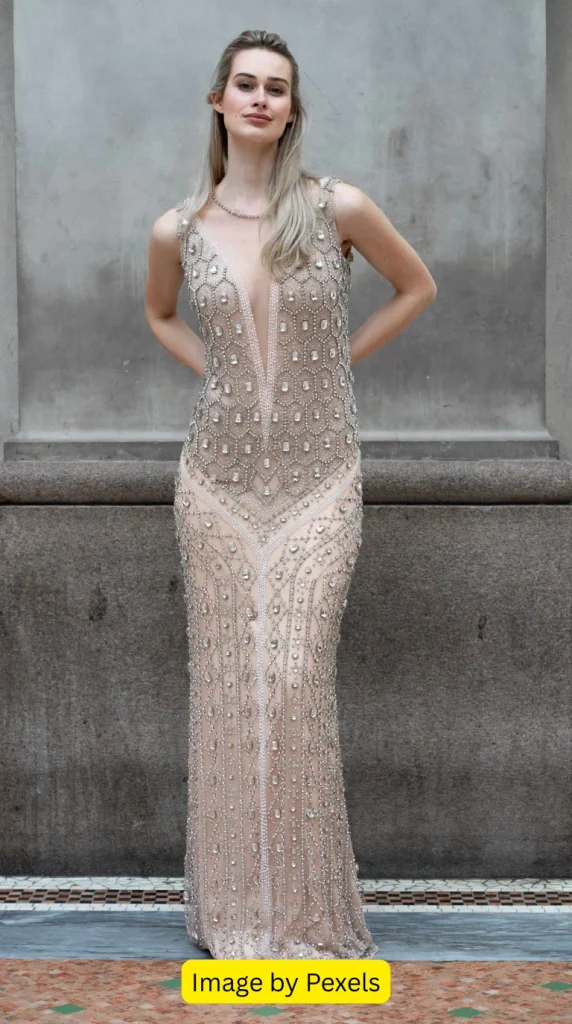
A column gown creates a relatively straight, streamlined line from the bodice toward the hem.
This is a useful option if you prefer a minimalist appearance or don’t want the volume of a ball gown or full A-line skirt.
Crepe can give the silhouette a clean matte finish, while satin adds more light reflection.
Keep accessories streamlined to maintain the modern character of the dress.
Champagne Mermaid Dress
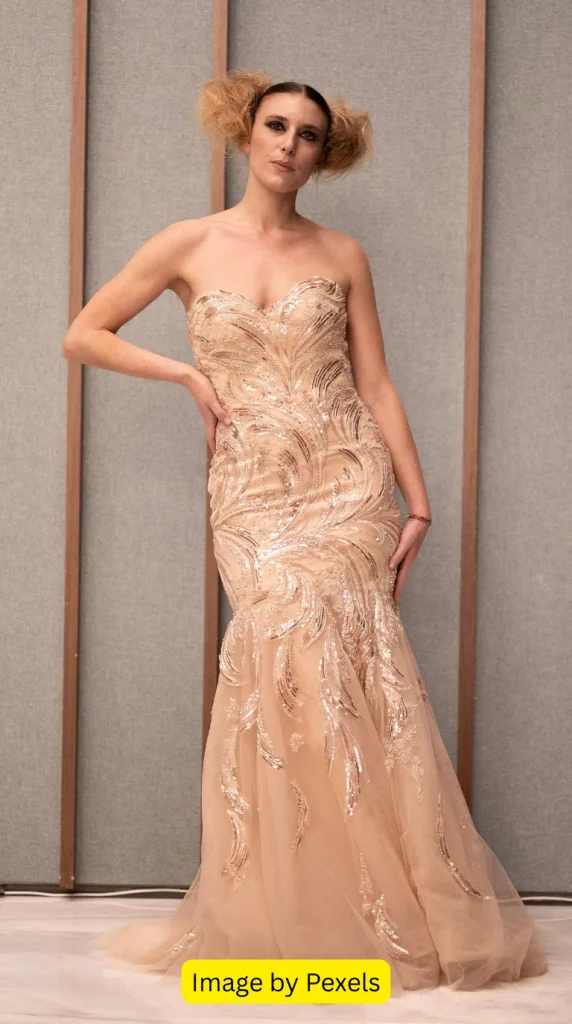
A mermaid gown follows the body more closely before widening around the lower skirt.
This silhouette can highlight curves while creating a dramatic hemline. It works particularly well for formal evening weddings and ballroom receptions.
If comfort is important, look for a design with some flexibility through the fitted areas and make sure you can sit and walk comfortably before the event.
Because the silhouette is already distinctive, simple jewelry is usually enough.
Champagne Chiffon Maxi
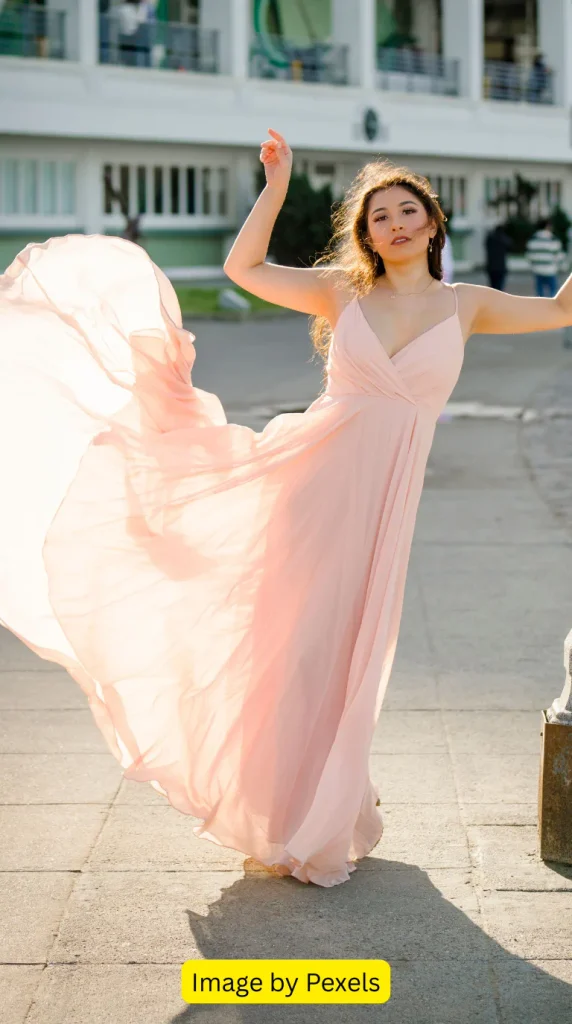
A flowing chiffon maxi combines a soft silhouette with plenty of movement.
This makes it particularly useful for garden weddings, destination celebrations, spring events, and other settings where you may spend time walking outdoors.
Flutter sleeves, a softly gathered waist, or layered chiffon can add visual interest without making the dress feel heavy.
Choose block heels or dressy wedges if the venue includes grass or uneven surfaces.
Champagne Off-Shoulder Gown
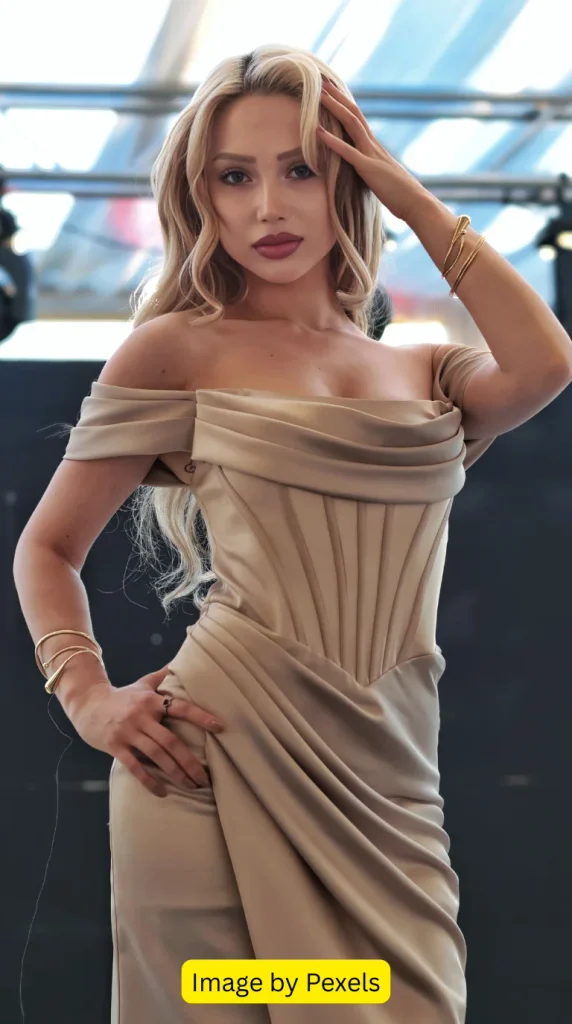
An off-shoulder neckline emphasizes the collarbone and shoulders while creating a more open upper silhouette.
This can be a good choice if you want the dress to have a distinctive neckline without adding heavy decoration.
A relatively simple skirt helps keep the proportions balanced. For evening weddings, pair the gown with statement earrings rather than a large necklace.
If you prefer more coverage, look for a wide off-shoulder neckline or a detachable wrap that can be worn during the ceremony.
Champagne V-Neck Dress
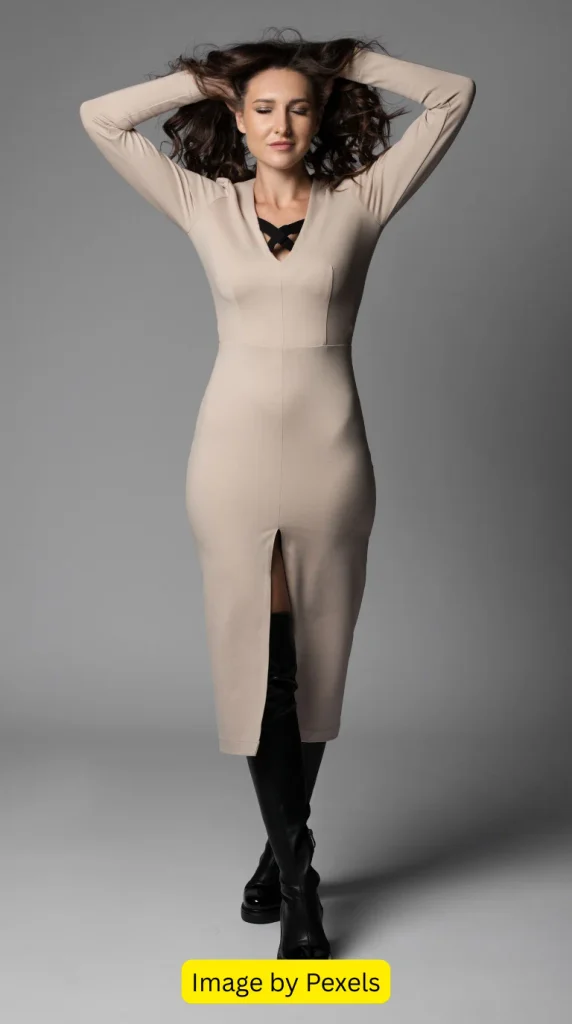
A V-neck creates a vertical opening through the upper portion of the dress and can visually lengthen the neckline.
The depth can range from modest to dramatic, so choose the version that feels comfortable and appropriate for the wedding.
A modest V-neck works particularly well for church and daytime weddings, while a deeper version can suit a formal evening reception.
Simple earrings and a small clutch are enough to complete the look.
Champagne Boat-Neck Gown
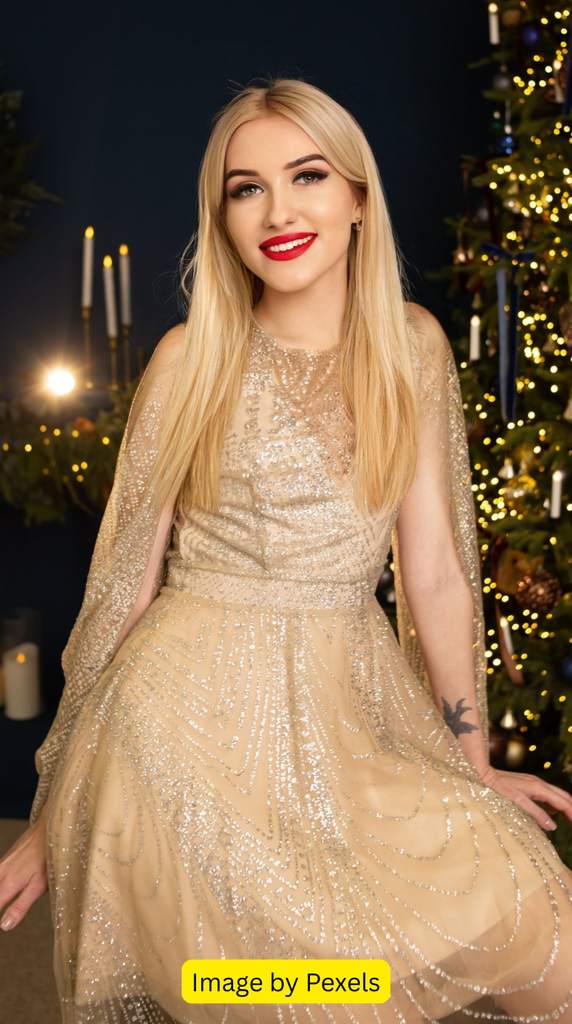
A boat neckline follows the collarbone and offers more coverage than many open necklines.
This design can create a graceful, structured appearance without relying on a plunging neckline. It works particularly well with column, A-line, and softly fitted silhouettes.
Because the neckline is clean and horizontal, an updo or swept-back hairstyle can help showcase it.
Pearl earrings are an especially natural pairing for this classic style.
Champagne Long-Sleeve Dress
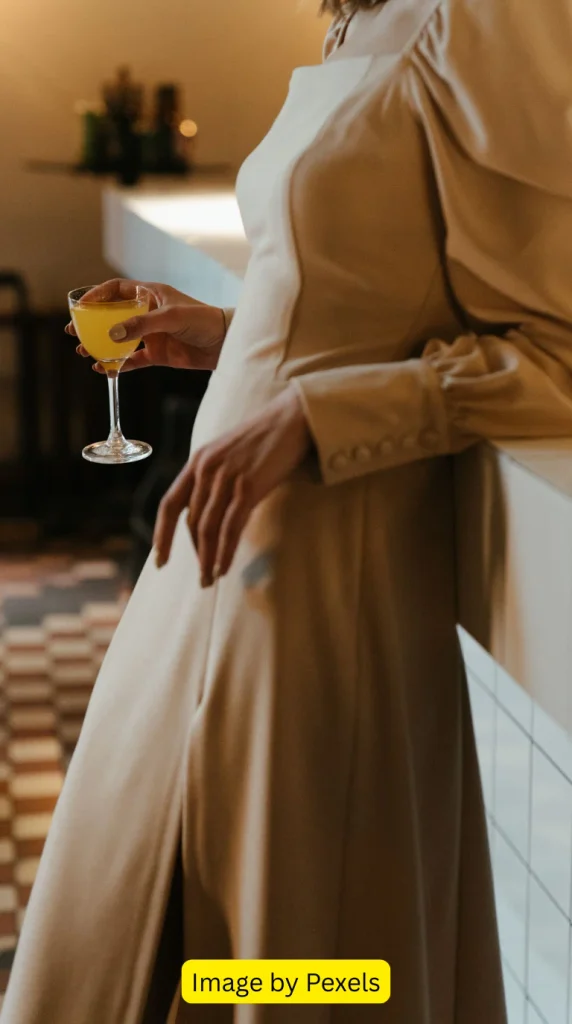
Long sleeves provide additional coverage and can make a champagne dress particularly suitable for fall, winter, evening, or church weddings.
A fitted sleeve creates a streamlined appearance, while lace or sheer sleeves introduce texture.
Balance the additional coverage with a neckline that reflects your preferred style. A V-neck can create openness, while a higher neckline gives the outfit a more covered appearance.
For colder celebrations, a coordinated wrap or elegant coat can complete the outfit.
Champagne Lace Dress
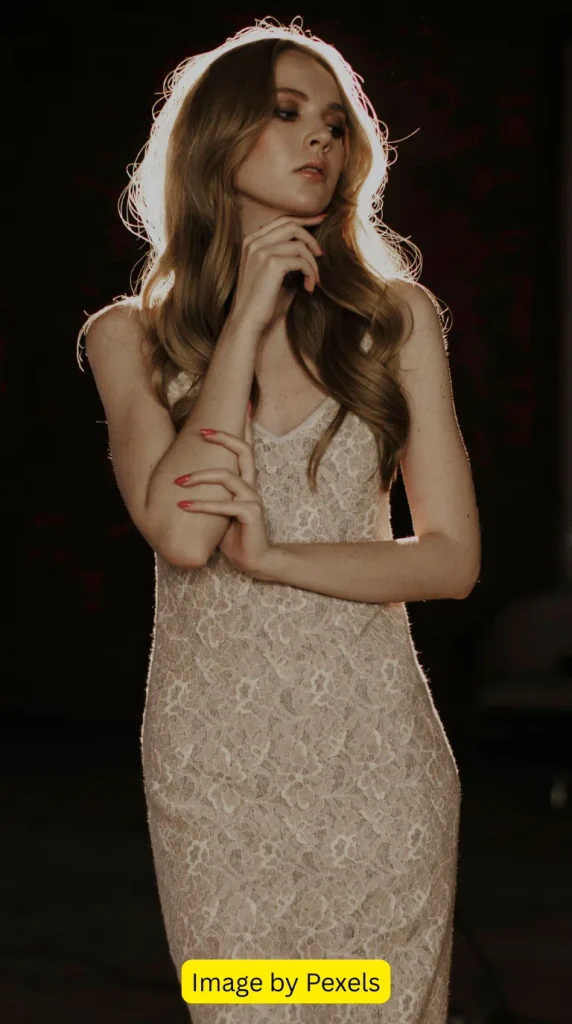
Lace introduces texture and can soften the appearance of a solid champagne gown.
A dress with lace sleeves, a lace bodice, or a delicate overlay can work particularly well for romantic weddings, church ceremonies, and garden settings.
Because lace already provides visual detail, keep the accessories relatively simple.
Pearls can create a traditional finish, while minimal metallic jewelry gives the same dress a more contemporary direction.
Champagne Pleated Gown
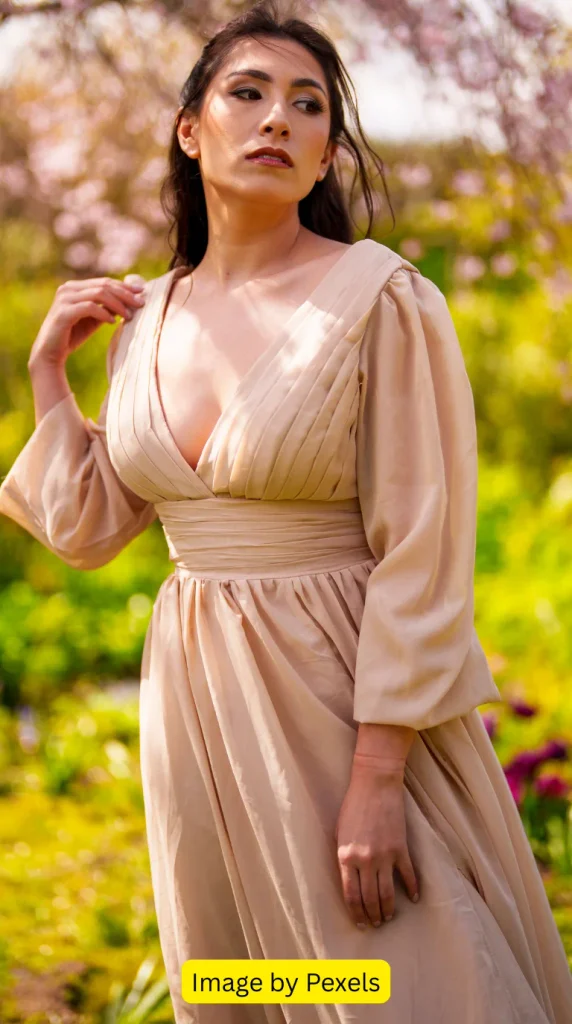
Pleats create vertical texture and movement throughout the skirt.
A finely pleated gown can be particularly useful when you want visual interest without sequins, beading, or elaborate embroidery.
Pleated chiffon works well for outdoor and warm-weather weddings, while a more structured pleated fabric can suit formal indoor celebrations.
A defined waistband can provide additional structure if you prefer some waist emphasis.
Champagne Fit-and-Flare Dress
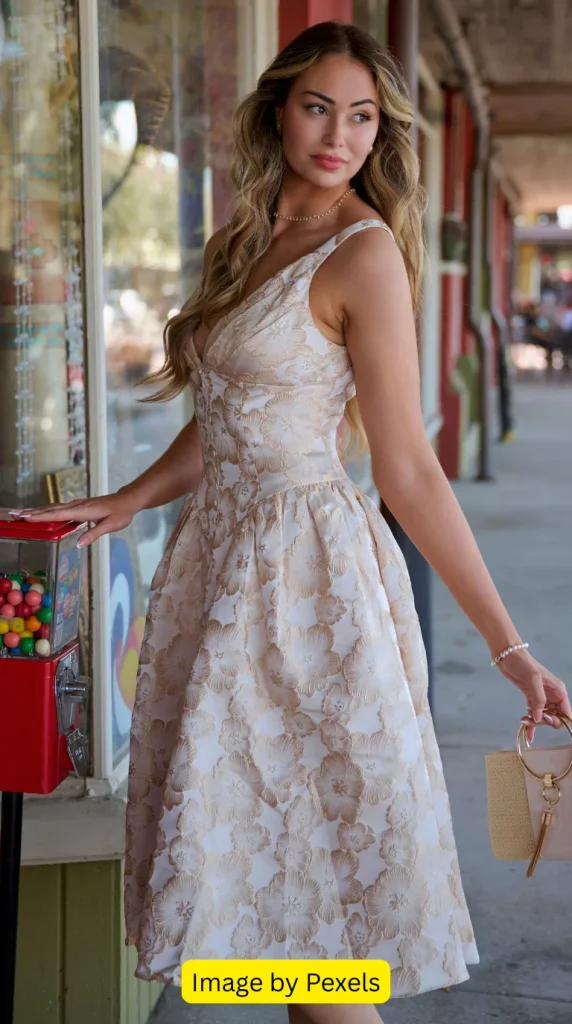
A fit-and-flare silhouette provides structure through the bodice before opening into a fuller skirt.
This makes it a useful middle ground between a closely fitted gown and a traditional full-skirted dress.
A midi version can work for cocktail or semi-formal weddings, while a floor-length version can be elevated for formal celebrations.
If you want a clearly defined waist without a very dramatic skirt, this is one of the most versatile options.
Champagne One-Shoulder Gown
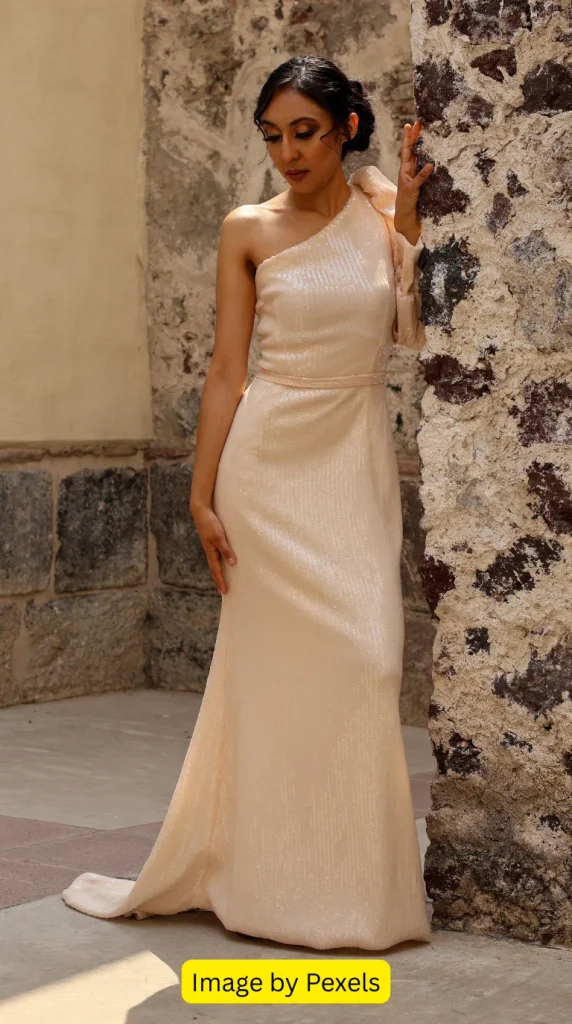
A one-shoulder neckline creates asymmetry and immediately gives a simple gown a more contemporary appearance.
The design works particularly well when the rest of the dress remains relatively clean.
A flowing skirt creates softness, while a fitted or column skirt makes the same neckline feel more structured.
Since the neckline provides the main visual detail, choose earrings or a bracelet instead of adding a competing necklace.
Champagne Dress With a Slit
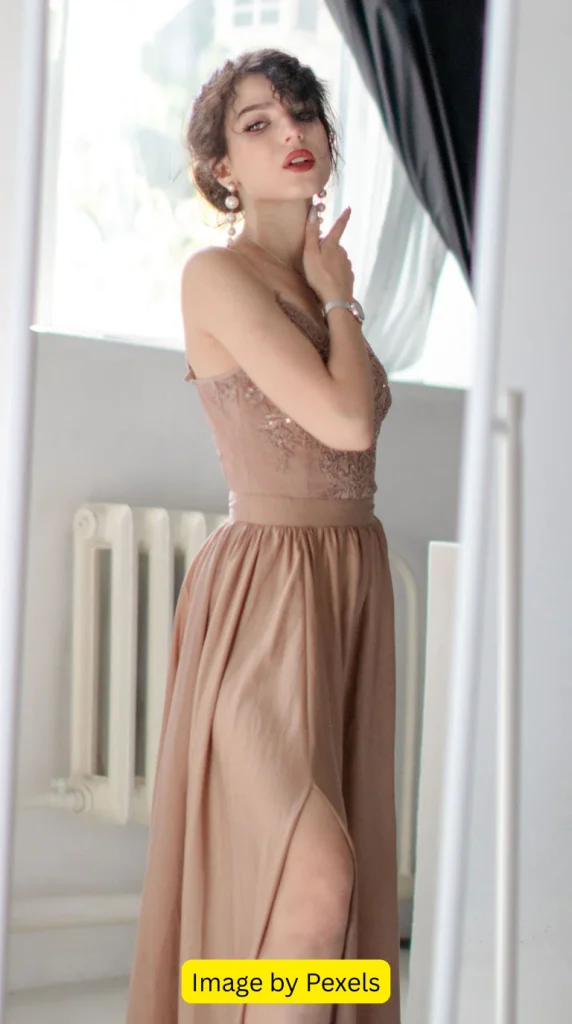
A slit can introduce movement and a modern touch to a long champagne dress.
For a balanced formal look, choose one major statement feature rather than combining a high slit with several other dramatic details.
A subtle slit works well for elegant evening weddings, while a more modest opening can provide movement without changing the overall conservative character of the dress.
Neutral, metallic, or champagne-toned heels can complete the outfit.
Champagne Ball Gown
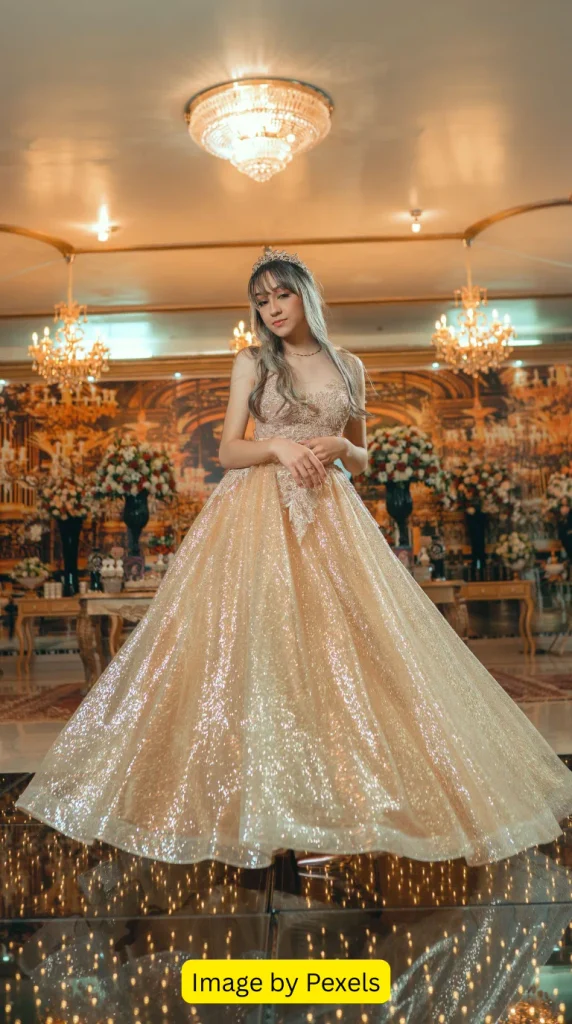
A full skirt creates the most dramatic interpretation of champagne formalwear.
This silhouette works particularly well for grand ballrooms, highly formal evening weddings, and celebrations where a traditional gown is appropriate.
A structured bodice can balance the volume of the skirt. If the dress is already elaborate, keep the jewelry relatively restrained.
A compact clutch and classic heels are usually enough to finish the outfit.
Champagne Dress With Jacket
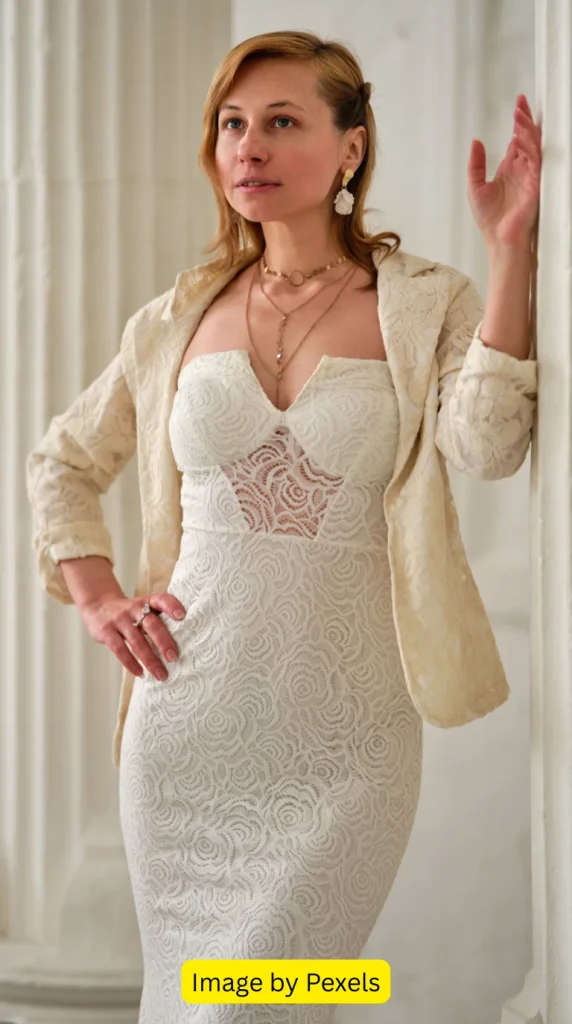
A coordinating jacket adds structure and coverage while giving you more versatility throughout the wedding day.
This can be especially practical for church ceremonies, cooler venues, and guests who prefer covered shoulders.
A tailored jacket over a simple champagne dress can also create a polished two-piece effect. Remove the jacket for the reception if the venue becomes warmer or you want a less structured appearance.
Choose closely coordinated colors and fabrics for the most seamless result.
How to Choose a Champagne Dress for Your Body Shape
Instead of following strict rules about which dress every body shape should wear, start with the feature you want the dress to provide.
If You Want More Waist Definition
Consider:
- wrap dresses
- A-line gowns
- fit-and-flare silhouettes
- defined waistbands
These designs create visible structure around the waist while allowing different amounts of movement through the skirt.
If You Prefer More Room Through the Hips
A-line and empire-waist silhouettes allow the skirt to fall away from the body instead of closely following the hips.
Flowing chiffon can provide additional movement, while structured fabrics can create a more tailored appearance.
If You Prefer a Streamlined Look
Column gowns and softly fitted dresses create a relatively uninterrupted vertical line.
A monochromatic accessory palette can reinforce that streamlined appearance.
If You Want More Upper-Body Coverage
Consider:
- long sleeves
- lace sleeves
- boat necklines
- higher necklines
- jacket dresses
- cape sleeves
Coverage doesn’t have to mean sacrificing style. Interesting sleeves, texture, or an elegant neckline can become the defining feature.
If You Want More Movement
Look for:
- chiffon
- pleated skirts
- flowing A-lines
- empire-waist silhouettes
- fit-and-flare designs
These options can feel particularly comfortable when you’re spending several hours walking, sitting, and dancing.
How to Choose the Right Champagne Shade
Not every champagne dress has the same color.
Some shades lean toward:
- warm gold
- beige
- blush
- pink
- cream
- deeper antique champagne
Your skin’s undertone can help narrow the options, but it shouldn’t be the only consideration.
If you have warm undertones, gold-champagne shades may create a harmonious combination. Cooler complexions may prefer champagne with pink or neutral undertones. Neutral undertones can often work with either direction.
Most importantly, check the actual dress in different lighting. A shade that looks distinctly champagne online may appear much paler in bright daylight or photographs.
Can Wedding Guests Wear Champagne?
This depends on the specific shade, the wedding, and the couple’s preferences.
A deeper champagne dress is generally easier to distinguish from traditional bridal white than an extremely pale champagne gown. However, some champagne fabrics can photograph almost ivory, particularly under bright lighting.
Before choosing one, consider:
- How pale is the dress?
- Does it look bridal in photographs?
- Has the couple requested specific guest colors?
- Could it be confused with the wedding gown?
- Does the styling clearly read as guestwear?
When in doubt, choosing a richer champagne, beige-gold, or blush-champagne shade can create more separation from bridal white.
Champagne Dresses by Wedding Setting
| Wedding Setting | Recommended Champagne Style |
|---|---|
| Black tie | Floor-length gown |
| Ballroom | Ball gown, column, mermaid, or satin gown |
| Garden | Chiffon, lace, or flowing A-line |
| Church | Long sleeves, jacket, or higher neckline |
| Summer | Lightweight chiffon or crepe |
| Winter | Velvet or long sleeves |
| Hotel reception | Structured gown or sophisticated midi |
| Semi-formal | Wrap, fit-and-flare, or midi dress |
Always let the invitation determine the required level of formality before choosing the silhouette.
Champagne Dress Accessories
Champagne is a relatively neutral base, which gives you plenty of accessory options.
Gold: Emphasizes the warm side of champagne and creates a cohesive palette.
Silver: Adds a cooler contrast and works particularly well for evening styling.
Pearls: Create a classic, softer appearance.
Crystal: Adds sparkle for formal evening receptions.
Nude: Keeps the outfit visually continuous and understated.
Metallic: Provides a little more contrast without introducing a competing color.
Black: Creates stronger definition and can make champagne feel more modern.
The dress’s neckline should also influence your jewelry. An open neckline gives you more room for a necklace, while a boat neck, high neck, or one-shoulder design often looks cleaner with earrings or a bracelet instead.
Final Thoughts
The best champagne wedding dress is not simply the one with the prettiest color. It is the combination of shade, silhouette, comfort, formality, and styling that makes sense for the occasion and for you.
An A-line gown can provide easy movement, a wrap dress can create adjustable waist definition, a column gown can deliver a streamlined appearance, and a chiffon maxi can work beautifully for outdoor celebrations. The right choice depends on the features you want rather than a strict set of rules based on body shape.
Remember to consider the shade carefully if you’re attending a wedding as a guest. Very pale champagne can look similar to ivory in photographs, so checking the invitation and the couple’s preferences is an important final step.
Choose the silhouette you feel best wearing, coordinate the accessories with the warmth or coolness of the champagne shade, and let your personal style guide the final details.