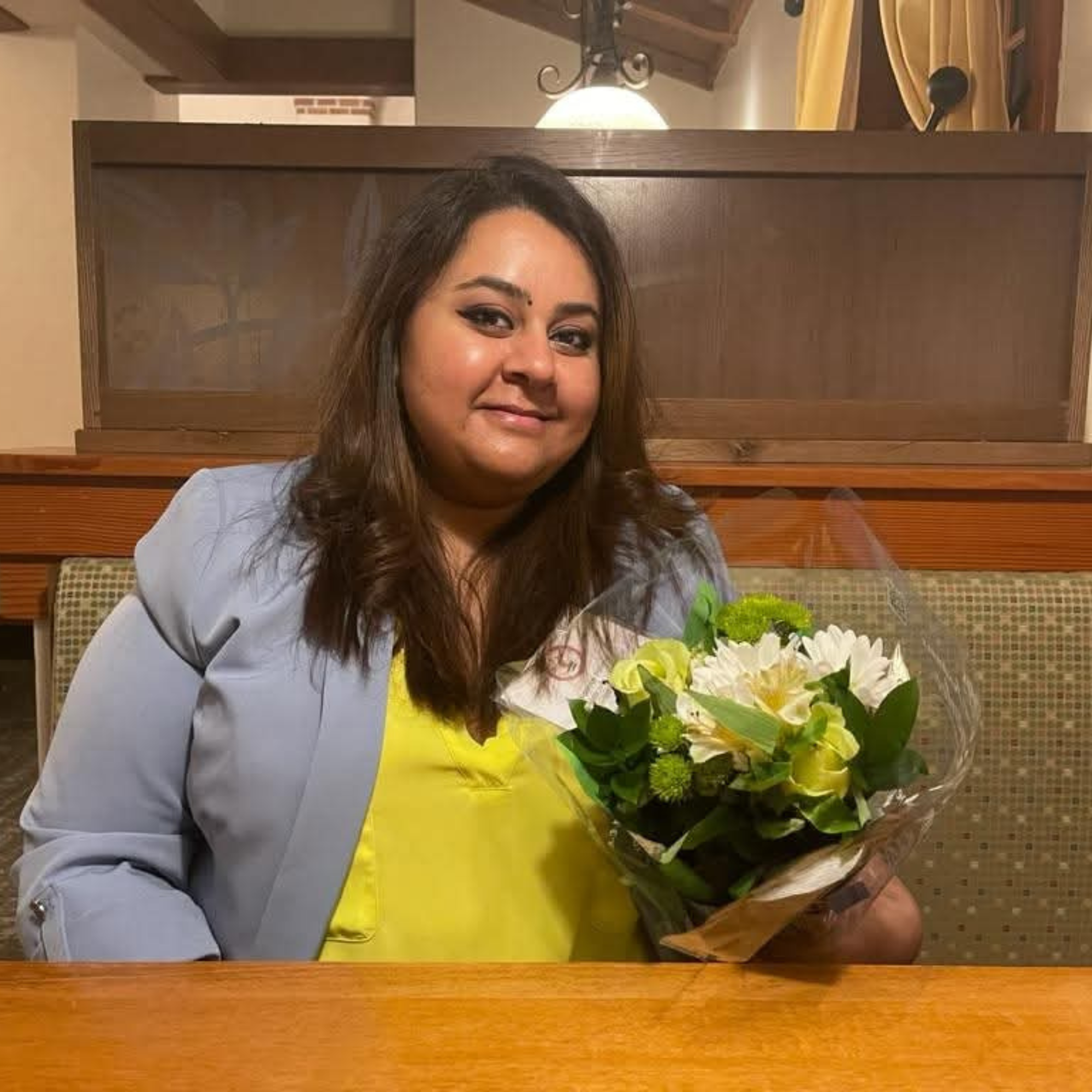
When a wedding invitation says black tie, it can leave you wondering exactly how formal your outfit needs to be. Do you need a floor-length gown? Is a midi dress acceptable? Does black tie mean you have to wear black?
The short answer is that black tie is one of the most formal wedding dress codes, and women are generally expected to wear sophisticated eveningwear with an elegant, polished finish. A floor-length gown is the safest traditional choice, but the exact interpretation can depend on the invitation, venue, season, and whether the dress code says black tie or black tie optional.
The good news is that black tie dressing doesn’t have to feel intimidating. Once you understand what the dress code actually means, choosing an appropriate outfit becomes much easier.
What Does Black Tie Mean for Women?
For women, black tie wedding attire generally means formal eveningwear that looks polished, sophisticated, and appropriate for an upscale celebration.
A traditional black tie wedding usually calls for:
- A floor-length evening gown or formal dress
- Luxurious-looking fabrics such as satin, silk, velvet, chiffon, or crepe
- Elegant heels or other polished formal shoes
- A small clutch or evening bag
- Refined jewelry and accessories
- Intentional hair and makeup
Black is certainly appropriate, but women do not have to wear black. Deep jewel tones, sophisticated neutrals, rich metallics, and tasteful formal prints can all work beautifully.
The overall goal is elegance rather than extravagance. Your outfit should look noticeably more formal than what you might wear to a cocktail, semiformal, or casual wedding.
Black Tie at a Glance
| Outfit Element | Traditional Black Tie Expectation |
|---|---|
| Dress | Formal evening dress or gown |
| Length | Floor-length is the safest choice |
| Fabrics | Satin, silk, velvet, chiffon, crepe |
| Colors | Black, jewel tones, rich neutrals, elegant prints |
| Shoes | Formal heels or polished dress shoes |
| Jewelry | Refined and intentional |
| Bag | Small clutch or evening bag |
| Hair | Polished and event-appropriate |
| Makeup | Refined rather than overly casual |
| Overall Style | Elegant, sophisticated, and formal |
This quick guide is useful when you’re standing in front of your closet trying to decide whether an outfit feels formal enough.
If the dress looks more appropriate for brunch, a casual dinner, or a daytime party, it probably isn’t formal enough for a traditional black tie wedding.
How Formal Should Your Dress Be?
Black tie sits toward the formal end of the wedding dress-code spectrum.
A useful way to think about it is:
Casual → Cocktail → Formal → Black Tie
Each step increases the expected level of polish, formality, and evening sophistication.
For black tie, the safest approach is to choose a dress that feels intentionally formal rather than simply attractive.
A floor-length gown is the most traditional option because the length immediately communicates formality. However, the fabric and construction matter too. A long dress made from an extremely casual material may not feel appropriate, while a beautifully tailored formal dress in satin or crepe can look significantly more elevated.
If you’re unsure, consider the venue as well. A black tie wedding at a luxury hotel or grand ballroom will usually feel more formal than a black tie celebration held outdoors.
For a deeper comparison between dress codes, see Black Tie vs Formal Wedding Attire.
Does Black Tie Mean a Floor-Length Dress?
A floor-length gown is the safest and most traditional choice for a woman attending a black tie wedding.
That doesn’t mean every black tie invitation should be interpreted as requiring exactly one style of dress.
Formal ankle-length gowns, sophisticated evening dresses, and certain contemporary silhouettes can sometimes work depending on the event. The invitation wording, venue, time of day, and overall atmosphere all provide useful context.
A midi dress requires more consideration because many midi styles lean toward cocktail or semiformal dressing. A highly polished midi in a luxurious fabric may work for some modern or black-tie-optional celebrations, but a traditional black tie wedding is generally safer territory for a floor-length gown.
If you’re specifically wondering whether a midi dress is appropriate, see Can You Wear a Midi Dress to a Black Tie Wedding?
Choosing the Right Fabric
Fabric can make a major difference in how formal a dress appears.
Satin
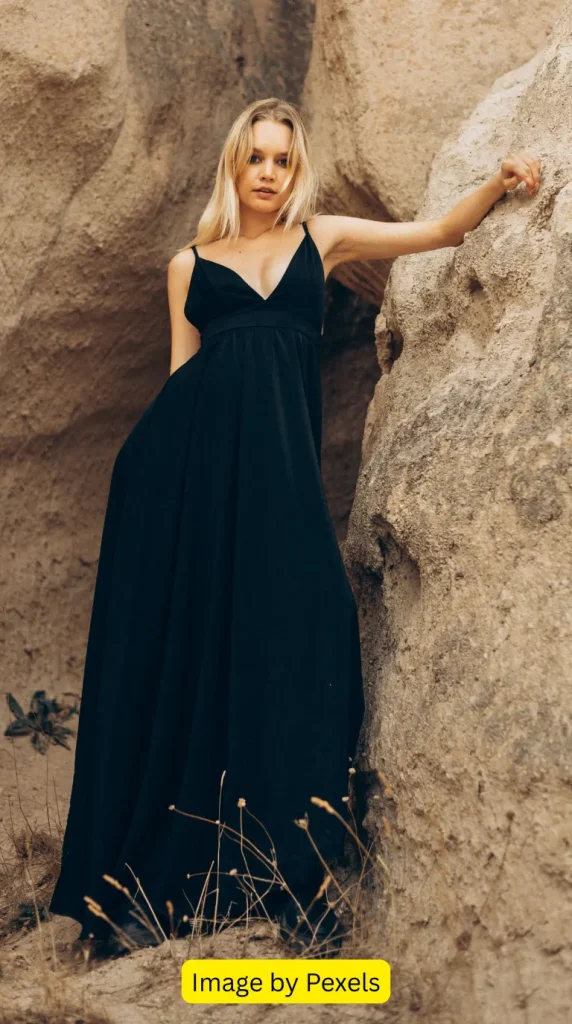
Satin has a smooth surface and subtle shine that naturally creates an eveningwear feel. It works particularly well for sleek gowns, draped silhouettes, and minimalist designs.
Velvet
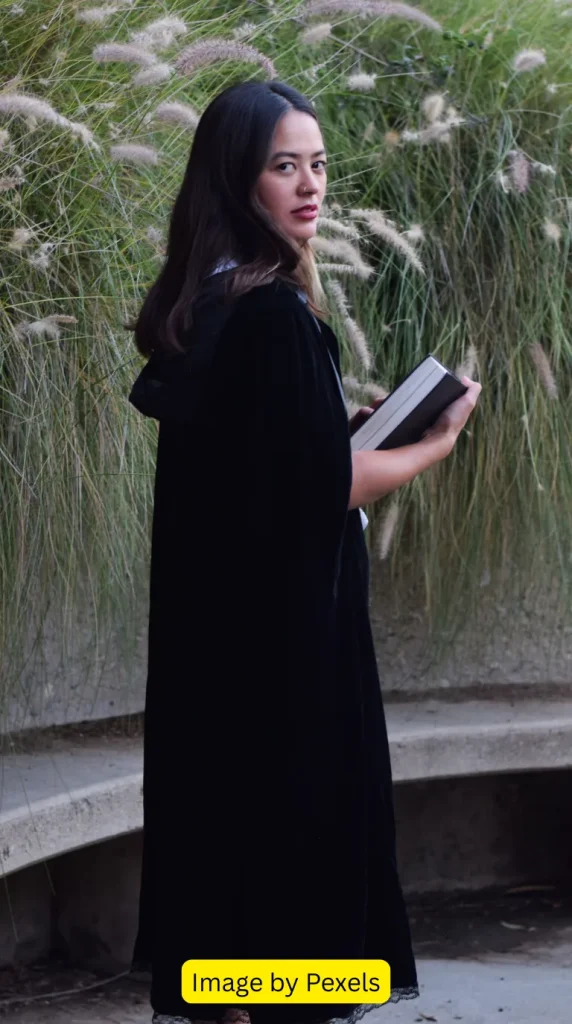
Velvet brings richness and depth to formal dressing. It’s especially suitable for fall and winter weddings, evening celebrations, and elegant indoor venues.
Chiffon
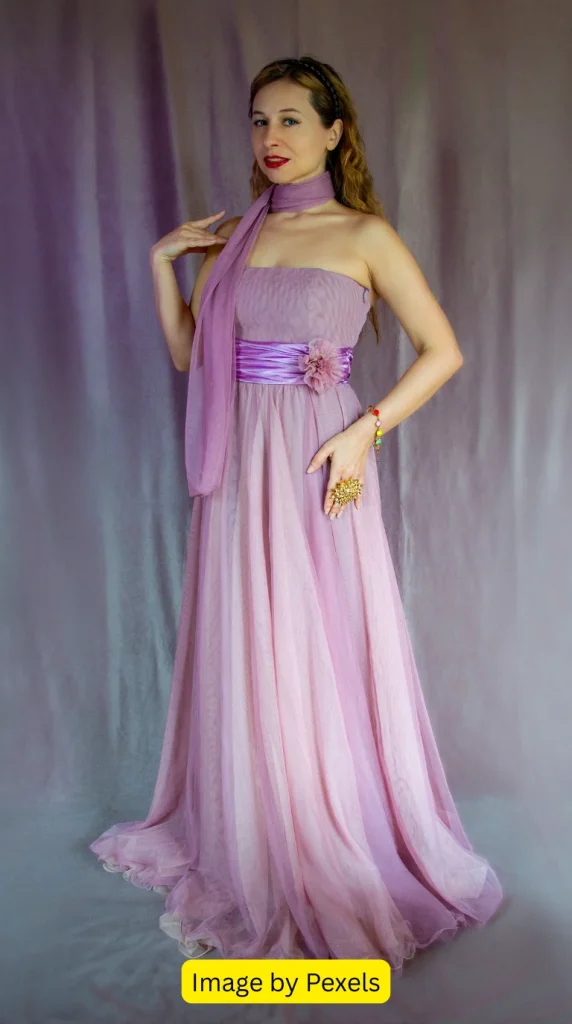
Chiffon creates soft movement and works beautifully for romantic silhouettes. It’s particularly useful for warmer celebrations and outdoor formal weddings.
Crepe
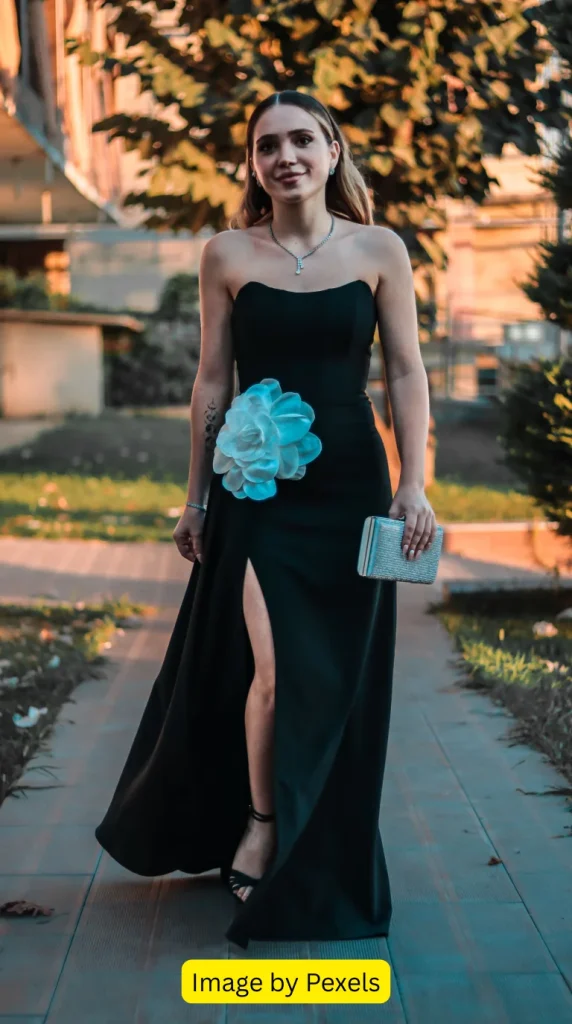
Crepe has a sophisticated, smooth appearance that works especially well for column gowns, minimalist dresses, and structured silhouettes.
Silk
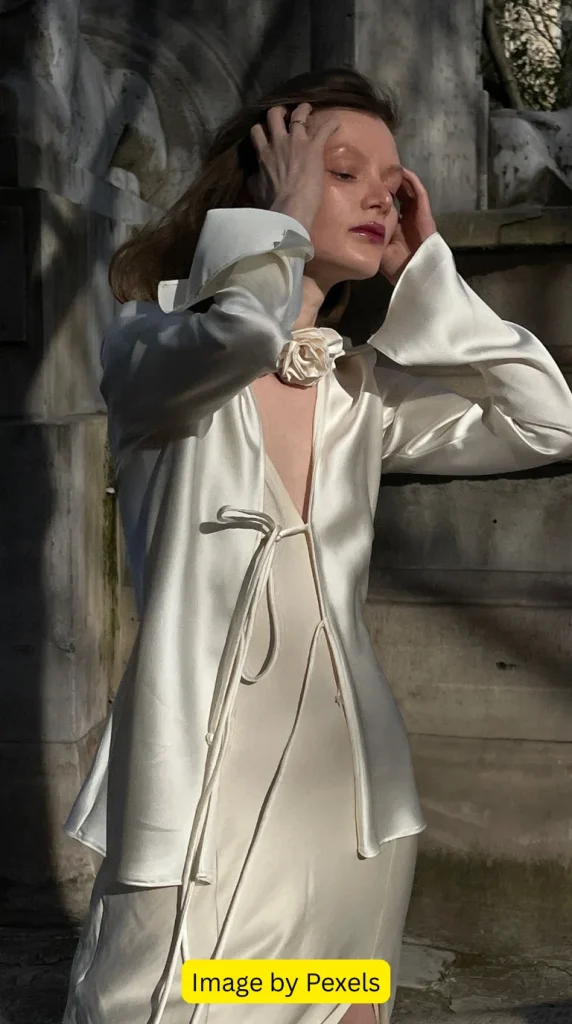
Silk can create an exceptionally refined appearance when paired with elegant tailoring and understated styling.
The key isn’t simply choosing an expensive fabric. The fabric should look polished, coordinate with the season, and suit the formality of the event.
Which Colors Can Women Wear?
One of the biggest misconceptions about black tie is that women are expected to wear black.
That’s not true.
Black is timeless and completely appropriate, but you have plenty of other options.
Elegant choices include:
- Emerald green
- Navy blue
- Burgundy
- Deep plum
- Sapphire
- Chocolate brown
- Champagne
- Taupe
- Soft metallics
- Sophisticated floral prints
Rich colors can look especially beautiful at evening weddings because they photograph well under low or warm lighting.
Lighter shades can also work, particularly for summer or destination celebrations, but wedding etiquette should always be considered. A dress that could easily be mistaken for a bridal gown is generally better avoided unless the couple has specifically indicated otherwise.
Color should support the overall level of formality. A sophisticated navy gown and a casual bright sundress may technically use the same color family, but they communicate completely different levels of formality.
Choosing the Right Silhouette
Black tie doesn’t require one particular silhouette.
The most important consideration is whether the dress looks formal, well-fitted, and appropriate for the celebration.
A-Line
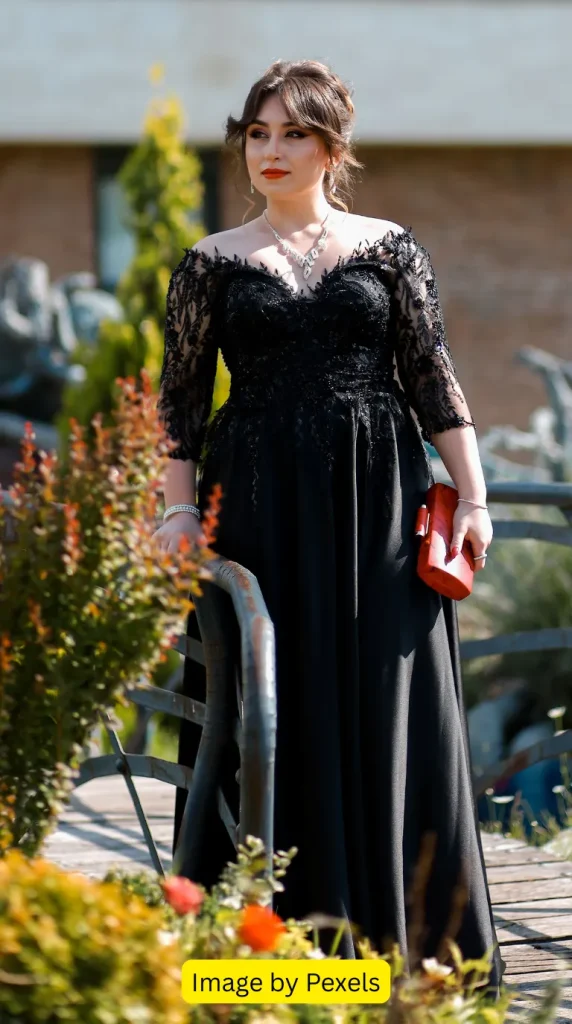
An A-line gown provides a fitted upper body with a skirt that gradually widens. It’s versatile, graceful, and suitable for many formal wedding settings.
Column
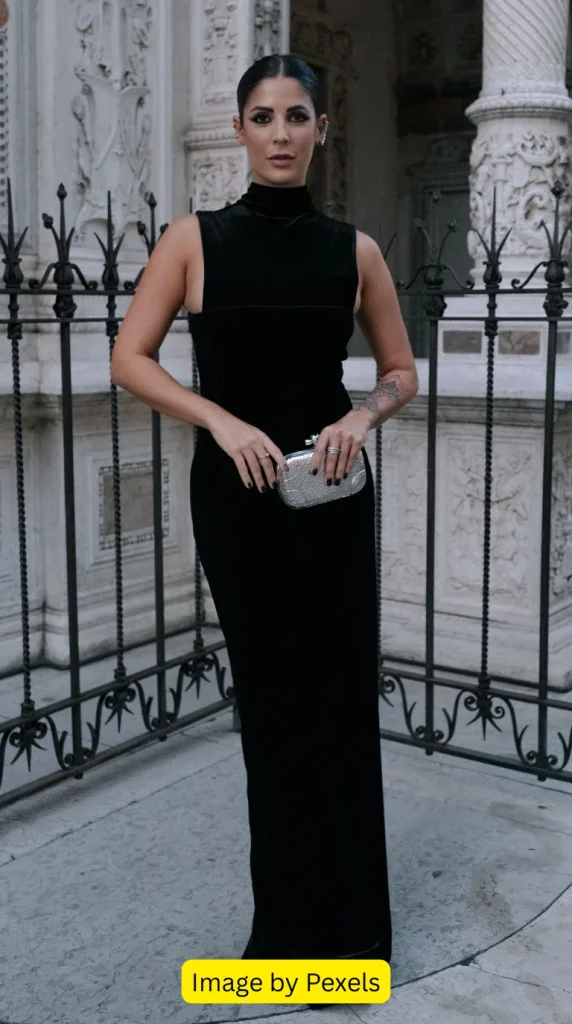
A column dress creates a clean, streamlined silhouette. This style works particularly well for minimalist black tie dressing.
Mermaid
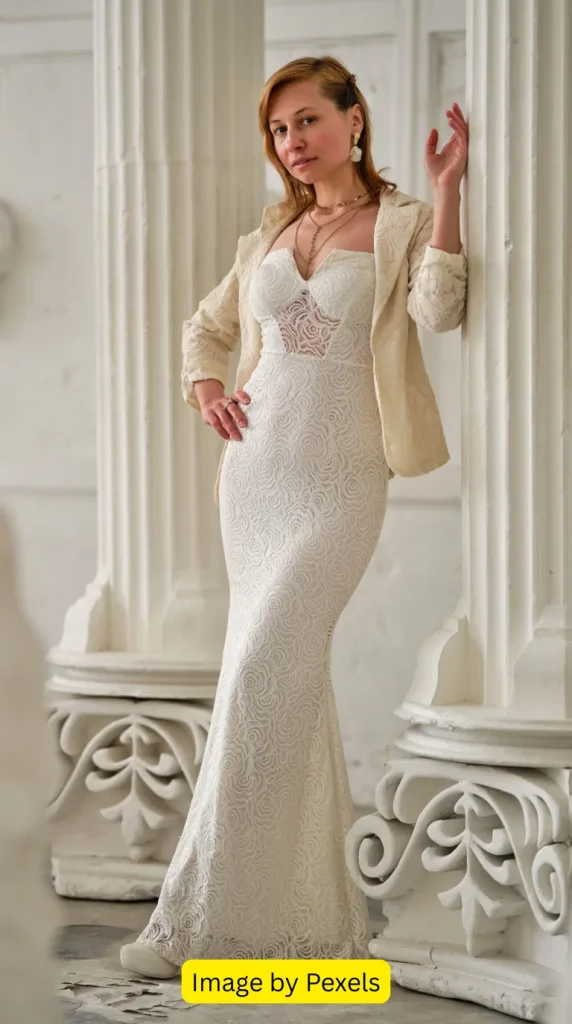
A mermaid gown follows the body before flaring toward the hem, creating a more dramatic evening appearance.
Off-Shoulder
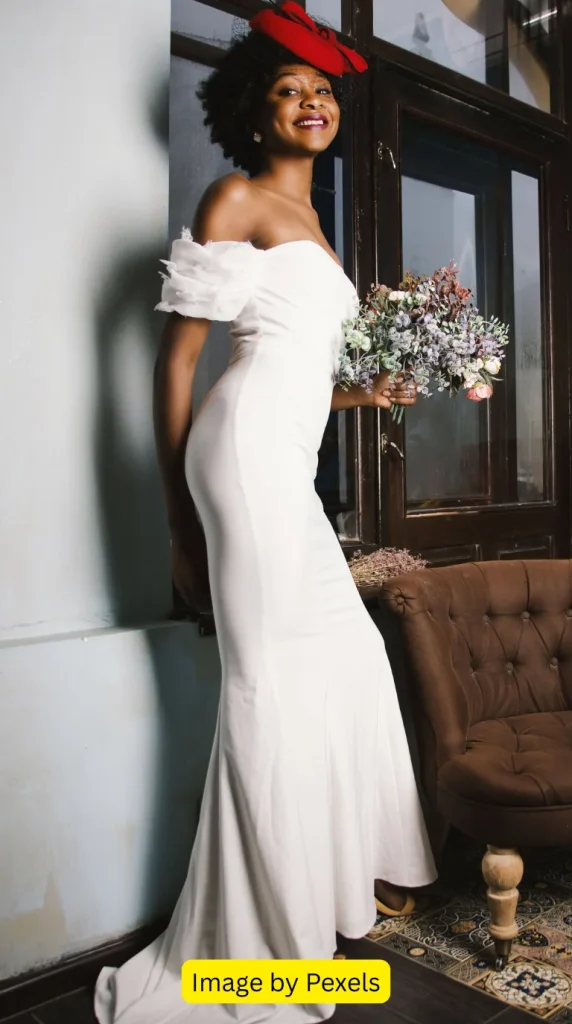
An off-shoulder neckline can create a romantic formal look while highlighting the shoulders and collarbone.
Long Sleeve
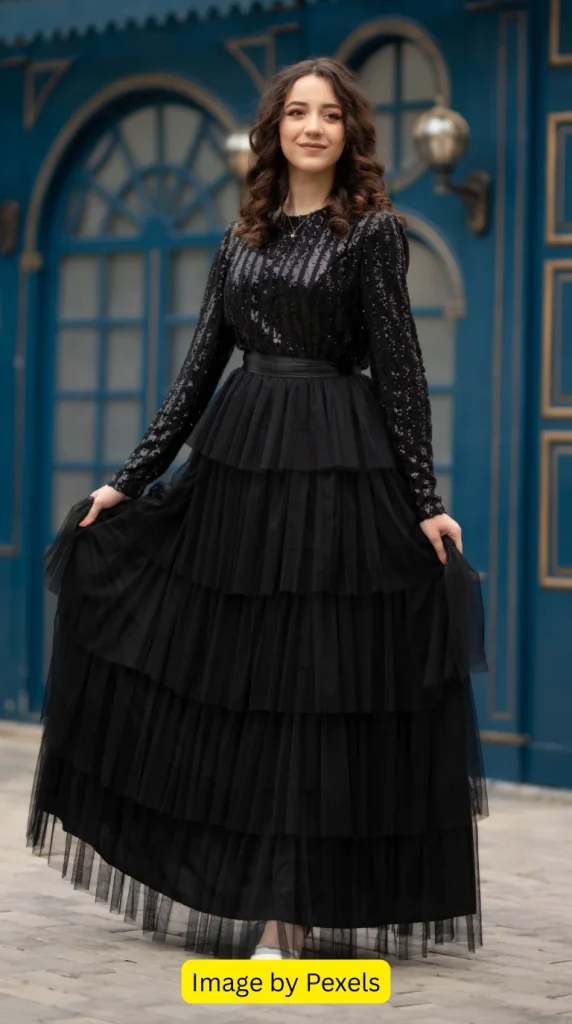
Long sleeves offer elegant coverage and work particularly well for fall and winter weddings or more conservative formal settings.
Draped Silhouettes
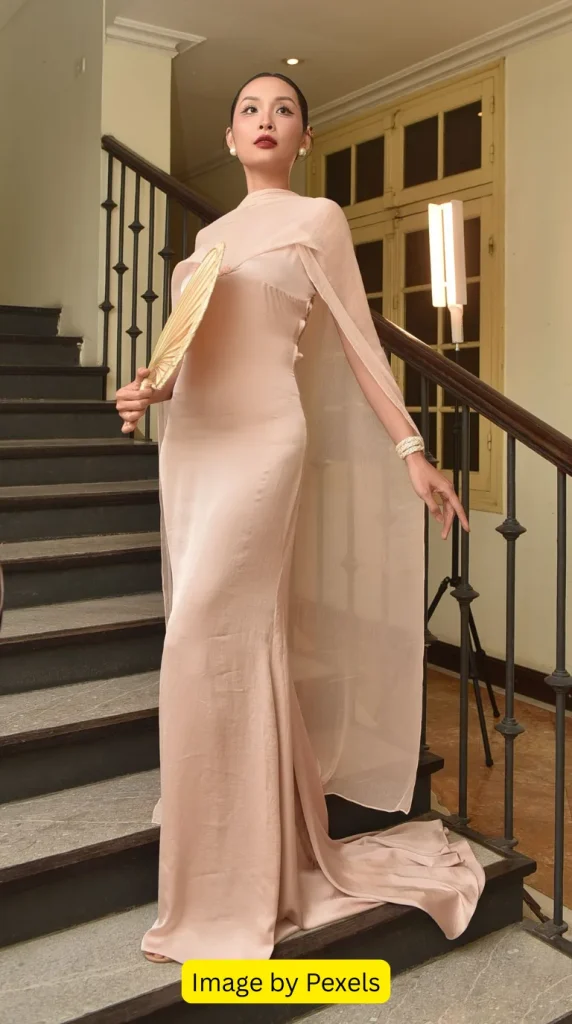
Soft draping adds movement and visual interest without requiring heavy embellishment.
Instead of choosing a silhouette simply because it’s trending, consider the fit, comfort, venue, and overall formality.
Black Tie Accessories
Accessories should complete the outfit rather than compete with it.
A simple formal gown can look significantly more polished when paired with thoughtful finishing details.
Jewelry
Choose pieces that complement the neckline and overall style of the dress. Pearl earrings, delicate bracelets, crystal details, and refined statement earrings can all work.
Shoes
Formal heels are a traditional choice, but elegance and comfort matter too. Choose shoes that allow you to stand, walk, and dance comfortably throughout the celebration.
Clutch
A small structured clutch or elegant evening bag is usually more appropriate than a large everyday handbag.
Wrap or Shawl
For cooler evenings, a sophisticated wrap or shawl can add warmth without making the outfit look casual.
The best accessory rule is simple: if your dress is dramatic, keep the accessories restrained; if your dress is minimalist, you can allow one accessory to become the focal point.
Hair and Makeup Matter Too
Black tie dressing doesn’t stop at the dress.
Hair and makeup help determine whether the complete outfit feels formal and intentional.
Polished options include:
- Sleek buns
- Elegant updos
- Soft waves
- Smooth Hollywood-inspired curls
- Refined half-up styles
Makeup can be natural and polished or more glamorous depending on your personal style.
You don’t need heavy makeup to look formal. Clean, well-finished makeup often works beautifully with sophisticated eveningwear.
The goal is for your hair, makeup, dress, shoes, and accessories to feel like parts of the same outfit rather than separate choices.
What Does Black Tie Optional Mean?
Black tie optional gives guests more flexibility than traditional black tie.
It generally means that formal black tie attire is encouraged, but guests may have additional acceptable choices.
For women, this could include:
- A floor-length evening gown
- A sophisticated midi dress
- A highly polished formal jumpsuit
- An elegant evening separates combination
- A refined cocktail-style dress, depending on the event
However, “optional” doesn’t mean casual.
The outfit should still look elevated and appropriate for a formal celebration.
When deciding between a gown and a slightly less formal option, consider the venue and the rest of the invitation. A luxury ballroom wedding may encourage a more traditional interpretation, while a modern destination celebration may allow greater flexibility.
Does the Venue Change What You Should Wear?
The venue can provide useful clues about how the black tie dress code may feel in practice.
Ballroom Wedding
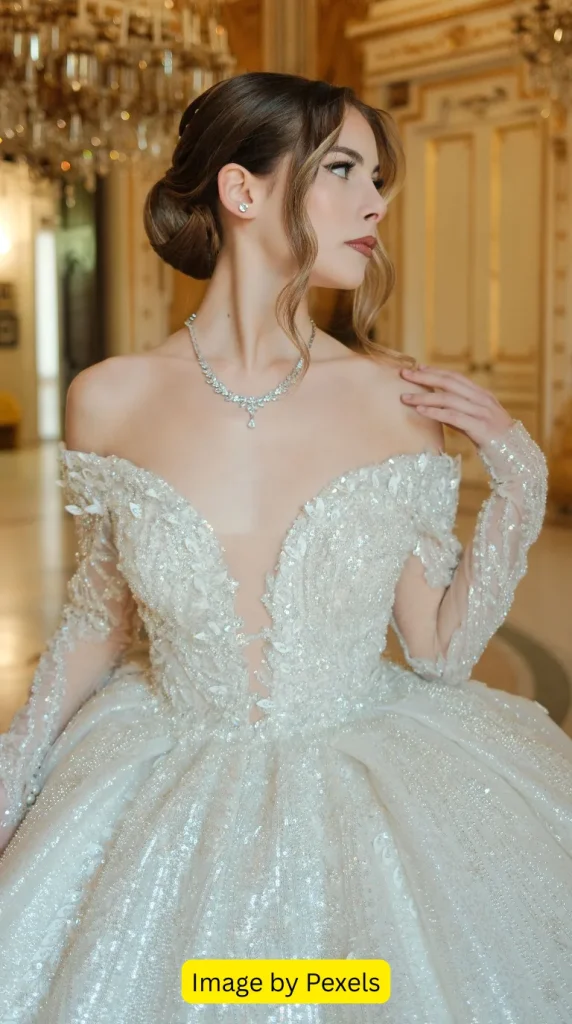
A grand ballroom naturally supports traditional floor-length gowns, elegant jewelry, formal heels, and luxurious fabrics.
Luxury Hotel
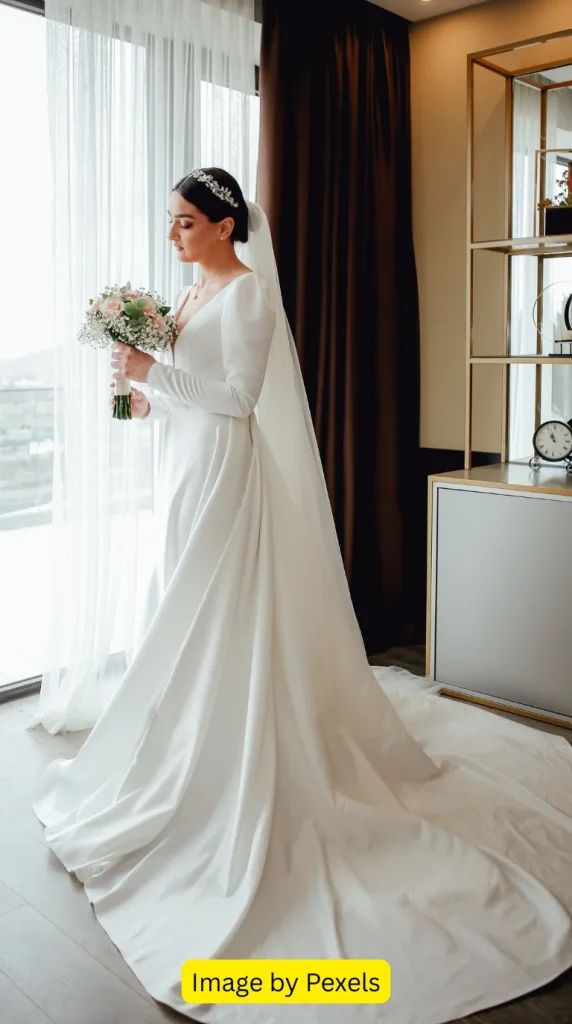
A sophisticated hotel wedding usually calls for polished eveningwear with refined accessories and formal footwear.
Garden Wedding
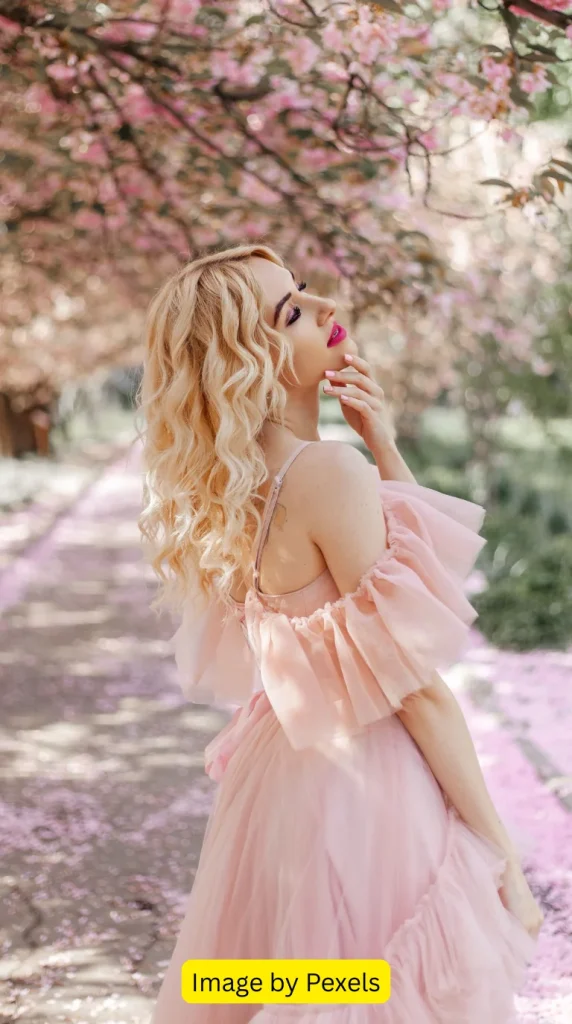
A garden setting can still be black tie. Choose formal fabrics and elegant silhouettes while considering comfortable footwear and weather conditions.
Destination Wedding
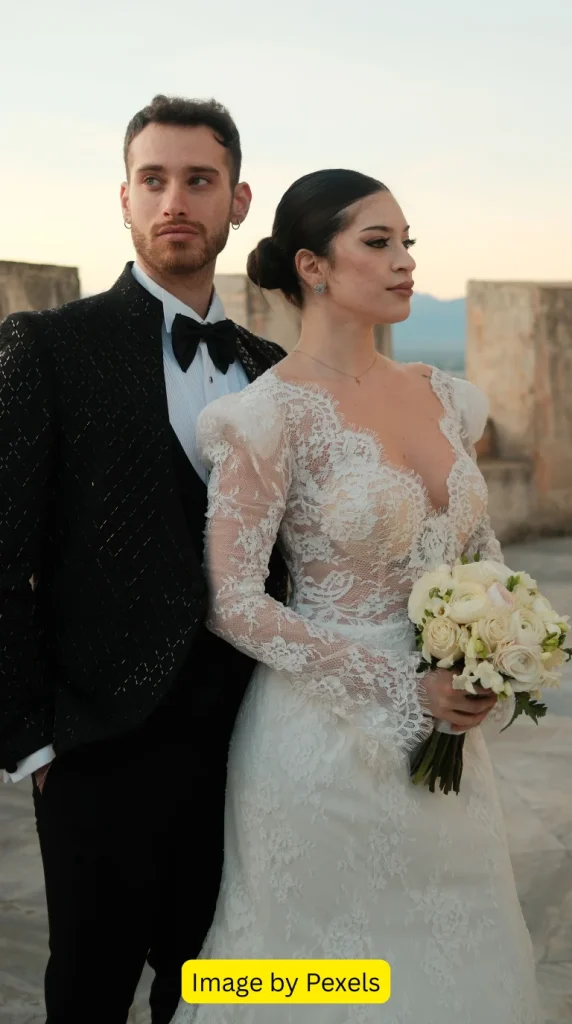
Destination celebrations may require lightweight fabrics and practical shoes without sacrificing the formal appearance requested by the invitation.
Coastal or Beach Wedding
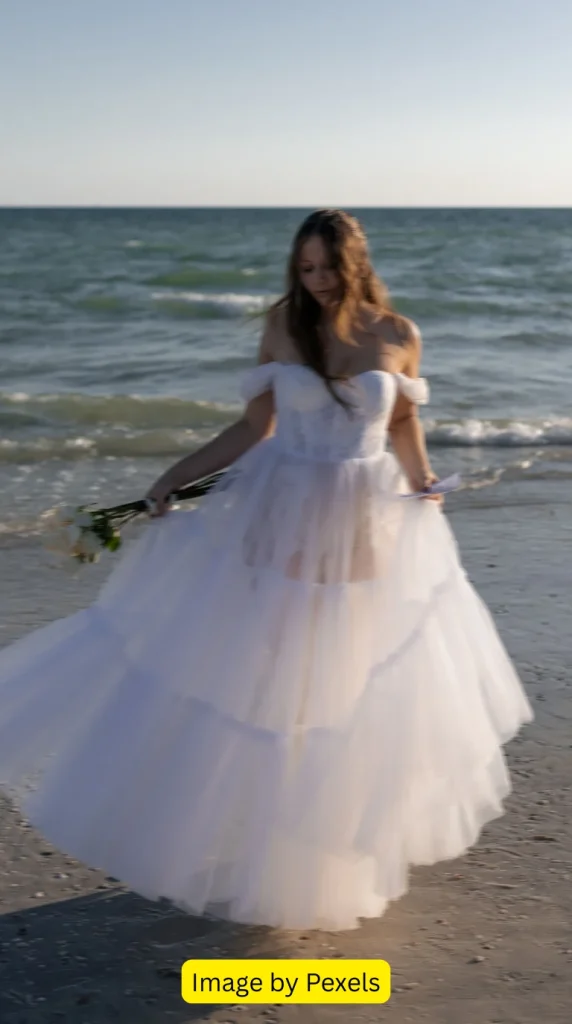
A black tie beach wedding still requires formal dressing, but breathable fabrics and graceful movement become especially important.
The venue should help you refine your outfit—not override the stated dress code.
Common Black Tie Misconceptions
Black tie can seem complicated because several common assumptions aren’t actually rules.
You Must Wear Black
No. Black is classic, but rich colors and elegant neutrals are also appropriate.
You Must Wear Sequins
No. A simple satin, crepe, silk, or velvet gown can look just as formal without heavy embellishment.
Your Dress Must Be Extremely Revealing
Absolutely not. Black tie is about sophistication, not showing as much skin as possible.
You Must Wear Uncomfortable Heels
No. Formal shoes should look polished, but comfort matters during a long wedding celebration.
Black Tie Means You Need the Most Expensive Dress
Not necessarily. Fit, fabric, tailoring, and styling often have a greater visual impact than the price tag.
Understanding these distinctions makes the dress code much less intimidating.
What Should You Avoid?
Although black tie gives you plenty of room for personal style, some choices can make an outfit look noticeably too casual.
Avoid:
- Denim
- Casual cotton sundresses
- Flip-flops
- Very casual sandals
- Everyday tote bags
- Athletic shoes
- Beachwear
- Extremely casual fabrics
- Club-style outfits that prioritize revealing details over elegance
The goal isn’t to make your outfit conservative or boring. It’s to make sure the overall appearance matches the significance and formality of the occasion.
For a more detailed guide to mistakes, see What Not to Wear to a Black Tie Wedding.
Black Tie vs Other Wedding Dress Codes
Understanding where black tie sits among other dress codes can make invitations easier to interpret.
| Dress Code | Typical Women’s Attire | Overall Formality |
|---|---|---|
| Casual | Sundresses, polished separates | Low |
| Cocktail | Shorter or midi party dresses | Moderate |
| Formal | Elegant dresses and gowns | High |
| Black Tie Optional | Gowns or highly polished alternatives | Very High |
| Black Tie | Formal evening gowns and sophisticated eveningwear | Highest |
These categories can overlap in modern weddings, so the invitation wording and event context should always take priority.
If you’re deciding specifically between black tie and formal wedding attire, read Black Tie vs Formal Wedding Attire for the detailed comparison.
A Simple Black Tie Outfit Formula
If you’re still unsure what to wear, start with this formula:
Formal dress + elegant shoes + small clutch + refined jewelry + polished hair and makeup
For example:
Option 1:
Emerald satin gown + metallic heels + crystal earrings + structured clutch.
Option 2:
Navy crepe gown + silver jewelry + pointed heels + sleek evening bag.
Option 3:
Burgundy velvet gown + understated earrings + black heels + satin clutch.
Option 4:
Minimalist black gown + gold jewelry + classic heels + structured clutch.
The exact pieces can change according to your personality, season, and venue. The important thing is that the complete outfit feels cohesive and unmistakably formal.
Black Tie Wedding Checklist
Before leaving for the wedding, use this quick checklist:
- My dress looks formal enough for an evening celebration.
- The fabric suits the season and venue.
- My shoes are polished and comfortable enough for several hours.
- My bag is small and formal.
- My jewelry complements the neckline and dress.
- My hair looks intentionally styled.
- My makeup feels polished and event appropriate.
- Nothing about the outfit looks overly casual.
- The overall look respects the couple’s dress-code request.
- I feel comfortable and confident wearing it.
If you can check every box, you’re likely on the right track.
Frequently Asked Questions
Does black tie mean women have to wear a long dress?
A floor-length gown is the safest and most traditional choice for women at a black tie wedding. Depending on the invitation, venue, and modern interpretation of the dress code, other highly formal styles may sometimes work.
Can women wear black to a black tie wedding?
Yes. Black is one of the most classic choices for black tie. However, women can also wear jewel tones, rich neutrals, metallic shades, and sophisticated prints.
Can you wear a midi dress to a black tie wedding?
A midi dress is less traditional than a floor-length gown for black tie. It may work for some modern or black-tie-optional celebrations if the dress is exceptionally formal, but a gown remains the safer choice for a traditional black tie wedding.
Is black tie the same as formal?
No. Black tie is generally more formal and more specific than a broad “formal” dress code. A formal wedding can allow a wider range of outfits, while traditional black tie usually points guests toward sophisticated eveningwear.
What fabrics are best for black tie weddings?
Satin, silk, velvet, chiffon, and crepe are all strong choices because they can create an elegant evening appearance. The best fabric also depends on the season, venue, and silhouette.
Do women have to wear heels?
No. Formal heels are traditional, but polished flats or other elegant footwear can work if they complement the outfit and suit your comfort needs.
Can you wear a floral dress to a black tie wedding?
Yes, provided the floral dress looks formal enough for the event. Choose sophisticated fabrics, refined silhouettes, and an elegant print rather than a casual daytime floral dress.
What should you bring to a black tie wedding?
A small formal clutch, appropriate jewelry, comfortable formal shoes, and a wrap or shawl if the weather requires one are practical choices.
Is black tie always an evening dress code?
Traditionally, black tie is associated with evening formalwear. However, modern weddings can interpret dress codes more flexibly, so the invitation, venue, and timing should all be considered.
Final Thoughts
Understanding what black tie means for women is much easier once you stop treating it as a list of rigid fashion rules.
The safest traditional choice is a polished floor-length evening gown paired with elegant shoes, a small formal bag, refined accessories, and intentional hair and makeup. But there is still plenty of room for personality through color, fabric, silhouette, jewelry, and styling.
When in doubt, remember three words: formal, polished, and elegant.
Your goal isn’t to look exactly like everyone else. It’s to respect the dress code while choosing an outfit that makes you feel confident, comfortable, and ready to celebrate.
For a complete overview of black tie wedding dressing, continue to The Ultimate Black Tie Wedding Guest Dress Guide (2026). For specific questions about other dress-code situations, explore the related guides on black tie vs formal attire, what not to wear, and whether a midi dress can work for a black tie wedding.