
Finding the right petite black tie wedding guest dress is about more than choosing a beautiful gown. A dress can look stunning on a model or hanger and still feel awkward when the proportions are wrong for a shorter frame.
The most common problems are surprisingly simple: a hem that is too long, a waistline that sits too low, oversized details that overwhelm the silhouette, or a dress that was never altered after purchase. None of these mistakes means you need to give up on the gown you love. In many cases, a small adjustment can make a dramatic difference.
Petite dressing for a black tie wedding is not about following a strict list of rules. It is about understanding scale, proportion, fit, and balance so your dress works with your frame rather than against it.
Here are the most common mistakes to avoid—and the practical fixes that can make your formal wedding guest look feel polished, comfortable, and intentional.
| Petite Styling Mistake | Better Choice |
|---|---|
| Overwhelming ball gown | Streamlined column or A-line silhouette |
| Pooling hemline | Professionally tailored floor length |
| Heavy ankle straps | Delicate straps or pointed pumps |
| Dropped waist | Defined or natural waistline |
| Bulky layering | Lightweight wrap or tailored cape |
| Oversized prints | Smaller, refined patterns |
| Boxy silhouette | Softly fitted tailoring |
| Wide belt | Narrow belt or defined waist |
| Oversized handbag | Compact clutch |
| Ignoring tailoring | Hem, waist and sleeve alterations |
Buying a Regular Gown Without Alterations
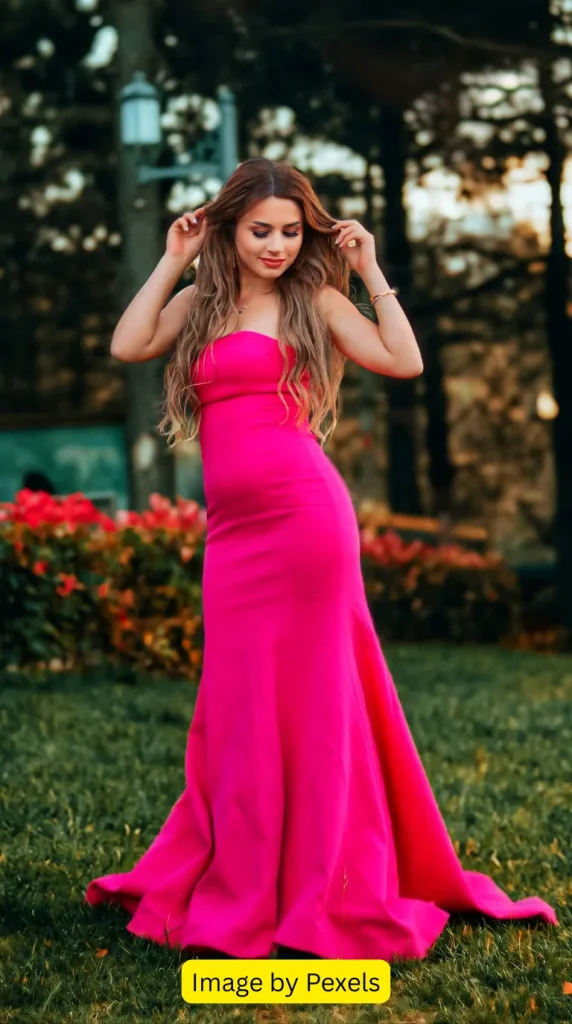
One of the easiest mistakes is assuming a standard-length formal gown will fit simply because the size is correct.
Regular dresses are generally designed around longer proportions. On a petite frame, the problem may not be the overall size at all. The shoulders, waist, sleeves, bodice, and hem can all sit differently than intended.
A dress can technically fit while still looking too long or poorly balanced.
How to fix it
Start with your measurements rather than relying only on the size printed on the label. Pay particular attention to:
- Bust measurement
- Natural waist
- Shoulder width
- Hollow-to-hem length
- Sleeve length
- Your preferred heel height
If the gown fits well through the bodice but is too long, professional hemming may be all you need. If the waist or shoulders also sit incorrectly, ask a tailor whether additional alterations are practical before purchasing.
A dress that fits your largest measurement and is then tailored down can often look far more polished than a gown chosen solely because it is labeled “petite.”
Choosing a Gown With Too Much Volume
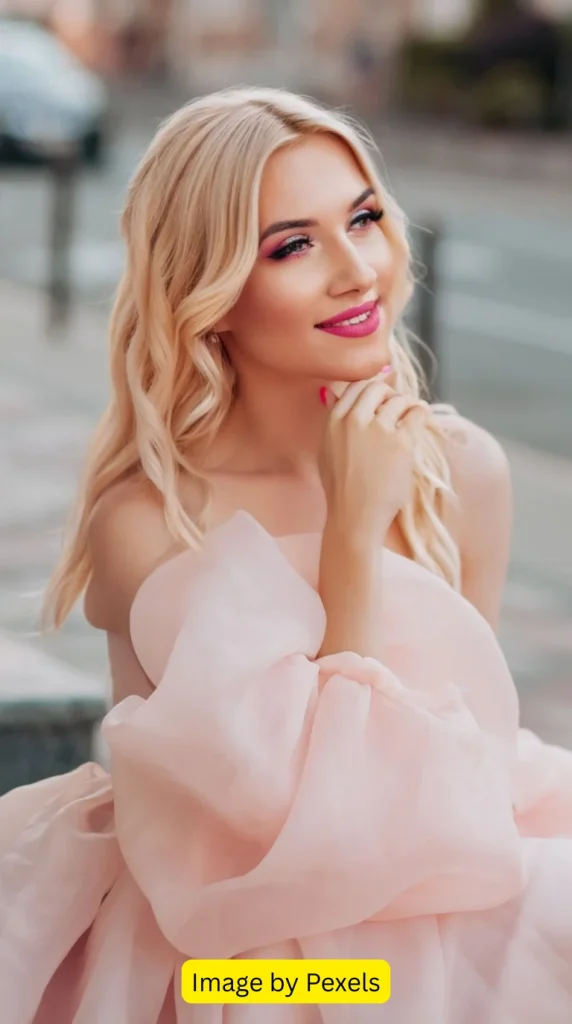
A dramatic ball gown can be beautiful for a black tie celebration, but excessive skirt volume can overwhelm a petite silhouette.
The issue is not that petite women cannot wear ball gowns. It is the relationship between the amount of fabric and the rest of the body.
When a very full skirt is combined with a long hem, elaborate embellishment, and oversized accessories, the dress can become the first and only thing people notice.
A better approach
Look for controlled volume rather than automatically avoiding full skirts.
A softly structured A-line, modified ball gown, or flowing skirt can provide drama without completely hiding your proportions. If the skirt is already voluminous, keep the bodice and accessories relatively clean.
The goal is one dramatic element at a time.
If you love a statement skirt, let the skirt be the statement.
Letting the Hem Pool Around Your Feet
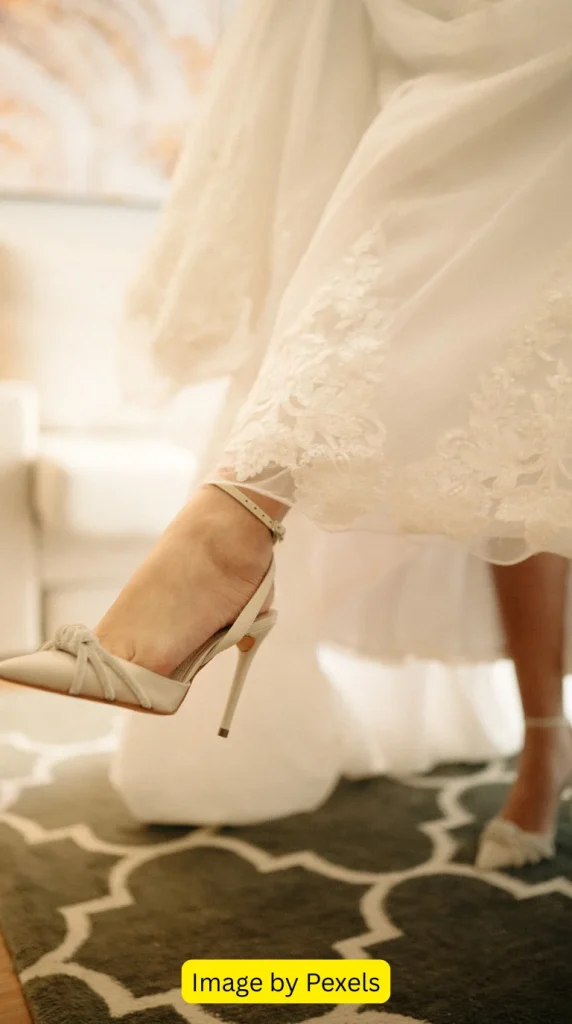
A floor-length gown should create an elegant line—not a pile of fabric around your shoes.
A hem that drags across the floor can make a petite woman appear visually shorter and can also become inconvenient while walking, dancing, or navigating stairs.
It is particularly noticeable in photographs because excess fabric can bunch around the feet instead of falling cleanly.
The petite-friendly fix
Have the dress hemmed while wearing the shoes you actually plan to wear to the wedding.
The correct length depends partly on the dress design and your footwear, so do not assume every floor-length gown should hit at exactly the same point.
A professional tailor can help you achieve a hem that falls elegantly while still allowing comfortable movement.
This is one of the most valuable alterations you can make to a petite formal gown.
Choosing Shoes That Visually Cut Off the Leg
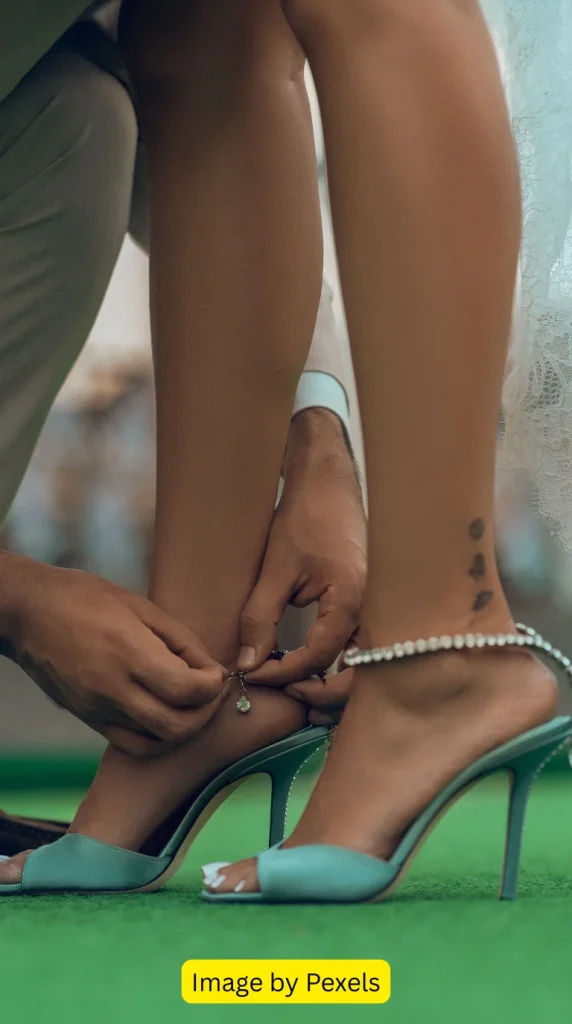
Your shoes may seem like a small detail, but they can influence the overall line of a long formal dress.
Heavy ankle straps, bulky shoes, and strongly contrasting footwear can create a horizontal break around the ankle. When combined with a floor-length gown, that interruption can make the lower body appear shorter.
What works better
Consider:
- Pointed-toe pumps
- Slim-strap sandals
- Shoes in a similar tone to the dress
- Elegant metallic footwear
- A heel height you can comfortably walk in
You do not need extremely high heels to create a graceful silhouette. Comfort matters, especially at weddings where you may spend several hours standing and dancing.
The best shoe is one that gives you the height and stability you want without making you uncomfortable halfway through the reception.
Wearing a Waistline That Sits Too Low

Where the waistline sits can significantly affect the proportions of a petite dress.
A dropped waist moves the visual center of the outfit downward. On some petite frames, this can make the legs appear shorter and the torso longer.
That does not mean every dropped-waist dress is automatically wrong. It simply means the placement deserves attention.
Try this instead
A naturally defined waist, slightly raised waist, or carefully positioned empire-style seam can create a more elongated appearance.
When shopping online, look closely at where the waist seam sits on the model. A design that looks perfectly balanced on a taller model may sit noticeably lower on you.
If possible, try the dress on before making a final decision.
Using Wide Belts to Create Definition
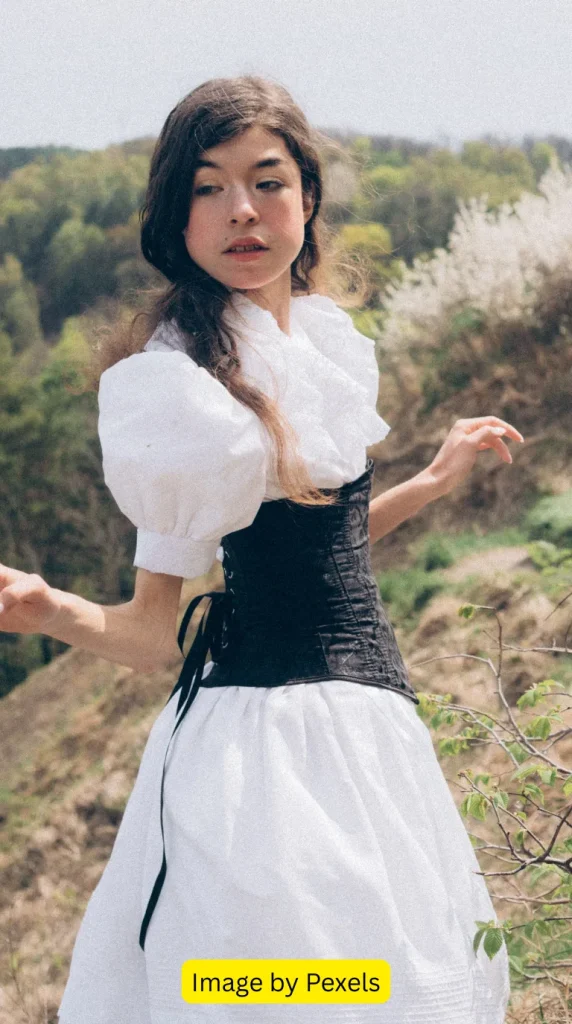
A belt can beautifully define the waist, but a very wide belt creates a strong horizontal line across the body.
On a petite frame, that line can visually divide the outfit into two sections.
If the dress already has a defined waist, adding a large belt may be unnecessary.
A more balanced option
If you want additional waist definition, consider:
- A narrow belt
- A delicate waist detail
- A built-in waist seam
- Subtle tonal embellishment
The closer the accessory is to the color of the dress, the less strongly it interrupts the overall silhouette.
Choosing Oversized Prints
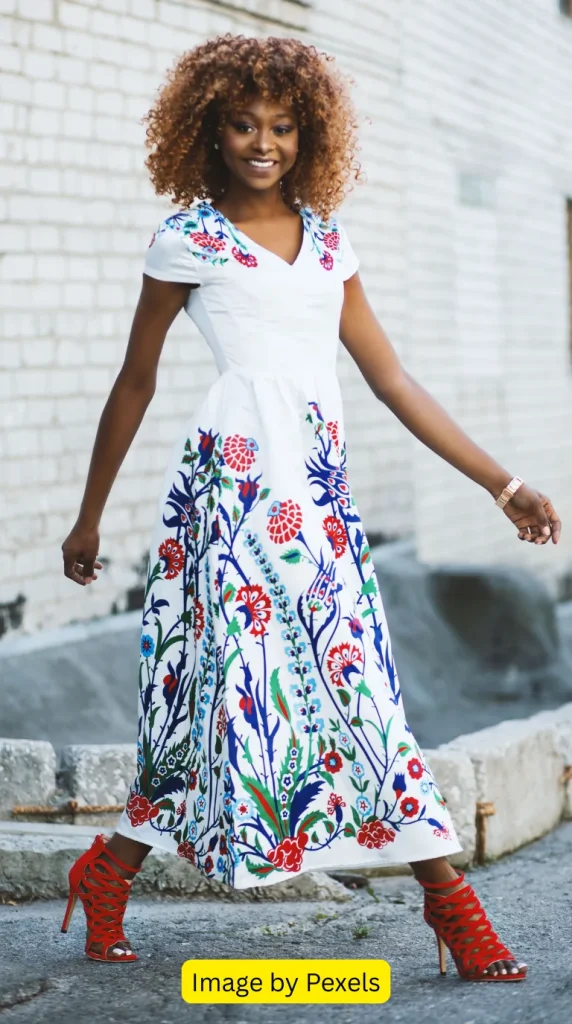
Large-scale prints can be striking, but they can also dominate a petite frame.
A huge floral motif, oversized geometric pattern, or dramatic color contrast may become visually heavier than the person wearing it.
This is especially noticeable when the print is combined with a full skirt or numerous embellishments.
You do not have to avoid prints
Instead, consider the scale of the pattern.
Smaller floral designs, subtle jacquard textures, delicate motifs, and thoughtfully spaced prints can provide visual interest without overwhelming the gown.
If you love a large print, look for a dress with a relatively simple silhouette so the pattern remains the primary statement.
Choosing a Boxy Silhouette
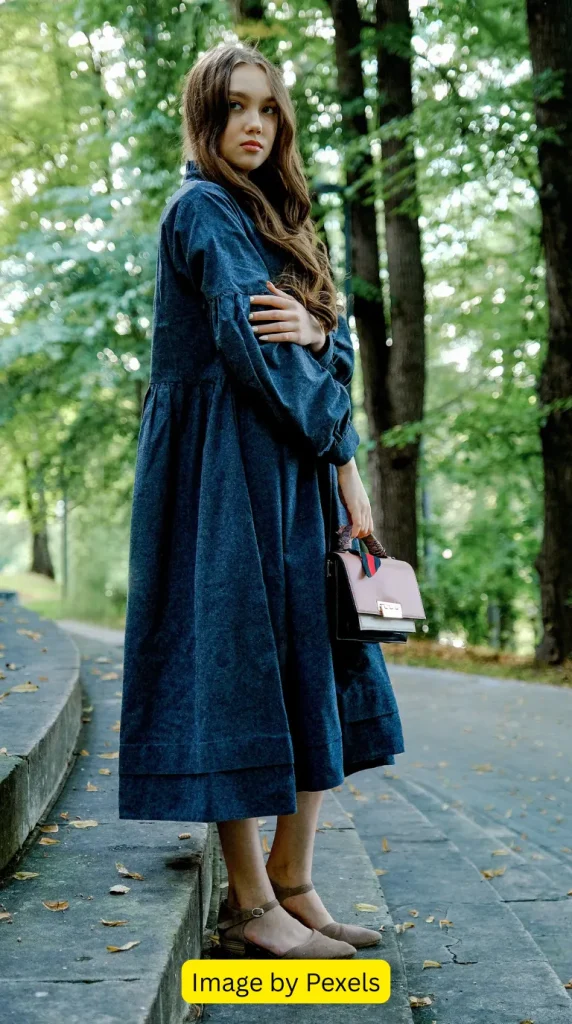
A formal gown does not need to be skin-tight to look flattering. However, an excessively boxy shape can hide the natural structure of a petite frame.
Loose fabric through the shoulders, waist, and hips can make the dress appear larger than necessary.
Look for intentional shaping
A softly fitted column dress, gently shaped sheath, tailored A-line, or structured gown can preserve comfort while creating clearer proportions.
The goal is not to make your body look smaller.
The goal is to make sure the dress itself is properly scaled to you.
That distinction is important when shopping for petite formalwear.
Adding Too Many Ruffles
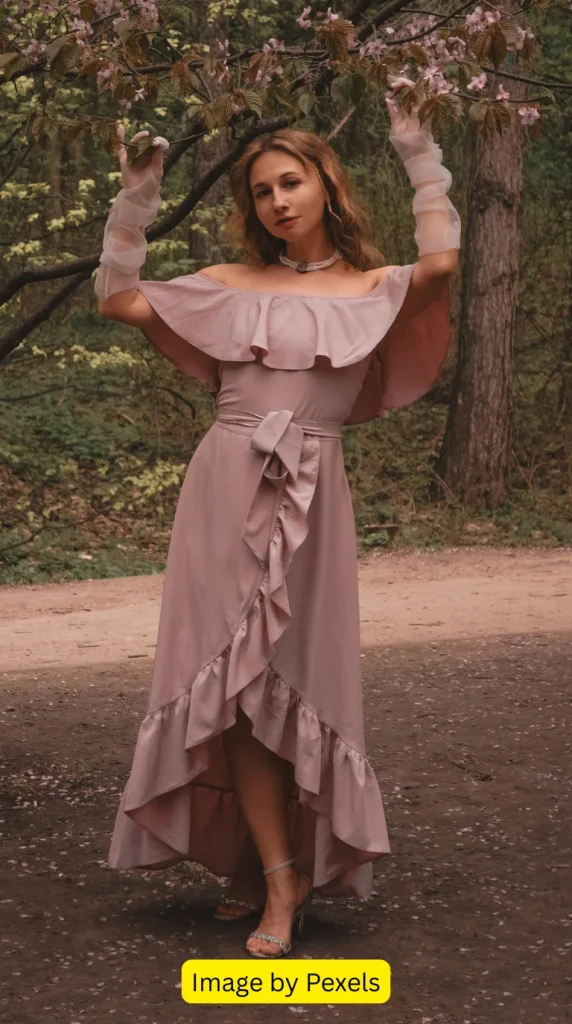
Ruffles can make a gown romantic and feminine, but layers of large ruffles can add considerable visual volume.
If ruffles appear across the bodice, sleeves, waist, and skirt simultaneously, they may compete with the petite frame instead of complementing it.
Use texture strategically
A dress with one controlled ruffle detail can be much easier to balance.
For example, you might choose:
- A softly ruffled neckline
- A single ruffled sleeve
- Subtle movement around the skirt
- Delicate gathered fabric
If the dress already has significant texture, keep the rest of the styling simple.
Overloading the Dress With Embellishments
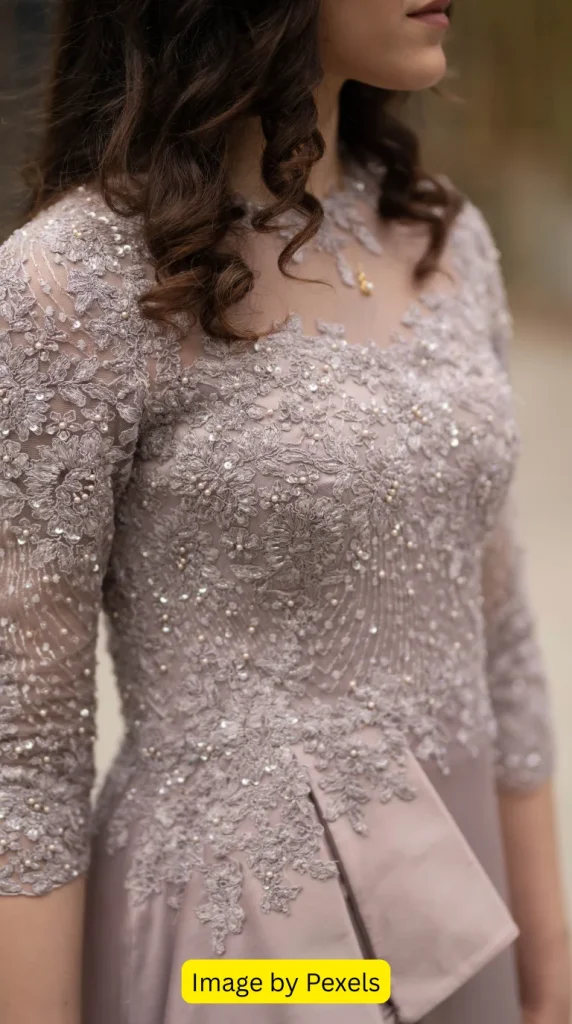
Sequins, crystals, beads, embroidery, and appliqués can all be appropriate for black tie.
The problem begins when several large embellishment styles compete at once.
Heavy embellishment can add visual weight, particularly when it covers the entire bodice and skirt.
Choose a focal point
A more refined approach is to decide where you want attention to go.
You might choose a gown with:
- Crystal detailing around the neckline
- Embellishment concentrated on the bodice
- Subtle beading along the waist
- A lightly decorated skirt
Then allow the rest of the outfit to remain relatively quiet.
This creates glamour without making the look feel crowded.
Wearing Oversized Sleeves
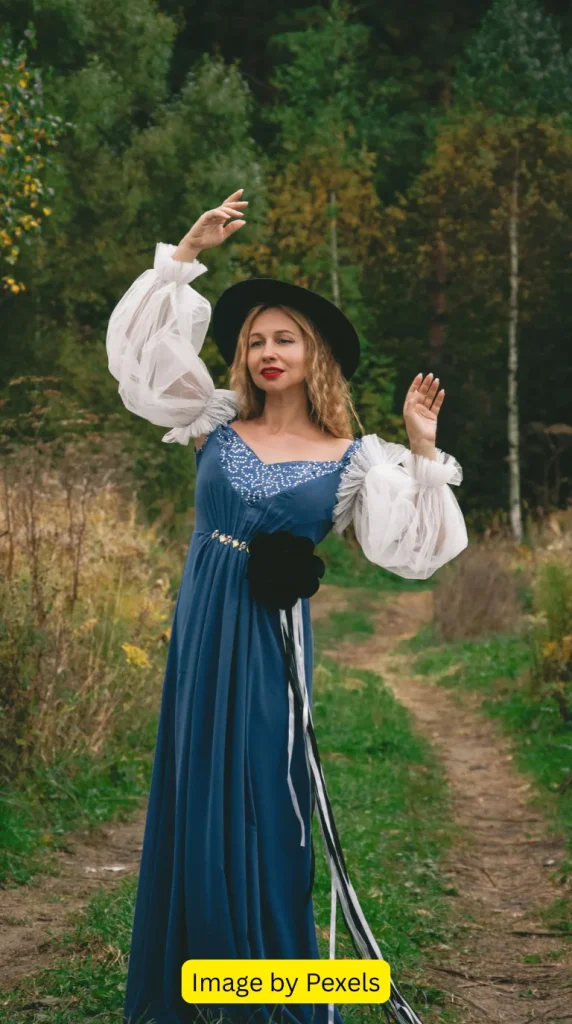
Sleeves need to be considered in proportion to the rest of the dress.
Extra-long sleeves, oversized cuffs, or very large sleeve shapes can add visual weight around the upper body and may make the gown appear too large.
This can happen even when the rest of the dress fits correctly.
Check the shoulder and sleeve length
When trying on a formal gown, raise your arms, bend your elbows, and move naturally.
The sleeve should allow comfortable movement without swallowing the hand or creating excessive fabric around the shoulder.
If everything else fits beautifully, sleeve alterations may be worth considering.
Choosing Bulky Layers
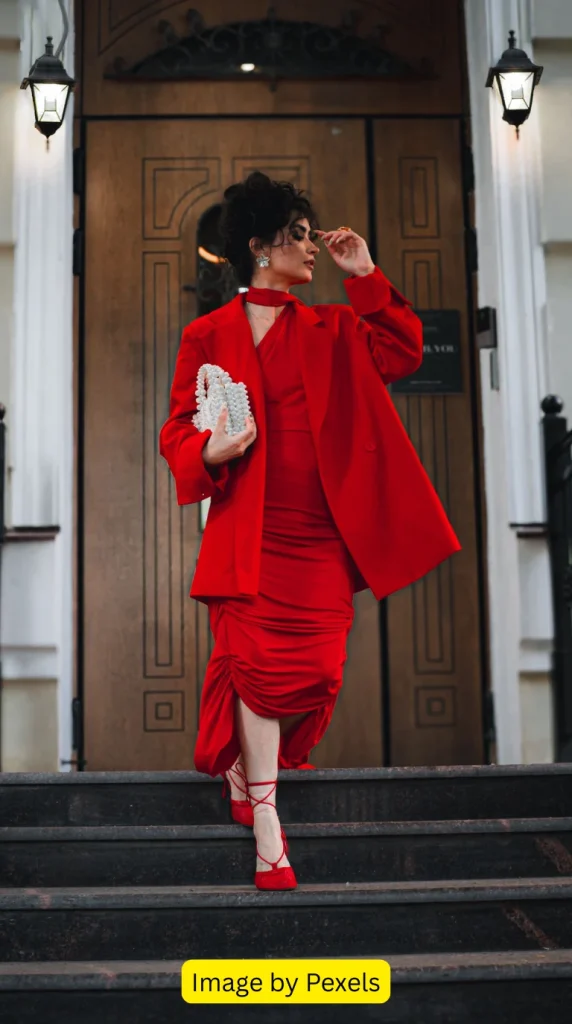
A formal wedding may involve chilly outdoor photographs, a cool venue, or a late-night reception. Adding a layer can be practical, but the wrong outer piece can completely change the proportions of your outfit.
Oversized shawls, bulky wraps, and large coats can hide the shape of a petite gown.
Choose a layer that follows the dress
Better options include:
- A lightweight evening wrap
- A tailored cropped jacket where appropriate
- A slim formal cape
- A refined stole
- A fitted evening coat
The outer layer should complement the gown rather than become a second oversized garment.
For winter celebrations, this is particularly important because warmth should not require sacrificing the overall silhouette.
Carrying an Oversized Handbag
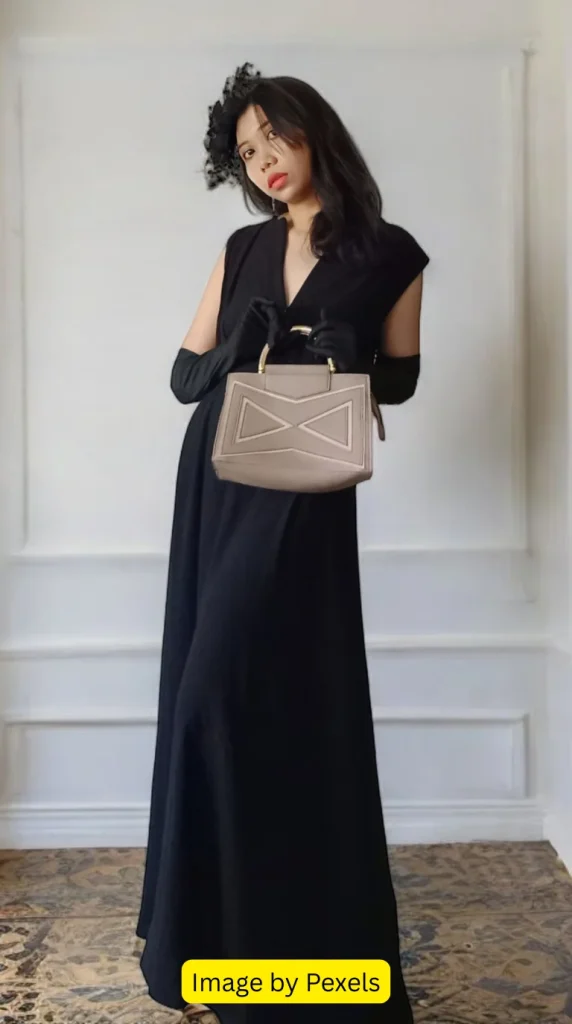
A large everyday handbag rarely works well with a formal black tie outfit.
On a petite frame, an oversized bag can look disproportionate beside a long evening gown and can make the entire outfit feel less formal.
Choose a compact evening bag
A clutch or small structured evening bag is usually a better match.
Consider satin, metallic finishes, velvet, or understated embellishment depending on the dress.
Your bag only needs to carry the essentials. It should complete the outfit rather than compete with it.
Creating Harsh Color Breaks
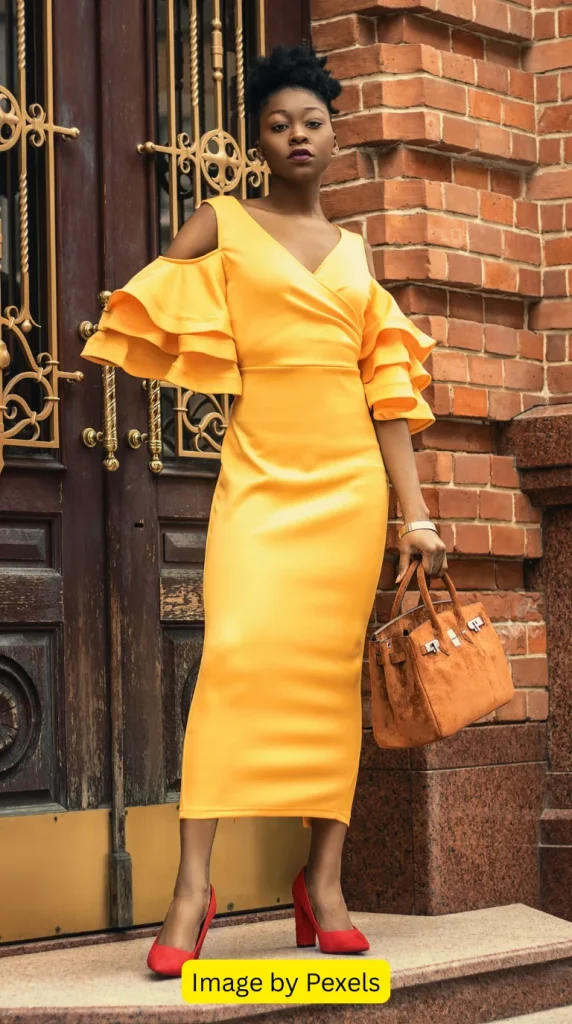
Color blocking can be fashionable, but strong horizontal contrasts can interrupt the long visual line created by a formal gown.
For example, a sharply contrasting bodice and skirt may divide the body into separate sections.
Create continuity instead
Monochromatic dressing can be especially effective when you want an uninterrupted appearance.
That does not mean your entire outfit needs to be exactly the same color. You can introduce variation through:
- Tonal fabrics
- Metallic accessories
- Slightly different shades
- Texture
- Subtle jewelry
Deep navy, emerald, burgundy, plum, black, and other rich tones can create a sophisticated foundation for a black tie wedding guest outfit.
Wearing Too Many Statement Accessories
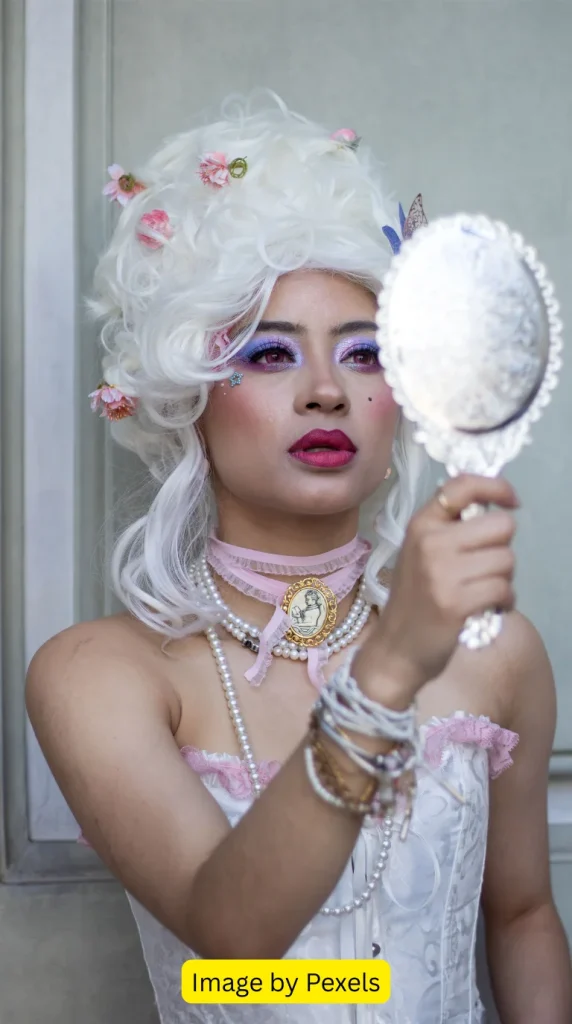
One dramatic accessory can elevate a formal gown.
Five dramatic accessories can make the outfit feel busy.
Large earrings, a statement necklace, stacked bracelets, an embellished clutch, sparkling shoes, and a heavily decorated dress are all competing for attention.
Use the one-statement rule
Choose one primary accessory to attract attention.
For example:
Statement earrings + simple necklace + understated clutch
or
Minimal earrings + statement necklace + simple clutch
or
Embellished gown + restrained jewelry + elegant shoes
This gives the outfit a clear focal point and allows the dress to remain the star.
Ignoring Fabric Quality and Structure
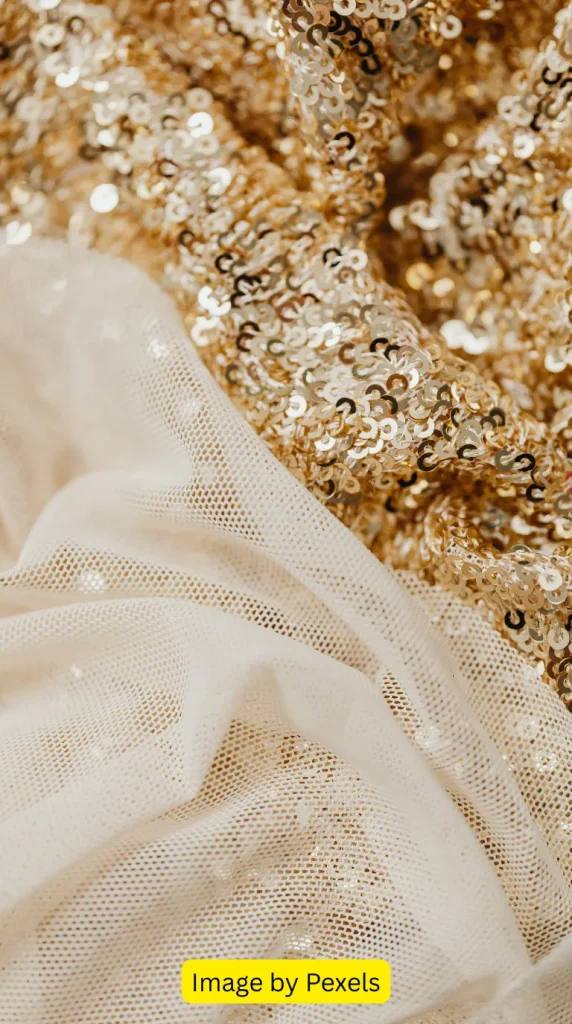
Fabric affects how a gown hangs, moves, and photographs.
Very thin or unstructured material may cling in unexpected places, wrinkle easily, or lose its shape during a long event.
For formalwear, fabrics with enough structure to hold the intended silhouette can make a significant difference.
Consider the way the fabric behaves
Crepe can create a smooth, streamlined effect.
Satin can provide shine and fluid movement.
Mikado can offer more structure.
Velvet can add richness, particularly for colder-season weddings.
The best choice depends on the dress design, season, venue, and the level of formality.
Instead of choosing a fabric simply because it looks luxurious online, consider how it will behave after several hours of sitting, walking, dining, and dancing.
Assuming “Petite” Means “Perfect Fit”
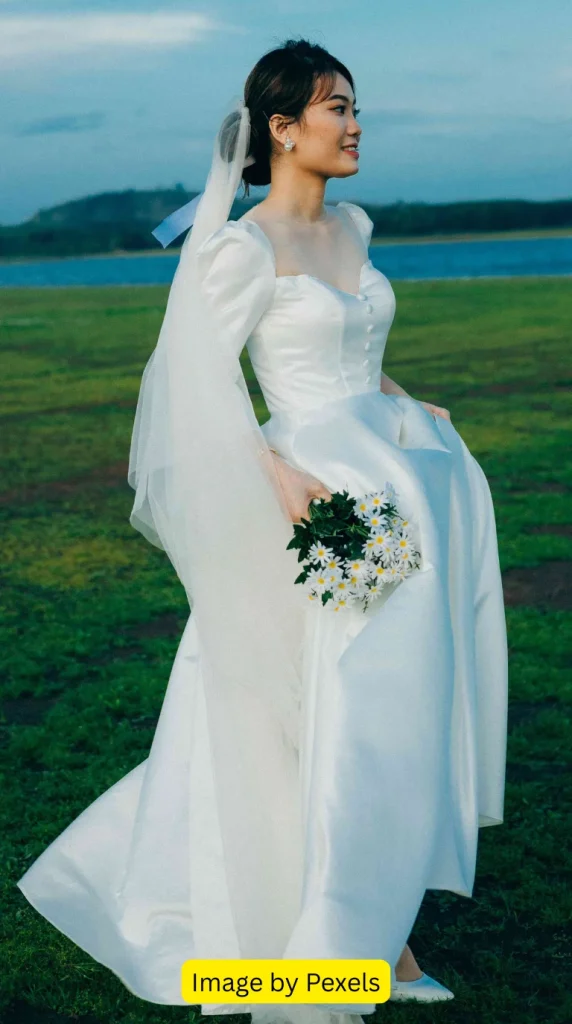
This is one of the most important mistakes to avoid.
A dress labeled petite is not automatically guaranteed to fit every petite woman.
Petite sizing generally changes proportions, but individual bodies still differ considerably.
You may have a shorter torso, longer legs relative to your height, broader shoulders, a fuller bust, or different waist proportions.
Treat petite sizing as a starting point
Check the actual garment measurements whenever they are available.
Look at:
- Bodice length
- Waist placement
- Shoulder width
- Sleeve length
- Overall dress length
Then compare those measurements with your own.
A non-petite gown that can be altered successfully may ultimately fit better than a petite gown with proportions that do not suit your body.
Shopping Only by the Model’s Appearance
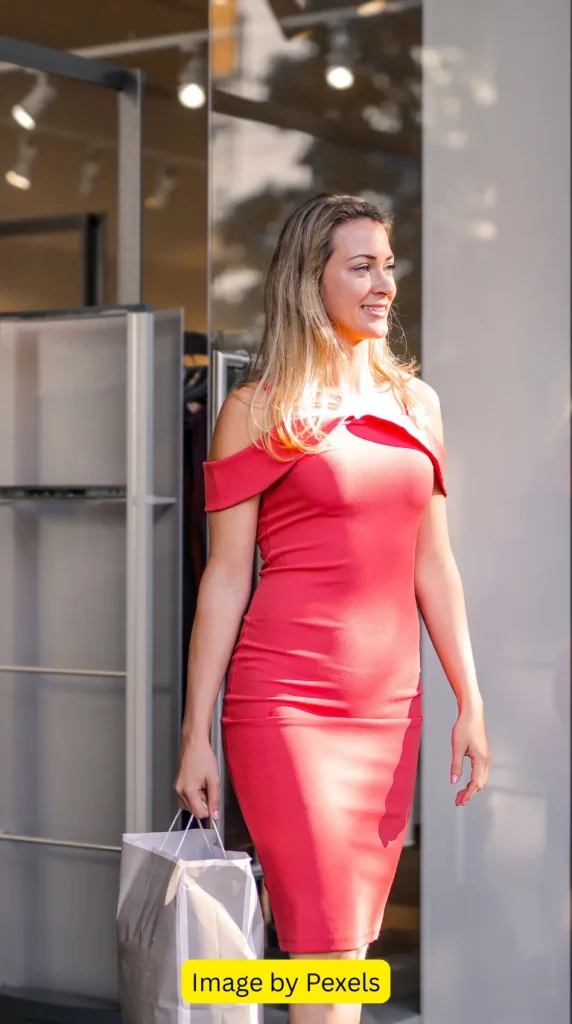
Online shopping can make this mistake particularly tempting.
A gown may look perfectly balanced on a tall model because the photographer, styling, and garment proportions are all working together.
That does not mean the same dress will fall in exactly the same place on you.
Look beyond the photograph
Before purchasing, ask:
- Where does the waist seam sit?
- How long is the dress?
- Is the neckline adjustable?
- Does the skirt have significant volume?
- Can the hem be altered?
- Are the shoulders structured?
- Does the fabric have stretch?
- What are the garment measurements?
The model’s height can also provide useful context when the retailer lists it.
Waiting Too Long to Alter the Dress
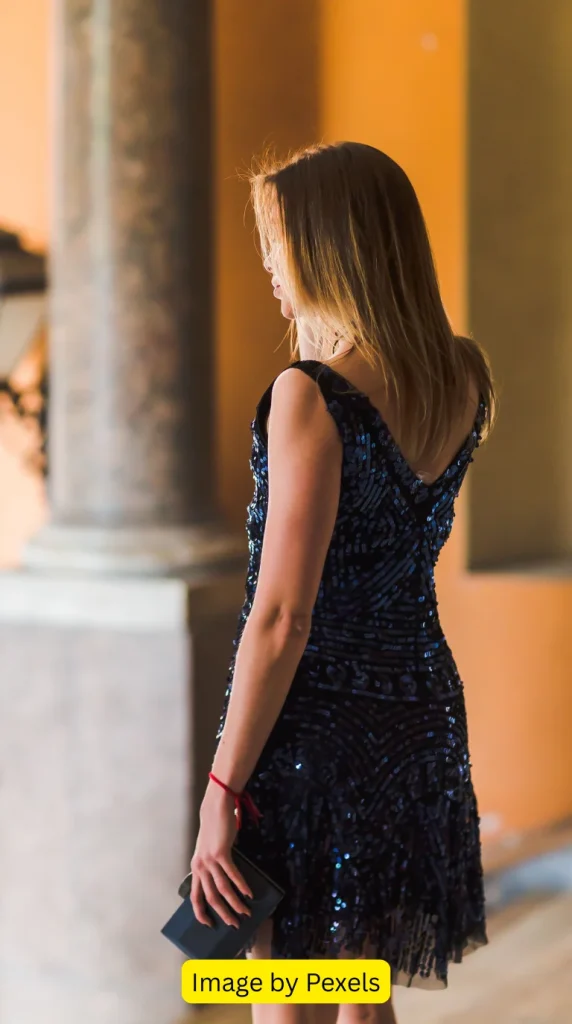
Buying the dress is not necessarily the end of the process.
For petite formalwear, alterations can be one of the most important final steps.
Waiting until a few days before the wedding creates unnecessary stress and may leave insufficient time for adjustments.
Plan alterations early
Once you decide on your gown, try it on with the exact shoes and undergarments you expect to wear.
Then identify the alterations you may need.
Common adjustments include:
- Hem shortening
- Waist refinement
- Strap adjustment
- Sleeve shortening
- Bodice alterations
- Bust adjustments
Give yourself enough time for a fitting and, if necessary, a second fitting.
A gown that looks merely “nice” on the hanger can look completely different after professional alterations.
Forgetting to Test the Dress in Motion
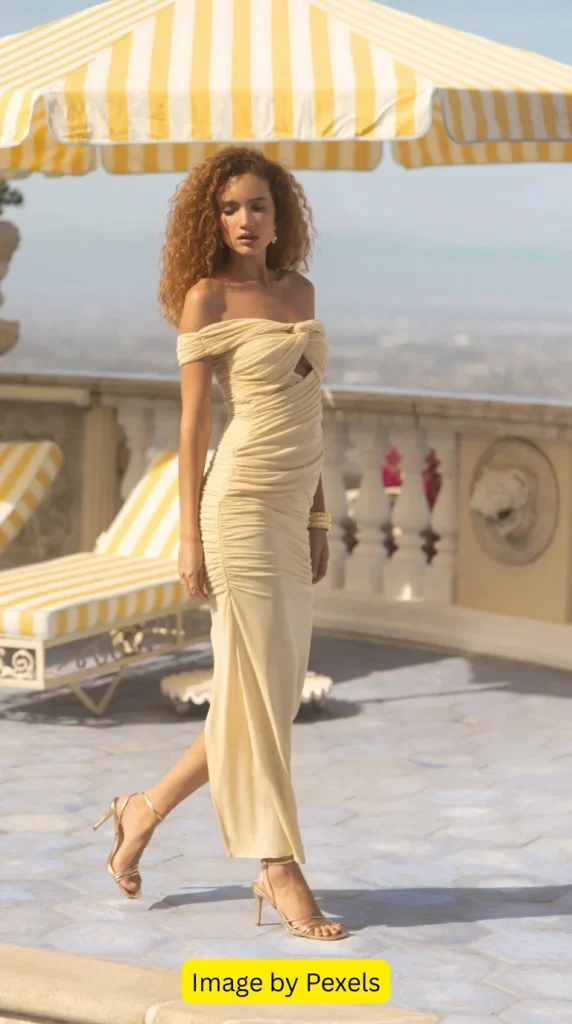
A wedding guest dress should look beautiful while standing still—but that is only part of the experience.
You will probably walk, sit, climb stairs, eat, dance, take photographs, and move between different parts of the venue.
A dress that looks perfect in a mirror can become uncomfortable once you start moving.
Do a movement test
Before committing to the gown, try:
- Walking several steps
- Sitting down
- Raising your arms
- Turning around
- Walking up stairs if possible
- Sitting with the skirt arranged naturally
Pay attention to whether the hem catches, the neckline shifts, the sleeves restrict movement, or the fabric pulls around the waist.
Comfort is part of elegance.
Forgetting the Final Proportion Check
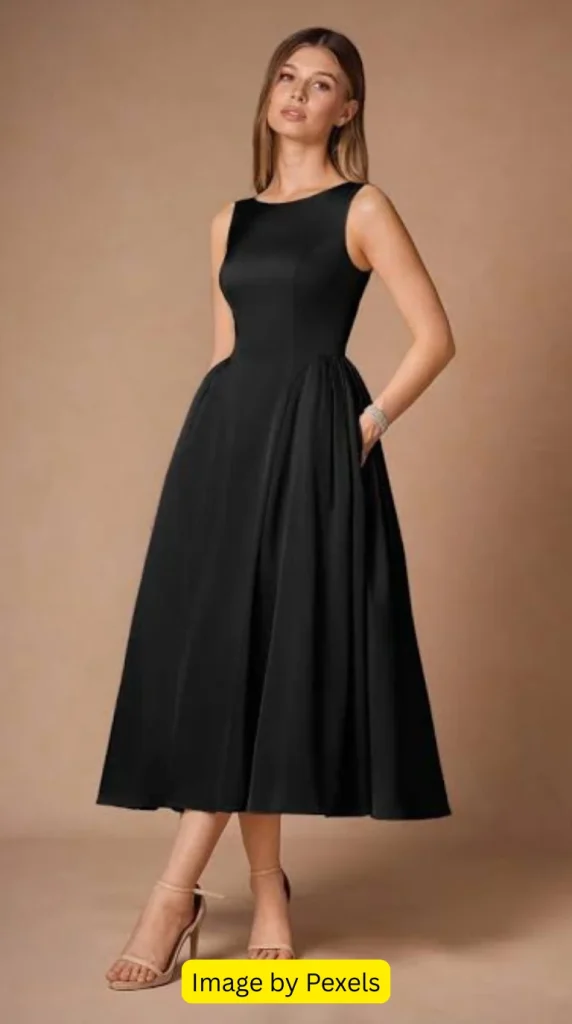
Before leaving for the wedding, take a full-length look at the complete outfit—not just the dress.
Check the relationship between:
Dress + shoes + accessories + hairstyle + outer layer
A beautiful dress can lose its impact when paired with accessories that are too large or shoes that create an abrupt visual break.
Likewise, a relatively simple gown can look exceptionally elegant when every element is properly scaled.
The Petite Proportion Checklist
Before the event, ask yourself:
- Does the hem fall cleanly?
- Is the waist positioned correctly?
- Do the sleeves end at the right place?
- Is the skirt volume balanced?
- Are the shoes proportional?
- Is the handbag compact enough?
- Do the accessories compete with the gown?
- Does the outer layer overwhelm the dress?
- Can I comfortably walk and sit?
- Does the complete outfit feel balanced?
If the answer is yes to most of these questions, you are probably on the right track.
The Biggest Petite Dress Mistake: Ignoring Tailoring
If there is one lesson worth remembering, it is this: do not underestimate alterations.
A gown does not need to be specifically marketed as petite to look beautiful on a shorter frame. What matters is whether the final proportions work for you.
A hem that sits correctly, a waist that falls in the right place, properly fitted sleeves, and a well-adjusted bodice can transform the appearance of a formal dress.
Tailoring also improves comfort, which matters just as much as appearance during a long wedding celebration.
Instead of immediately rejecting a beautiful gown because it is slightly too long, determine whether the problem can be realistically corrected.
How to Choose Better From the Start
Avoiding mistakes becomes easier when you change the way you shop.
Instead of asking only:
“Do I love this dress?”
ask:
“Will this dress work with my proportions?”
Look for a silhouette that creates a clear vertical line, fits properly through the most important areas, and leaves enough room for practical alterations.
Pay attention to the scale of every design element, from the print and embellishment to the sleeves and accessories.
Most importantly, remember that petite style does not mean you have to choose boring or overly simple dresses.
You can absolutely wear dramatic colors, glamorous fabrics, beautiful embellishments, full skirts, elegant trains, and statement details.
The key is balance.
Final Thoughts
Choosing a petite black tie wedding guest dress becomes much easier when you stop thinking about height as a limitation and start thinking about proportion.
The most common problems—pooling hemlines, oversized silhouettes, misplaced waistlines, bulky accessories, excessive embellishment, and poor tailoring—are often fixable.
You do not need to follow every petite fashion rule, either. The goal is not to make yourself look taller at all costs. It is to create an outfit that feels harmonious, comfortable, and appropriately elegant for the occasion.
Start with the fit, pay attention to scale, tailor the gown when necessary, and let one or two beautiful details take center stage.
When the proportions are right, even a simple formal gown can look remarkably sophisticated.
For more petite formalwear inspiration, explore Ultimate Black Tie Wedding Guest Dress Guide.
